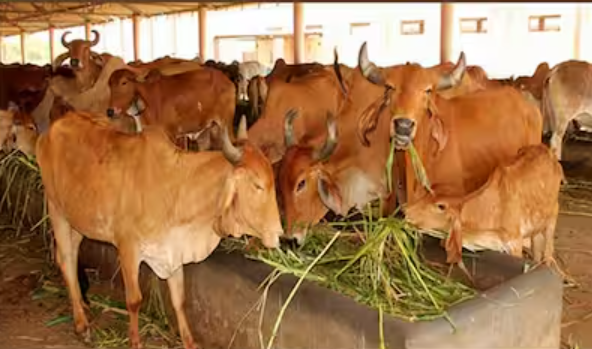
New Delhi: The Union Cabinet, chaired by Prime Minister Narendra Modi, has approved the Revision of the Livestock Health and Disease Control Programme (LHDCP), a significant initiative aimed at improving the health and productivity of livestock across India. The scheme, which will run for two years (2024-25 and 2025-26), has a total outlay of Rs. 3,880 crore and introduces several key components to address the challenges posed by livestock diseases.
The LHDCP comprises three major components: the National Animal Disease Control Programme (NADCP), Livestock Health & Disease Control (LH&DC), and the newly added Pashu Aushadhi. The LH&DC has three sub-components: Critical Animal Disease Control Programme (CADCP), Establishment and Strengthening of Veterinary Hospitals and Dispensaries – Mobile Veterinary Units (ESVHD-MVU), and Assistance to States for Control of Animal Diseases (ASCAD). A notable addition to the scheme is the Pashu Aushadhi component, designed to provide quality and affordable generic veterinary medicines to rural areas.
The initiative is expected to have a profound impact on India’s livestock sector, where diseases such as Foot and Mouth Disease (FMD), Brucellosis, Peste des Petits Ruminants (PPR), Cerebrospinal Fluid (CSF), and Lumpy Skin Disease have been significant hindrances to animal health and productivity. By focusing on the prevention of these diseases through immunization, the scheme aims to reduce the economic losses faced by farmers due to disease outbreaks.
One of the key highlights of the revised LHDCP is the allocation of Rs. 75 crore to the Pashu Aushadhi component. This initiative will make quality generic veterinary medicines available at affordable prices, with incentives for their sale through the network of PM-Kisan Samriddhi Kendras and Cooperative Societies. The program will also extend its reach through Mobile Veterinary Units (ESVHD-MVU), ensuring that livestock health care services are delivered directly to farmers’ doorsteps.
The scheme is designed to not only control animal diseases but also support the overall health care infrastructure for livestock in the country. By upgrading veterinary facilities and providing veterinary medicines through a comprehensive network, the program seeks to improve the quality of livestock care available to farmers in both rural and remote areas.
The LHDCP will contribute to improving livestock productivity, which is often hampered by diseases. By enhancing vaccination coverage and surveillance systems, the program aims to reduce the burden of diseases and improve the productivity of cattle, sheep, goats, and other livestock. Additionally, the scheme will generate employment and promote entrepreneurship in rural areas, especially by encouraging small-scale businesses related to veterinary services and animal health.
Through this initiative, the government seeks to bolster rural economies, reduce the financial strain on farmers, and prevent the spread of contagious diseases. By facilitating the growth of the rural veterinary ecosystem, the LHDCP will play a crucial role in strengthening India’s agricultural and livestock-based economy.
The LHDCP aligns with the government’s vision for inclusive growth and sustainable agriculture. It is part of the broader efforts to strengthen India’s agricultural and rural sectors by integrating advanced healthcare practices for livestock. The scheme aims to create a comprehensive system that supports disease control, enhances livestock productivity, and safeguards farmers’ livelihoods, ensuring long-term economic stability and food security.