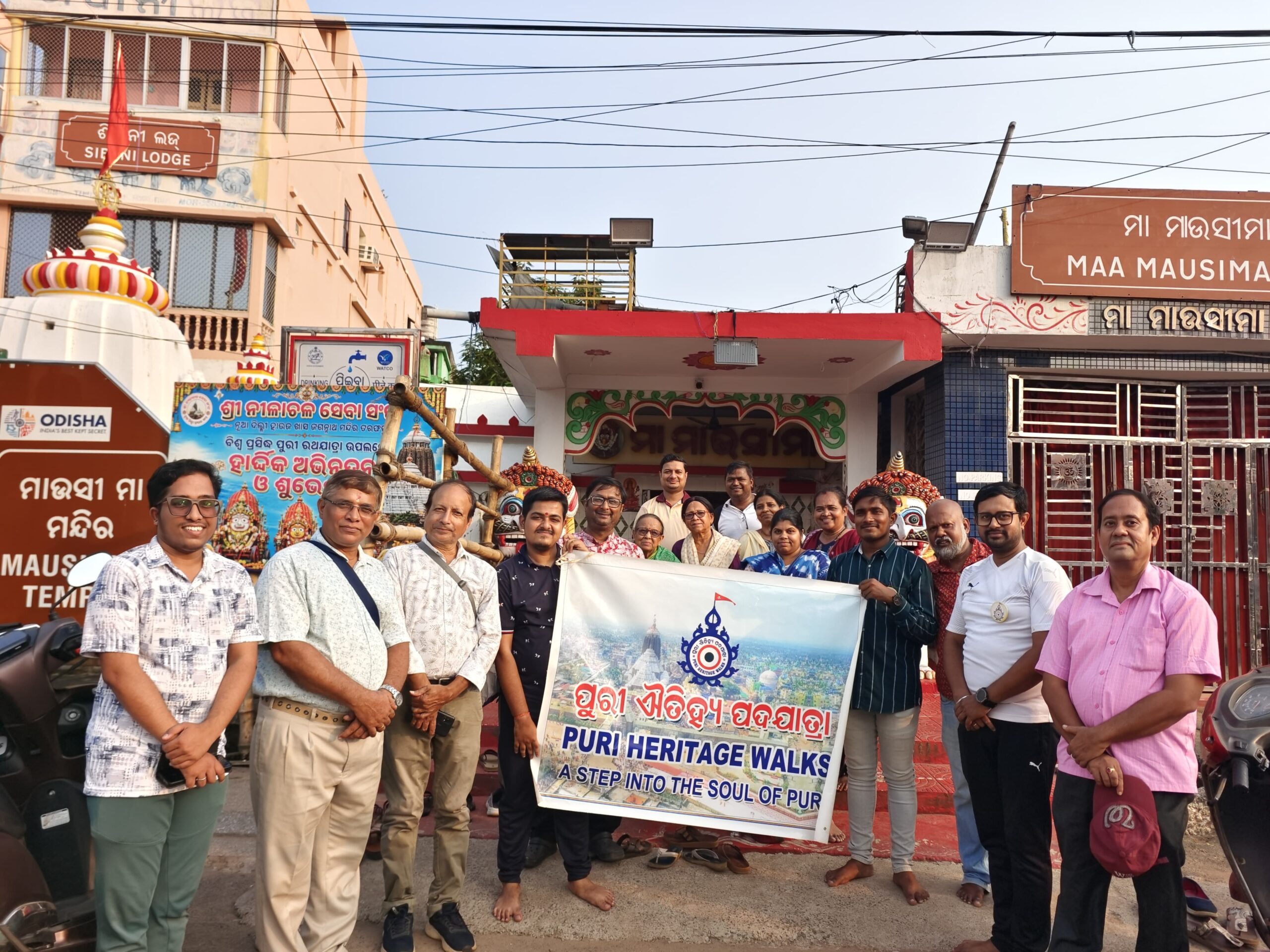
Puri: The 25th edition of Puri Heritage Walks (PHW), held on Sunday, took participants through the city’s distinctive Sharadiya Shola Puja traditions, ancient Devi shrines and the rituals associated with the Shree Jagannath Temple during the Durga Puja period.
The walk began at Maa Ardhasini Temple on the Grand Road, where PHW co-convenor Ashoka Manjari Nayak and the temple priest explained the Goddess’s significance in the religious traditions of Srikshetra. Popularly known as Mausi Maa, Maa Ardhasini is traditionally regarded as the maternal aunt of the sibling deities. Participants also learned about the offering of Poda Pitha to the deities during Bahuda Yatra and local legends connecting the Goddess with the Malini River.
The group then visited Maa Bisweswari Temple in Chudanga Sahi, north of the Shree Jagannath Temple. Traditionally associated with Ganga Dynasty ruler Chodaganga Deva, the shrine holds an important place in Puri’s Tantric traditions.
According to local accounts, Maa Bisweswari was the guardian deity of Nitei Dhobani, a tantric practitioner and spiritual preceptor of Chodaganga Deva, who is believed to have worshipped and consecrated the Goddess at the site. Local traditions also link the shrine to the king’s royal affairs, with his palace believed to have stood nearby at a place known as Badu Mahapatra Jaga.
The presiding deity is regarded as a manifestation of Maa Tara, one of the principal deities in Tantric worship. Her 16-day Shola Puja begins on Mulashtami and continues until Mahanavami during Durga Puja. The four-armed Goddess is depicted holding a sword, a blue lotus and a dagger, while her lower right hand is raised in a gesture of blessing. The south-facing shrine is also associated with the local belief that the Goddess gazes towards the Nilachakra of the Shree Jagannath Temple. PHW member Priyankar Maharana explained the deity’s iconography, historical associations and worship traditions.
The heritage trail also covered Maa Marichai Temple, Maa Charchika at Rath Khala and Maa Sola Pua Temple in Dolamandap Sahi, introducing participants to their connections with Shola Puja and Puri’s religious heritage.
Located within the Shree Jagannath Temple office building, Maa Charchika is worshipped in her Chamunda form alongside Mahavir and Bhairava. The nearby Rath Khala is traditionally associated with the construction of chariots for the annual Rath Yatra.
Durga Madhab ritual draws attention
A major attraction of the walk was the darshan of Durga Madhab at Narayani Temple in Dolamandap Sahi. The ritual represents a distinctive tradition of Srikshetra in which Goddess Durga is worshipped ceremonially alongside Madhab, a form associated with Lord Jagannath.
The 16-day Shodasha Puja begins on Mulashtami. During this period, Madhab and Goddess Jayadurga are united for worship. Following prescribed rituals and the offering of the Agyanmala, a garland signifying divine permission, Jayadurga is brought from the Bhandaraghara and placed beside Madhab on a special seat known as the Bhadrasana.
From Ashwina Shukla Pratipada, the divine pair undertake a daily ceremonial journey outside the Shree Jagannath Temple. After the morning Dhupa ritual, Durga Madhab travels in a chariot-shaped Bimana, or ceremonial palanquin, to Narayani Temple amid traditional observances. The deities receive prescribed worship and offerings at the shrine before returning to Srimandir at night following the evening rituals, including Chandana Lagi.
This nine-day journey, which continues until Mahanavami, is popularly known as Shakta Gundicha or Gupta Gundicha Yatra.
The walk also included a visit to Prabhuji ki Baithak near Marichikot Chhak, a historic spiritual seat associated with Vaishnava saint Swami Vallabhacharya. Caretaker Madhu Shri narrated accounts of the saint’s visit to Puri, his scholarly engagement at the Mukti Mandap and traditions associated with his stay in Srikshetra. She also presented a copy of her poetry collection, Madhuruchi, to the Puri Heritage Walks library.
Around 20 heritage enthusiasts from Puri, Cuttack, Jatni, Jagatsinghpur, Rourkela and other parts of Odisha participated in the walk, exploring several Devi shrines and a historic spiritual centre while learning about the rituals, legends and cultural practices that shape Puri’s religious identity.