
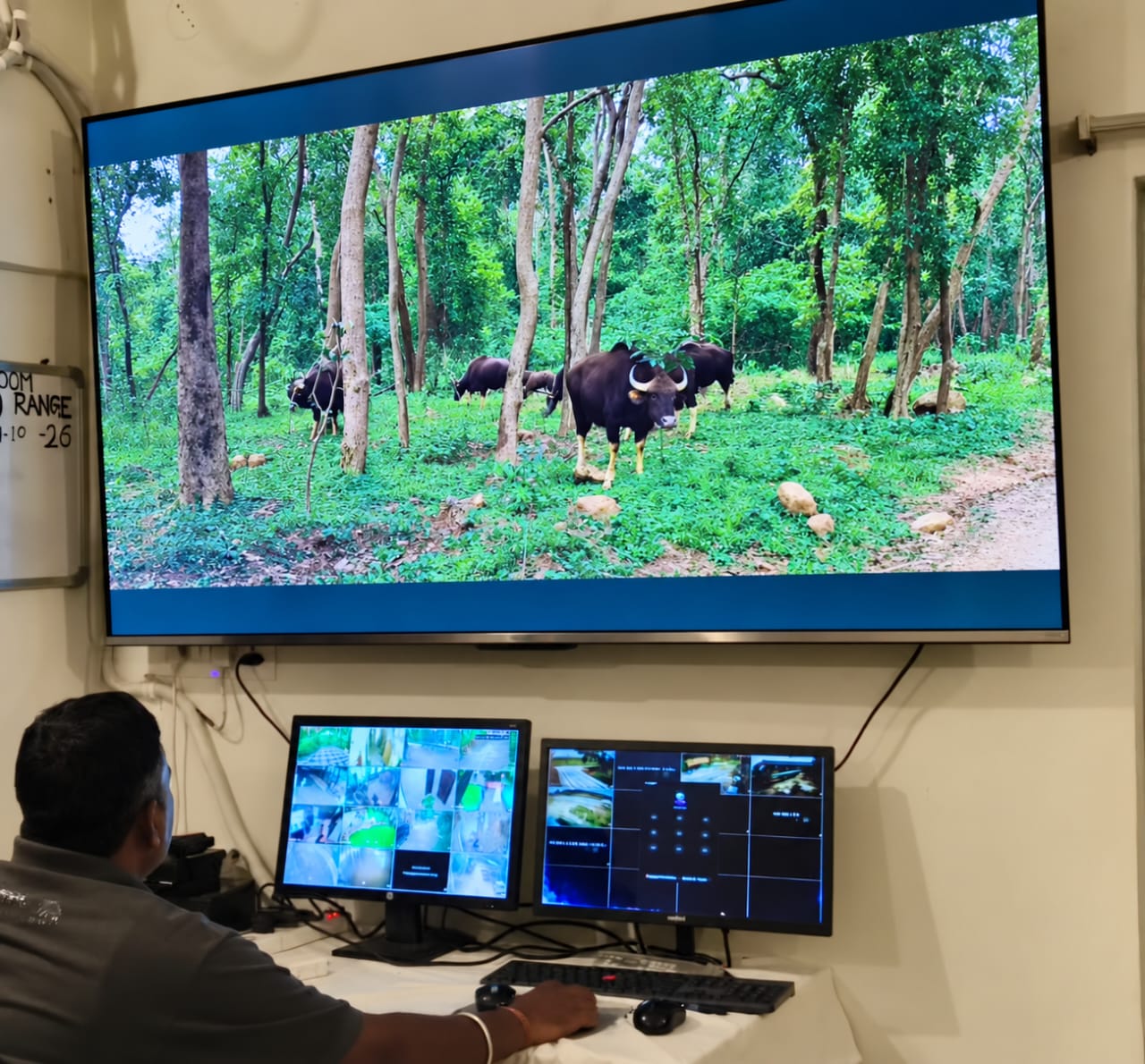
Bhubaneswar: Debrigarh Wildlife Sanctuary in Odisha has strengthened its wildlife protection system with the installation of 18 AI-enabled camera traps linked to an advanced surveillance tower, enabling forest personnel to monitor wildlife movements and potential threats in real time from a central control room.
The camera traps have been installed across remote forest interiors since October 2026, following the stabilisation of the wireless mesh network within the sanctuary. Initially, five camera traps were integrated with the AI surveillance tower in December 2025. The expanded network of 18 cameras now transmits images and videos directly to the control room, improving access to wildlife information without requiring frequent visits to camera locations.
The AI-integrated surveillance system combines an e-Eye® tower at Chourasimal with smart camera traps distributed across the sanctuary. Operational since December 2025, the tower covers approximately 70 sq km, with a monitoring radius of 5–6 km. Equipped with optical and thermal cameras, it supports day-and-night surveillance of wildlife, human movement and possible intrusions.
The AI-enabled camera traps can automatically identify wildlife species, including gaur, leopard, sambar, spotted deer, sloth bear and nilgai. The system filters irrelevant images, helping forest personnel access useful wildlife records and track animal movements more efficiently.
Information from the surveillance tower and camera traps is transmitted to the central control room at Zero Point, where forest staff monitor wildlife activity and coordinate protection measures.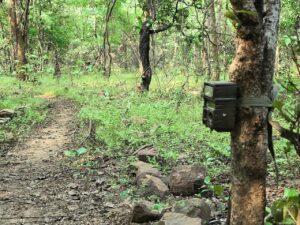
The technology is expected to support habitat monitoring, identify frequently used animal trails and detect suspicious human activity and potential poaching threats. Thermal imaging also strengthens surveillance at night, while the system can support early detection of forest fires and quicker field responses.
The integration of technology builds on Debrigarh’s existing ground-level protection efforts. The sanctuary has maintained nearly 90,000 km of foot patrolling annually for three consecutive years, providing intensive monitoring of its forest areas.
With real-time images and videos now available from remote locations, forest personnel can combine ground patrols with technology-based surveillance to improve movement tracking, species identification and threat detection. The information can also support more informed decisions on wildlife protection and habitat management.
The AI-integrated system is intended to complement conventional forest protection measures and strengthen the work of frontline staff. By combining sustained patrolling, automated species identification and centralised monitoring, Debrigarh is expanding its use of technology for wildlife conservation and forest management.