Bhubaneswar: Odisha has set an ambitious target of becoming a $500 billion economy by 2036 and a $1.5 trillion economy by 2047, with a focus on industrial expansion, skill development, emerging sectors and inclusive growth, Chief Secretary Anu Garg said on Friday.
Addressing a discussion on “Viksit Odisha: Progress, Prospects and the Road to 2047”, organised by Pahlé India Foundation (PIF) at Vivanta Bhubaneswar, DN Square, Garg outlined the state’s development vision and the strategy to align Odisha’s economic transformation with the national goal of Viksit Bharat 2047.
She highlighted the state’s EDGE framework—Economic Strength, Demography, Geography and Ecosystem—as a key pillar for achieving these targets. The framework focuses on leveraging Odisha’s natural resources, developing a skilled workforce, capitalising on its geographical advantages and creating a favourable environment for investment and enterprise.
Under economic strength, Garg stressed the need to sustain high growth by utilising the state’s mineral resources, maintaining fiscal prudence, strengthening revenue generation, securing water resources and attracting greater capital investment. She also highlighted the role of educational institutions and the World Skill Center in preparing young people for emerging industries and future employment opportunities.
Odisha’s geographical advantages, including its mineral reserves and extensive coastline, offer opportunities in sectors such as green metals, deep-sea fishing and the broader blue economy. The Chief Secretary also identified information technology, semiconductors, data centres, education, healthcare, tourism and agriculture as important drivers of future economic growth.
Emphasising that development must extend beyond economic indicators, Garg identified prosperity, wellness and equity as three essential pillars of the state’s vision. These, she said, would be central to improving quality of life, strengthening social well-being and ensuring that the benefits of economic growth reach a wider section of the population.
Focus on high-value industries and exports
Delivering the keynote address, Pahlé India Foundation Chairman and former NITI Aayog Vice Chairman Rajiv Kumar called for structural changes in Odisha’s economy to sustain growth and expand its participation in global value chains.
He noted that Odisha accounts for 44% of India’s mineral value but said the state needs to move beyond conventional mineral extraction towards higher-value industrial activities. Pairing mineral resources with port infrastructure and developing green steel, green aluminium, green hydrogen and rare-earth magnets would help increase value addition and strengthen exports, he said.
Kumar highlighted the need to raise Odisha’s merchandise exports from around $11 billion to $100 billion by 2036. He also pointed to the uneven distribution of export activity across districts, noting that eight districts account for 83% of merchandise exports, while the bottom 15 contribute barely 2%.
To address this imbalance, he proposed a district-level strategy built around four elements: identifying a product under the One District One Product initiative, securing a global anchor buyer, establishing a shared processing facility and providing road or rail connectivity to a port. Such an approach, he said, could help less-developed districts connect with global markets and expand their industrial base.
Kumar also underlined the importance of developing skills among Odisha’s youth to meet the requirements of new industries. With the state’s demographic advantage expected to remain available until 2036, he said, workforce preparation would be crucial to attracting investment and sustaining industrial growth.
He further observed that Odisha’s economy had grown tenfold over two decades. Sustained nominal growth of 10% annually, he said, could put the state on course to achieve developed-economy status by 2047, with a projected per capita income of around $18,000. Achieving this would require high-value mining, green metals, global anchor firms and greater participation of lagging districts in export-oriented industries.
Report examines Odisha’s alcobev sector
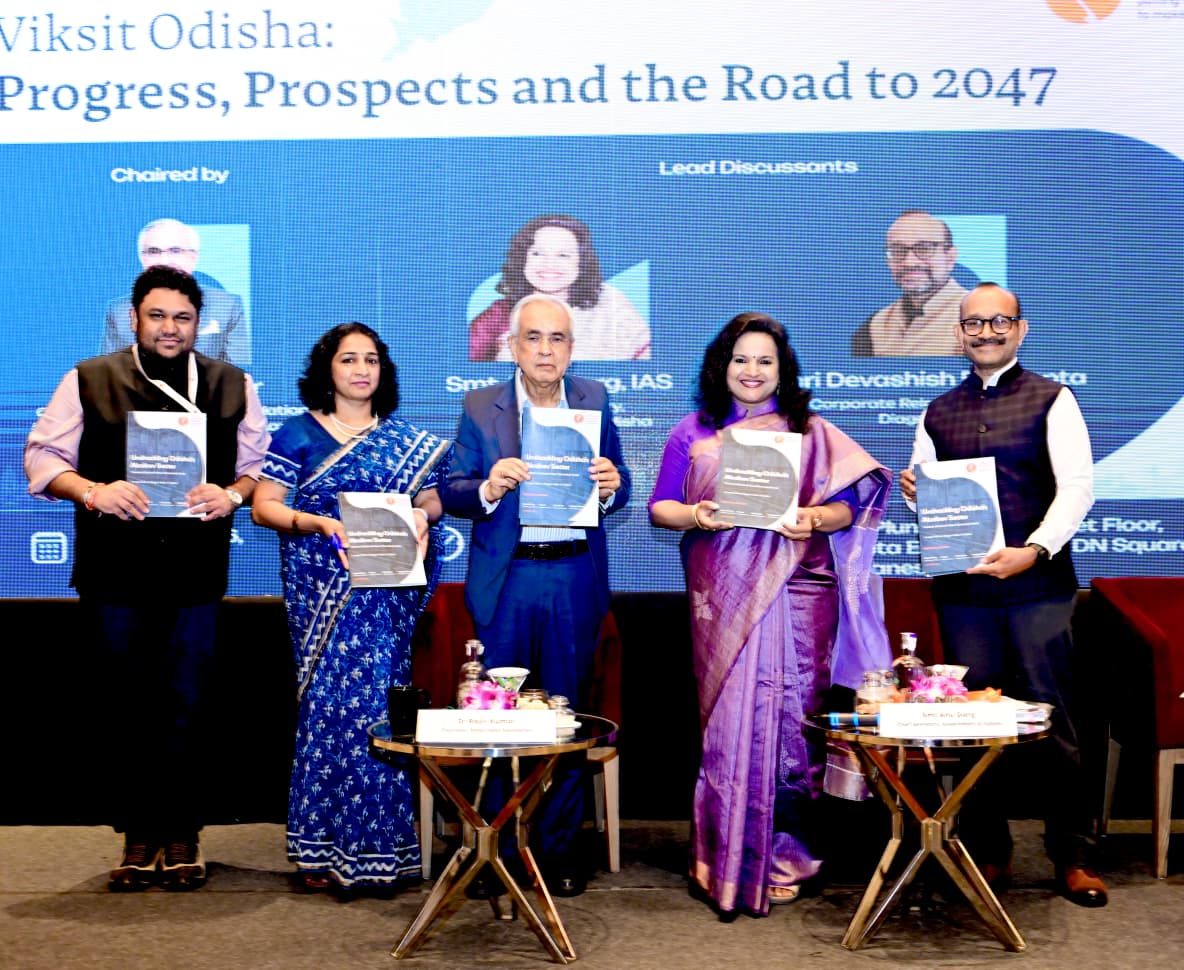
The event also saw the launch of Pahlé India Foundation’s report, supported by Diageo India, titled “Unshackling Odisha’s Alcobev Sector: Towards a Business-Driven Partnership Model.”
The report examines the economic contribution of Odisha’s alcoholic beverages sector, including revenue generation, employment, local procurement and environmental performance. It identifies opportunities to strengthen local manufacturing and supplier networks while improving the ease of doing business.
The study emphasises the importance of predictable regulations and closer coordination between the government and industry to translate industrial activity into wider economic benefits. Strengthening local supply chains and creating a more conducive investment environment, it suggests, could support employment generation and sustainable economic growth.
The discussion brought together government officials, industry representatives and members of academia to deliberate on Odisha’s economic prospects, investment opportunities and development priorities as the state works towards its 2036 and 2047 goals.