
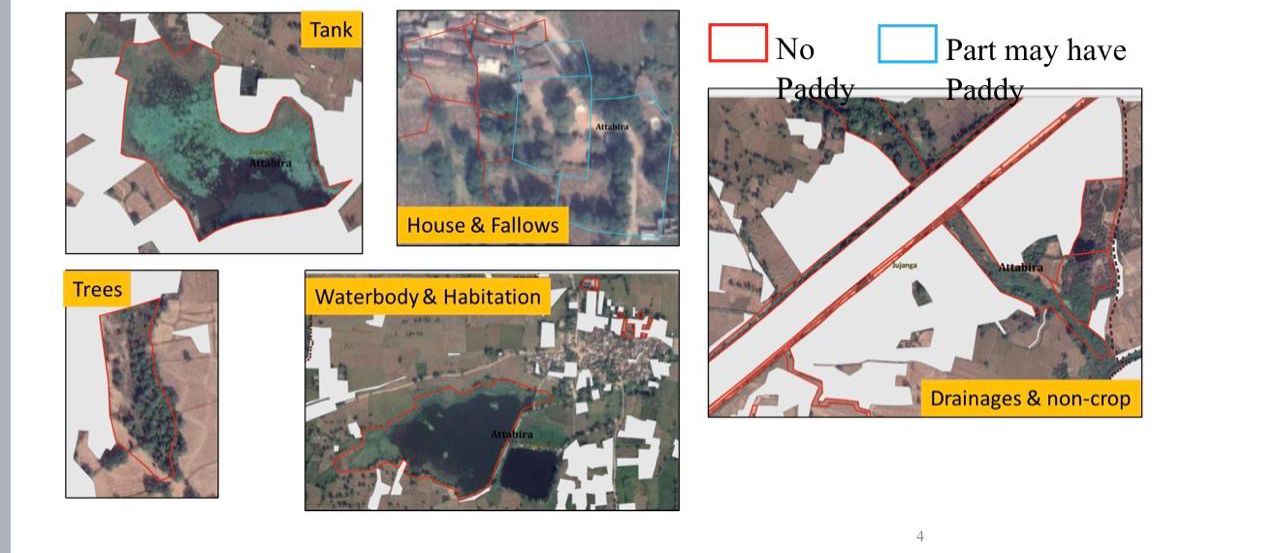
Bhubaneswar: To ensure transparency and protect the interests of genuine farmers during the ongoing Kharif season, the State Government has intensified satellite-based verification of paddy cultivation across Odisha. Suspected non-cultivated paddy plots identified through satellite imagery are being systematically verified on the ground to accurately distinguish between genuine paddy cultivation and non-cultivated land registered under the Kharif Marketing Season (KMS) 2025–26.
As part of the process, a total of 26,14,137 plots across 30 districts were identified for field survey. Verification has already been completed for 24,94,437 plots, covering all 30 districts of the state. Each plot flagged as “suspected” through satellite imagery is undergoing mandatory field-level verification by district officials.
Based on the verification carried out so far, 5,46,591 plots have been confirmed as paddy-cultivated land, while around 19 lakh plots have been identified as non-paddy cultivated land. Following these findings, District Registrar of Cooperative Societies (DRCS) in all districts have been directed to issue show-cause notices to farmers who have erroneously registered non-cultivated land as paddy fields for KMS 2025–26.
The satellite verification system follows a three-step mechanism. In the first stage, suspected plots are identified using satellite imagery. This is followed by physical field verification conducted by district-level officials. In the final stage, the verified data is reviewed and approved by the DRCS at the district level.
Tokens for paddy procurement are generated only after final approval for plots where paddy cultivation is confirmed. For plots that remain classified as suspected or are identified as non-paddy land, no procurement tokens are issued.
Officials said the satellite-based verification process has been introduced to bring greater accuracy, fairness and accountability in paddy procurement. The initiative aims to prevent ineligible registrations and misuse of public resources, while ensuring that procurement benefits reach only genuine paddy farmers across the state.