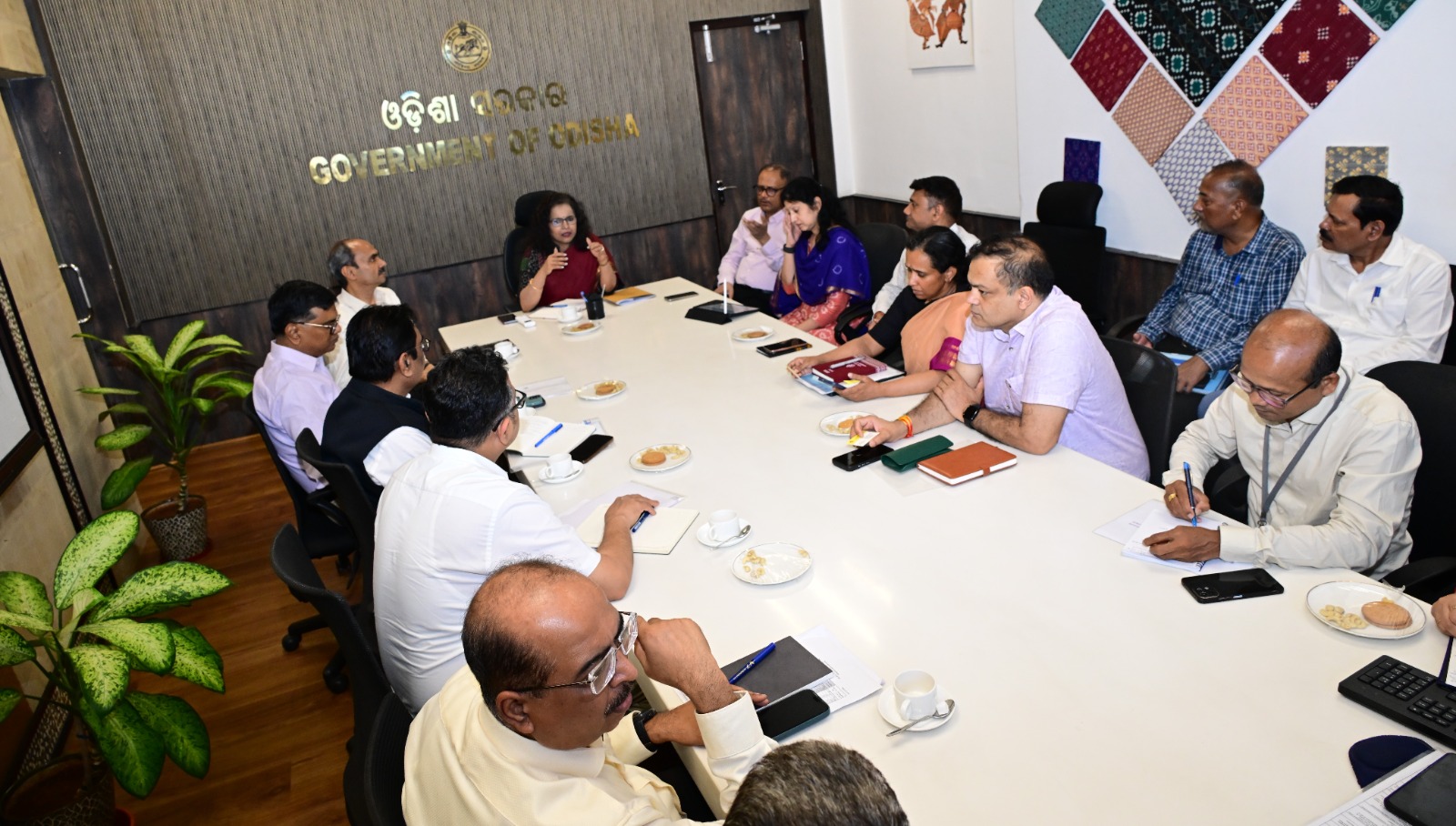

Bhubaneswar: In a high-level meeting held in Bhubaneswar, Secretary of the Ministry of New and Renewable Energy (MNRE), Santosh Kumar Sarangi, met with Odisha Chief Secretary Manoj Ahuja and senior state officials to deliberate on the National Green Hydrogen Mission (NGHM) and the PM Surya Ghar: Muft Bijli Yojana (PMSG: MBY)—two flagship initiatives of the Government of India aimed at accelerating India’s energy transition.
During the discussion, Odisha’s Chief Secretary emphasized the state’s strategic advantage in becoming a national and global leader in the production and export of Green Hydrogen derivatives such as Green Ammonia and Green Methanol. He highlighted Odisha’s coastal infrastructure, strong industrial base, and proactive policy ecosystem as key enablers, while also acknowledging challenges such as water availability and integration of large-scale renewable energy projects.
MNRE Secretary Santosh Kumar Sarangi reaffirmed Odisha’s critical role in India’s green hydrogen ambitions. He noted that the state has already attracted considerable interest from domestic investors, particularly for setting up production facilities near Paradip and Gopalpur ports. The meeting also brought together officials from central ministries, state departments, and key green hydrogen developers to discuss infrastructure requirements and roadblocks—especially in connection to the proposed Green Hydrogen and Ammonia projects at the Gopalpur Special Economic Zone (SEZ).
The Government of Odisha reiterated its full commitment to building a collaborative ecosystem to support timely and large-scale investments in green hydrogen, aiming to position itself as a preferred destination for clean energy production and exports.
In the second part of the meeting, the implementation of PM Surya Ghar: Muft Bijli Yojana (PMSG: MBY) in Odisha was reviewed. The initiative aims to increase the adoption of rooftop solar across the country. The Ministry and the Chief Secretary jointly assessed the progress in Odisha and urged district-level officials to ramp up installations swiftly.
To expedite implementation, district collectors were directed to conduct regular meetings with stakeholders, including bankers and vendors, ensuring timely loan disbursements and system installations. The Chief Secretary also advised the adoption of the Utility-Led Aggregation (ULA) model, especially to support low-income households opting for solar systems under 1 kW capacity.
The Ministry also shared successful strategies from other states under the PM-KUSUM scheme, particularly in the area of agricultural solarization. In response, the Chief Secretary directed the State Nodal Agency to implement Feeder Level Solarization across Odisha, with the goal of extending clean energy benefits to the farming community.