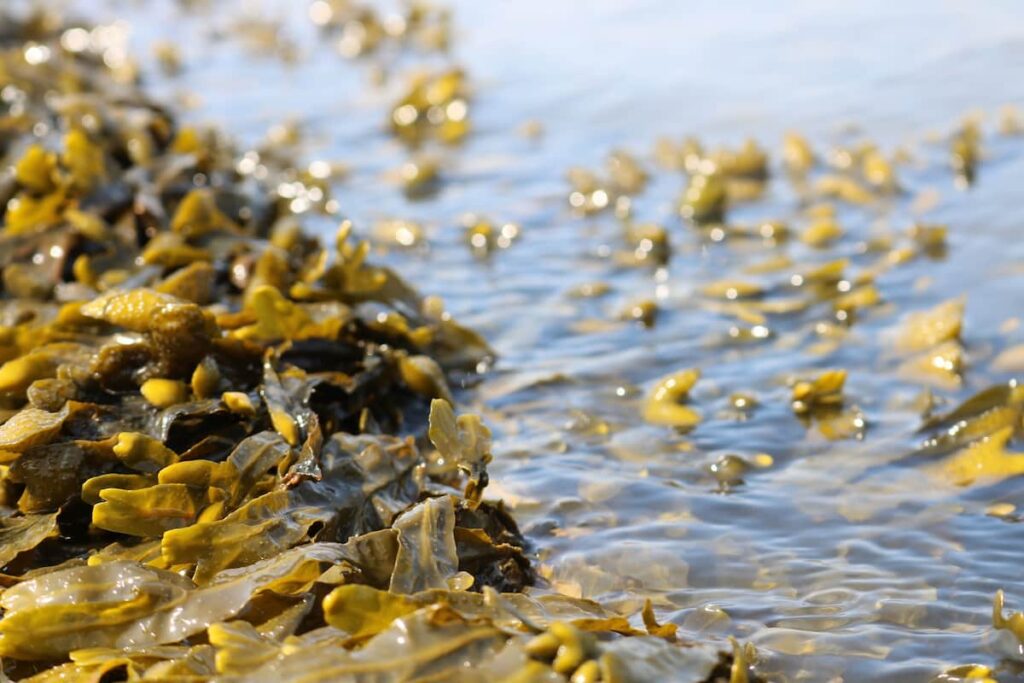
New Delhi: In a landmark step toward bolstering India’s seaweed sector, the Ministry of Fisheries, Animal Husbandry, and Dairying has announced new guidelines for the import of live seaweed. The initiative aims to address seed quality and availability issues, providing a foundation for expanding seaweed enterprises in coastal communities and promoting economic stability for fisher families, all while prioritizing biosecurity and environmental protection.
The guidelines will enable the import of high-quality seaweed seed materials, or germplasm, from international sources, allowing for domestic multiplication and the distribution of reliable seed stock to Indian farmers. This change is seen as a critical measure, particularly given the shortage of quality seeds for commercially valuable species, such as Kappaphycus, a widely farmed seaweed that suffers from quality degradation over time.
Under the Pradhan Mantri Matsya Sampada Yojana (PMMSY), a flagship scheme of the Government of India, seaweed farming has been designated a transformative sector, with a national production goal of over 1.12 million tonnes by 2025. Among several initiatives, the establishment of a Multipurpose Seaweed Park in Tamil Nadu, with an investment of Rs 127.7 crore, stands out as a key investment in supporting the sector’s growth.
The new guidelines set out a detailed regulatory framework for importing live seaweed. They include stringent quarantine protocols to prevent pest and disease risks, as well as an assessment process for biosecurity risks. Post-import monitoring will also be conducted, adding an extra layer of accountability and safety.
The guidelines are expected to promote sustainable cultivation practices while driving economic growth in coastal areas. Importing diverse seaweed strains will enable research and development in India, fostering a broader array of red, brown, and green algae cultivation, which in turn could support downstream processing and value-added enterprises. These developments are anticipated to create new job opportunities in coastal villages and contribute to India’s seaweed export sector.
To import live seaweed, applicants can submit a detailed application to the Department of Fisheries, which will be reviewed by the National Committee on Introduction of Exotic Aquatic Species into Indian Waters. Upon approval, an import permit will be issued within four weeks, facilitating the entry of high-quality germplasm into the country.
Bhubaneswar: Travel time between Rayagada and Kereda in southern Odisha is expected to nearly halve…
Bhubaneswar: In a major push to expand irrigation in water-deficit parts of Odisha, the state…
Bhubaneswar: Odisha is set to invest Rs 650 crore over the next five years to…
Bhubaneswar: Odisha is set to strengthen its agriculture administration with more officers at the senior,…
Bhubaneswar: The Odisha government has decided to digitise and integrate old records of Bhoodan land…
Bhubaneswar: The Odisha government is set to undertake another round of regulatory reforms aimed at…