Bhubaneswar: With Ama Bus services expanding across Odisha’s urban centres, the Housing & Urban Development Department has stepped up efforts to improve passenger safety, service reliability and operational efficiency, with a focus on technology-driven monitoring and stronger last-mile connectivity.
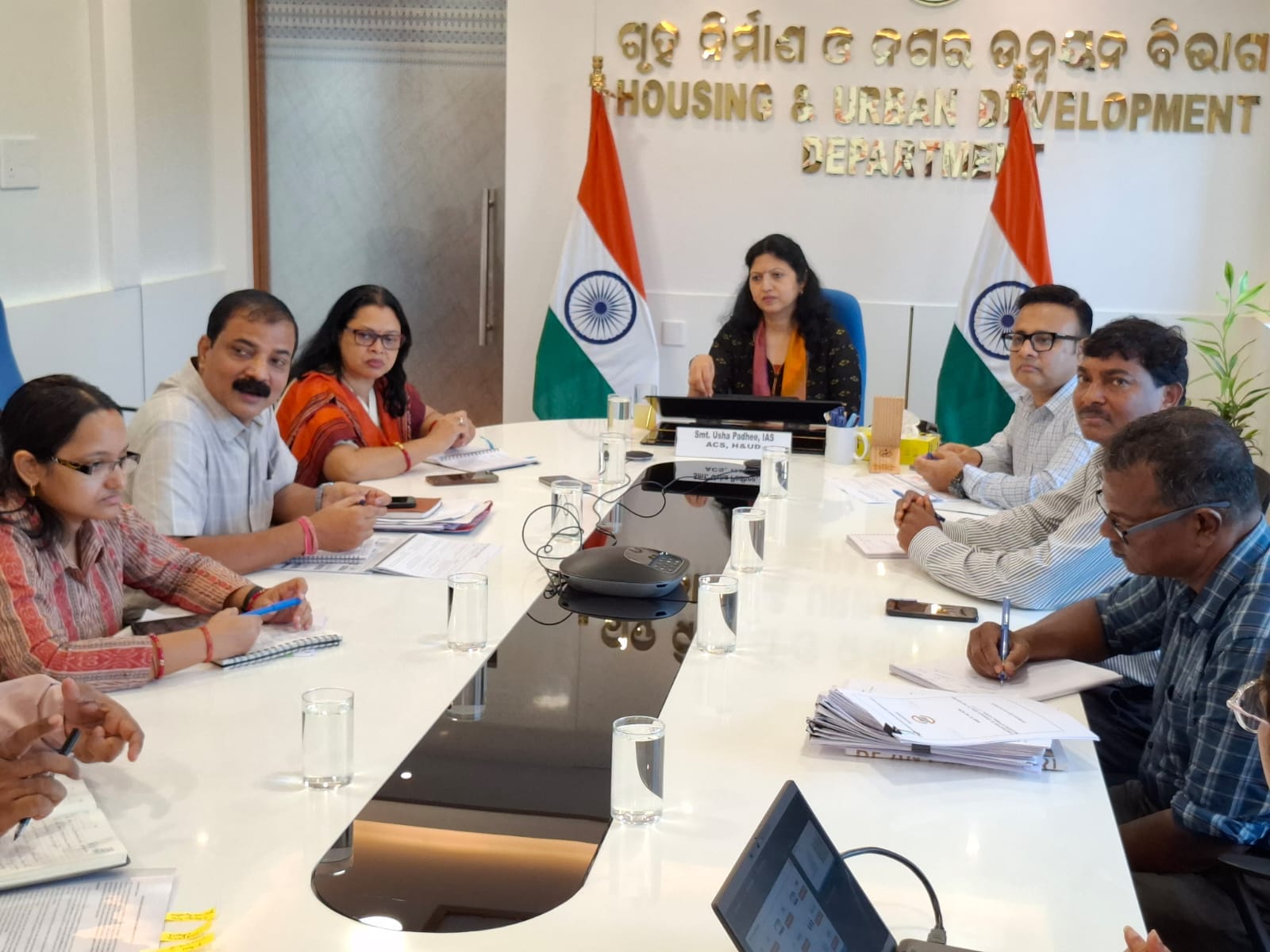
Additional Chief Secretary, Housing & Urban Development Department, Usha Padhee, reviewed the functioning of Capital Region Urban Transport (CRUT) at Kharavela Bhawan in Bhubaneswar and directed officials to take concerted and time-bound measures to further improve the quality and reliability of Ama Bus services.
During the review, Padhee assessed CRUT’s fleet and route operations, road safety, passenger services, crew management, digital systems, financial sustainability, infrastructure and future expansion plans. She directed officials to closely monitor service delivery and take prompt corrective measures wherever gaps are identified.
CRUT currently operates 770 buses across seven cities, including 390 electric buses, covering 138 routes and carrying around 3.5 lakh passengers every day.
The organisation has been increasingly relying on technology to monitor and manage operations. Its systems include the Intelligent Transport Management System (ITMS), GPS-based vehicle tracking, Command and Control Centre monitoring, CCTV surveillance, passenger information systems and operational dashboards.
Road safety emerged as a key focus during the review. CRUT has recorded a 52 per cent reduction in accidents compared with the corresponding period of the previous year.
To improve driver performance and safety, CRUT has introduced enhanced training, mandatory alcohol testing, speed monitoring, regular safety programmes and KPI-based assessment of crew members. The five-day SuVahak training programme has also been strengthened with dedicated modules on electric-bus operations.
The organisation is also working towards introducing Advanced Driver Assistance Systems (ADAS) and Driver Fatigue Monitoring Systems (DFMS) in its existing fleet.
Padhee emphasised that technology and infrastructure should ultimately translate into a better experience for commuters. The meeting therefore reviewed digital ticketing, live bus tracking, estimated time of arrival (ETA) information and passenger feedback systems.
CRUT is also strengthening last-mile connectivity through Sarathi services and electric feeder buses. The feeder-bus pilot is currently recording an average daily ridership of around 4,000 passengers.
The organisation is promoting digital and integrated ticketing solutions, including the National Common Mobility Card (NCMC), to make public transport more convenient and enable seamless travel across different modes and services.
Workforce development and employee welfare were also reviewed. CRUT has expanded refresher training and specialised electric-bus training, besides undertaking psychometric evaluations and health interventions. Crew performance has been linked to defined key performance indicators, while all crew members have been certified through SuVahak training.
As many as 118 crew members have received performance-linked recognition, according to the review.
The meeting also examined CRUT’s financial sustainability. Despite affordable fares and its public service obligations, the organisation’s cost recovery has improved to around 65 per cent.
Future measures include organisational restructuring, automated vendor and billing management, asset monetisation, AI-enabled scheduling and phased expansion of services.
CRUT plans to expand its public transport network to additional cities by increasing fleet strength and route coverage. The strategy aims to address growing urban mobility needs and improve access to dependable public transport.
To strengthen last-mile connectivity further, CRUT is exploring Public-Private Partnership (PPP) models and other collaborative approaches for feeder and allied mobility services. Such partnerships are expected to help expand service coverage and improve operational efficiency and commuter convenience.
Padhee directed CRUT to institutionalise continuous monitoring of routes, schedules, fleet utilisation, safety indicators, passenger grievances and crew performance.
She stressed that accountability at every level, timely resolution of operational issues and regular assessment of passenger feedback would be essential to maintaining public confidence in Ama Bus services.
The ACS further directed officials to ensure effective follow-up of decisions taken during the review and implement corrective measures within defined timelines, with the objective of developing CRUT into a safe, efficient, technology-enabled and citizen-centric urban public transport system.
CRUT Managing Director Md. Sadique Alam, Additional Secretary-cum-General Manager Sahadev Samadhia, Joint Secretary of the Housing & Urban Development Department Mamatarani Naik, Financial Advisor CRUT, OSD CRUT, Manager (Operations) and other senior officials attended the meeting.