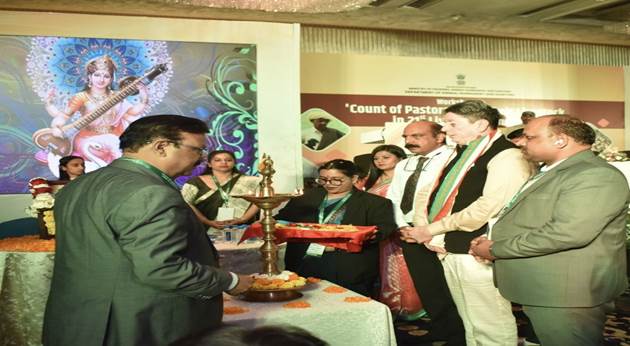
Indore: The Department of Animal Husbandry and Dairying, under the Ministry of Fisheries, Animal Husbandry, and Dairying, organized a crucial workshop in Indore, Madhya Pradesh, focused on the ‘Count of Pastoralists and their Livestock in 21st Livestock Census.’ The workshop aimed to garner a comprehensive understanding of pastoralism practices, the habitats of pastoralists, routes in various regions, and to establish a consensus on critical issues such as the inclusive definition of pastoralists and the methodology for data collection.
Participating states, including Gujarat, Rajasthan, Himachal Pradesh, and Jammu & Kashmir, along with non-governmental organizations (NGOs) like Sahjeevan: Center of Pastoralism and Desert Resource Center, and various government organizations dealing with pastoralism, such as the Development and Welfare Board for Nomadic and Semi-Nomadic Tribes, National Rainfed Area Authority (NRAA), and the Tribal Research Institute of the Government of Madhya Pradesh, actively engaged in discussions during the workshop.
The Department of Animal Husbandry and Dairying has been conducting the livestock census nationwide every five years since 1919, serving as a crucial source of data for effective planning and the formulation of Livestock Welfare Programmes. The 21st Livestock Census, scheduled for 2024, is set to include information on pastoralists and their livestock, responding to the growing demand for comprehensive insights into this community.
The workshop facilitated dialogues to determine an inclusive definition of pastoralists, finalize the data to be collected, and agree upon the methodology for data collection. The insights gained from this collaborative effort are expected to enhance the accuracy and relevance of the upcoming livestock census.
The livestock census encompasses a broad spectrum of domestic animals, providing headcounts, and details on various species such as cattle, buffalo, mithun, yak, sheep, goat, pig, horse, pony, mule, donkey, camel, dog, rabbit, and even elephants. Poultry birds, including fowl, ducks, and other poultry species, are also accounted for. The census is conducted at both household and non-household enterprises, with a breed-wise breakdown and information on age and sex.
By delving into the nuances of pastoralism, the workshop aims to contribute valuable insights that will aid in the development of targeted Livestock Welfare Programmes, ensuring the holistic progress of this crucial sector.
Bhubaneswar: East Coast Railway (ECoR) has announced the cancellation of 14 express and passenger train…
Bhubaneswar: Cyclonic Storm Arnab is likely to cross the Andhra Pradesh coast near Yanam by…
Bhubaneswar: The Department of Mission Shakti has launched a state-level capacity-building programme to strengthen women-led…
Bhubaneswar: Odisha is planning to modernise its land and property registration system through the National…
Bhubaneswar: Odisha has stepped up its cyclone preparedness, with the India Meteorological Department (IMD) forecasting…
Bhubaneswar: Odisha has received three national honours for its urban transport initiatives at the 19th…