Itanagar: A recent biodiversity survey in the remote forests of Upper Siang district, Arunachal Pradesh, has led to the discovery of six butterfly species previously unrecorded in India. The breakthrough highlights the Eastern Himalayas’ unmatched ecological richness and the vital role of community-led conservation in safeguarding it.
The discovery was made during a collaborative study by researchers from the Ashoka Trust for Research in Ecology and the Environment (ATREE), Bengaluru, and the Litin Community Conservation Society. Their findings, published in the latest issue of Entomon, are based on field observations and photographic evidence collected during 2024.
Leading the expedition was Agur Litin, a local conservationist and co-author of the study, whose efforts in community-based conservation have been instrumental in protecting the Simong Community Forest — the site of the discovery.
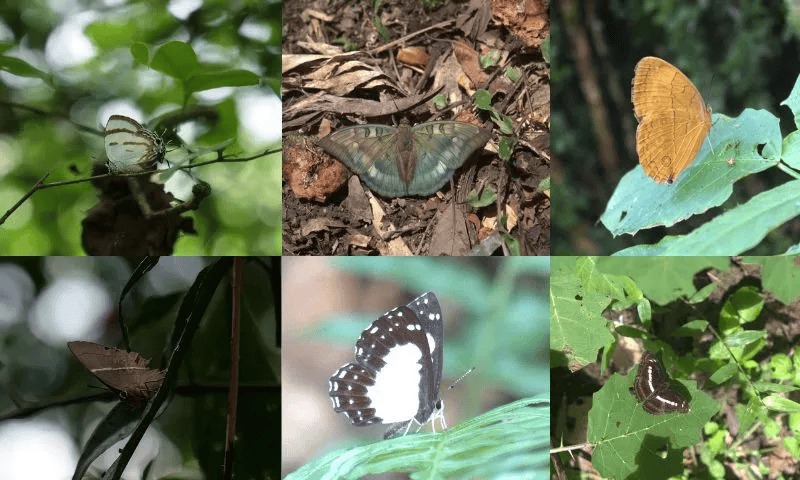
The six newly recorded species are Litin Onyx (Horaga takanamii), Narrow-banded Royal (Dacalana vui), Tibetan Duke (Euthalia zhaxidunzhui), Tibetan Sergeant (Athyma yui), Tibetan Junglequeen (Stichophthalma neumogeni renqingduojiei), and Mountain Columbine (Stiboges elodinia). Until now, these butterflies had only been documented in Laos, Thailand, Vietnam, Myanmar, and southeastern Tibet. Their presence in Arunachal Pradesh extends their known distribution and suggests strong ecological and biogeographic links between the Siang Valley and Tibet’s Metok region.
“The Brahmaputra River appears to play a crucial biogeographic role, enabling faunal continuity between southeastern Tibet and eastern Arunachal Pradesh,” the study observes, drawing attention to the river’s significance as an ecological corridor.
In just seven days of fieldwork, the researchers documented 90 butterfly species — a figure that, they say, demonstrates how little of the region’s Lepidoptera has been explored. “The recording of six previously unknown species during a brief survey highlights the pressing need for more systematic biodiversity research in the Indian Eastern Himalayas,” the team noted.
Beyond its scientific importance, the discovery reaffirms the success of community-managed conservation areas, where indigenous groups, such as the Litin clan, are actively involved in protecting their local environment. Their stewardship, researchers say, is helping to preserve some of India’s last intact forest ecosystems while deepening the nation’s understanding of its natural heritage.