Bengaluru: Scientists at the Jawaharlal Nehru Centre for Advanced Scientific Research (JNCASR) have unveiled a groundbreaking diagnostic platform for precise detection of HIV, promising significant improvements in reliability and reduction of false positives.
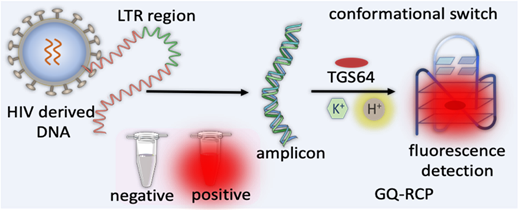
The innovative technology, termed GQ Topology-Targeted Reliable Conformational Polymorphism (GQ-RCP), focuses on detecting a unique DNA structure known as G-Quadruplex (GQ), a four-stranded unusual configuration derived from the HIV genome. This advanced approach addresses the persistent challenge of false positives and limitations of conventional HIV diagnostic methods, offering a promising alternative for early and accurate detection.
HIV-1, the retrovirus responsible for AIDS, continues to pose a global health threat. Existing diagnostic techniques, while effective, often fall short due to their inability to differentiate between specific and nonspecific DNA sequences, leading to potential inaccuracies. The GQ-RCP platform bridges this gap by using a specialized molecular probe to target the distinctive GQ DNA structures present in the HIV genome.
The research team, comprising Sumon Pratihar, Vasudhar Bhat S.V., Krithi K. Bhagavath, and Thimmaiah Govindaraju, demonstrated the efficacy of this novel approach by reverse transcribing and amplifying a 176-nucleotide segment of the HIV genome. Their findings, published in Analytical Chemistry, highlight a crucial pH-mediated, single-step transition of double-stranded DNA into the GQ conformation. This transition serves as the detection target, identified with exceptional precision using a fluorescent probe called TGS64.
Unlike existing assays, which rely on conventional principles, the GQ-RCP platform introduces a novel methodology by leveraging specific nucleic acid–small molecule interactions. This breakthrough significantly enhances diagnostic accuracy by minimizing false positives from nonspecific amplification, a common issue in nucleic acid-based diagnostics.
The versatility of the GQ-RCP platform extends beyond HIV detection. Originally designed for SARS-CoV-2 diagnostics, the platform can be adapted for a range of DNA/RNA-based pathogens, including other viruses and bacteria. Its integration into current diagnostic systems holds potential for revolutionizing pathogen detection with its high reliability and specificity.
This advancement underscores the transformative potential of molecular diagnostics and positions the GQ-RCP platform as a vital tool in the fight against infectious diseases. Researchers envision its widespread application in clinical settings, enabling precise and unambiguous detection of pathogens, and contributing to improved global healthcare outcomes.
Bhubaneswar: Odisha has taken a significant lead in India’s clean energy transition by becoming the…
Bhubaneswar: In a major step towards planned urban expansion, the Bhubaneswar Development Authority on Tuesday…
Bhubaneswar: The “Bamboo Forward Summit — From Ground to Growth” was successfully organised, bringing together…
Bhubaneswar: ParibhaAsha HeritEdge Lab has launched Ekamra Anubhav 2.0, a reimagined edition of its heritage…
Bhubaneswar: Responding to mounting criticism and political consensus, the Odisha government has begun the process…
Bhubaneswar: The inaugural edition of the National Indoor Athletics Championships concluded on a high note…