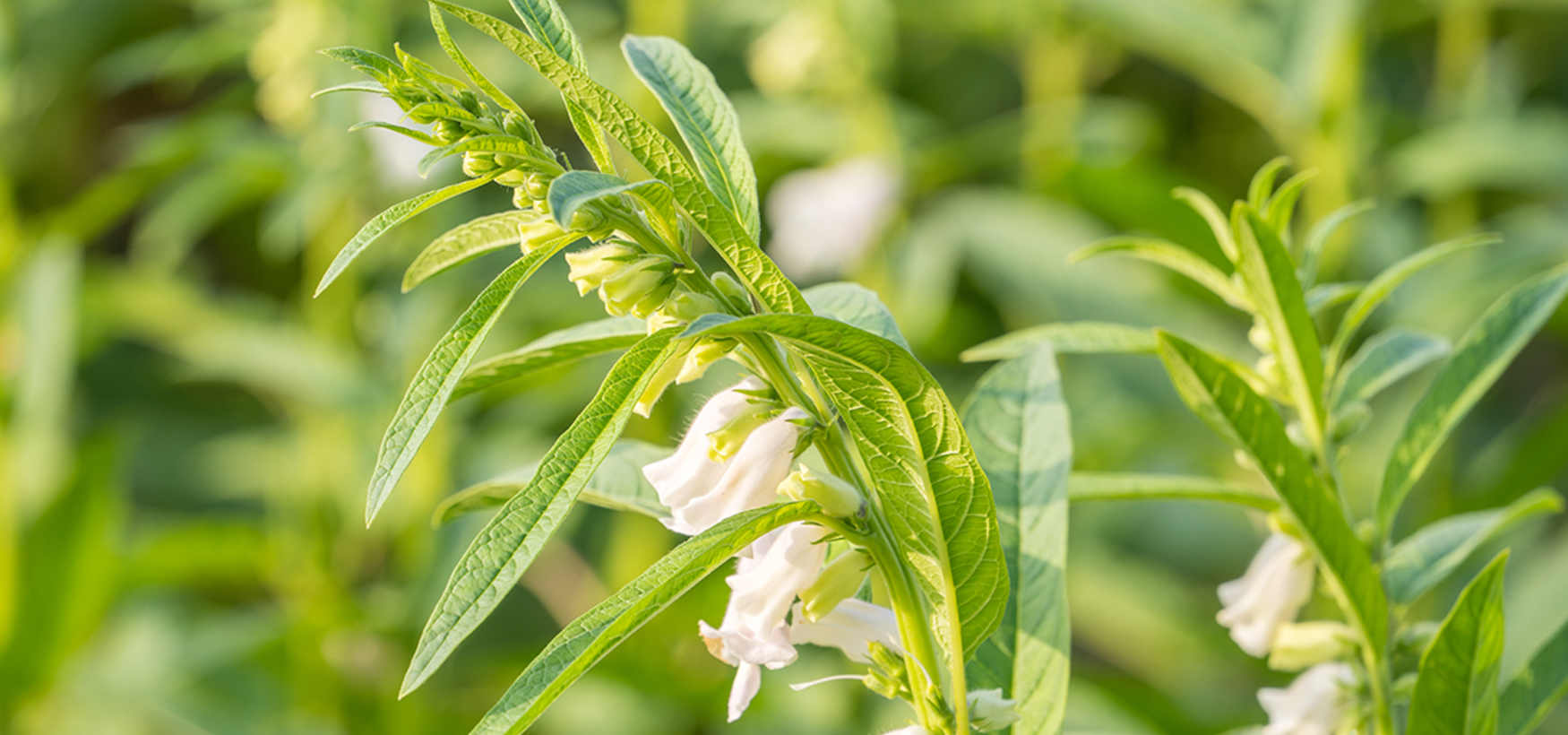
Midnapore: A new microbe has been identified as the culprit behind a mysterious disease plaguing sesame fields in the Midnapore region, posing a significant challenge to farmers cultivating the “Queen of Oil.”
Sesame, one of the oldest oilseed crops, holds historical and medicinal significance. Revered for its heart-healthy antioxidants, the crop’s benefits have remained underutilized in India’s edible oil market. Efforts to improve Indian sesame varieties have been ongoing, with Prof. Gaurab Gangopadhyay of the Bose Institute leading advancements in molecular marker-assisted breeding for the past 14 years.
However, recent years have seen a peculiar phenomenon in sesame fields of East and West Midnapore districts. Plants that had reached the flowering and fruiting stage began reverting to their vegetative stage, with white flowers turning green.
Upon investigation, Prof. Gangopadhyay’s team identified the culprit: Candidatus Phytoplasma, a cell-wall-lacking bacterium belonging to the Mollicutes group. This microbe, residing in the gut of pests like leafhoppers and plant-hoppers, infects plants by feeding on their nutrient-rich phloem.
The disease, transmitted by these phloem-feeding insects, leads to virescence (green pigmentation) and disfigurement of floral parts, rendering them leaf-like. Such infestations have been known to affect various commercial crops, including tobacco, maize, and grapevine.
To address the lack of understanding surrounding Phytoplasma infections, Prof. Gangopadhyay’s study delved into the interconnected metabolic pathways affected by the bacterium, shedding light on the molecular responses of sesame plants. These findings, recently published in the Plant Molecular Biology Reporter (2024), offer a multi-target approach for studying complex biological systems.
The research holds promise for devising strategies to combat this disease, ensuring the protection and improvement of sesame crops. Prof. Gangopadhyay’s work underscores the importance of understanding plant-microbe interactions, paving the way for innovative solutions in agriculture.
This breakthrough marks a significant step toward safeguarding sesame’s legacy and harnessing its full potential for health and commerce.
New Delhi: President Droupadi Murmu on Wednesday attended the award ceremony of the 65th National…
New Delhi: Union Agriculture and Farmers’ Welfare Minister Shivraj Singh Chouhan has called for developing…
Bhubaneswar: Odisha Chief Secretary Anu Garg has called for expanding livelihood opportunities for rural families…
Bhubaneswar: Odisha Chief Secretary Anu Garg has directed all concerned departments and District Collectors to…
Bhubaneswar: Higher secondary schools across Odisha must install CCTV cameras in examination halls and other…
Cuttack: Remembering police personnel who made the ultimate sacrifice in the service of the nation,…