The News Hashtag - 1
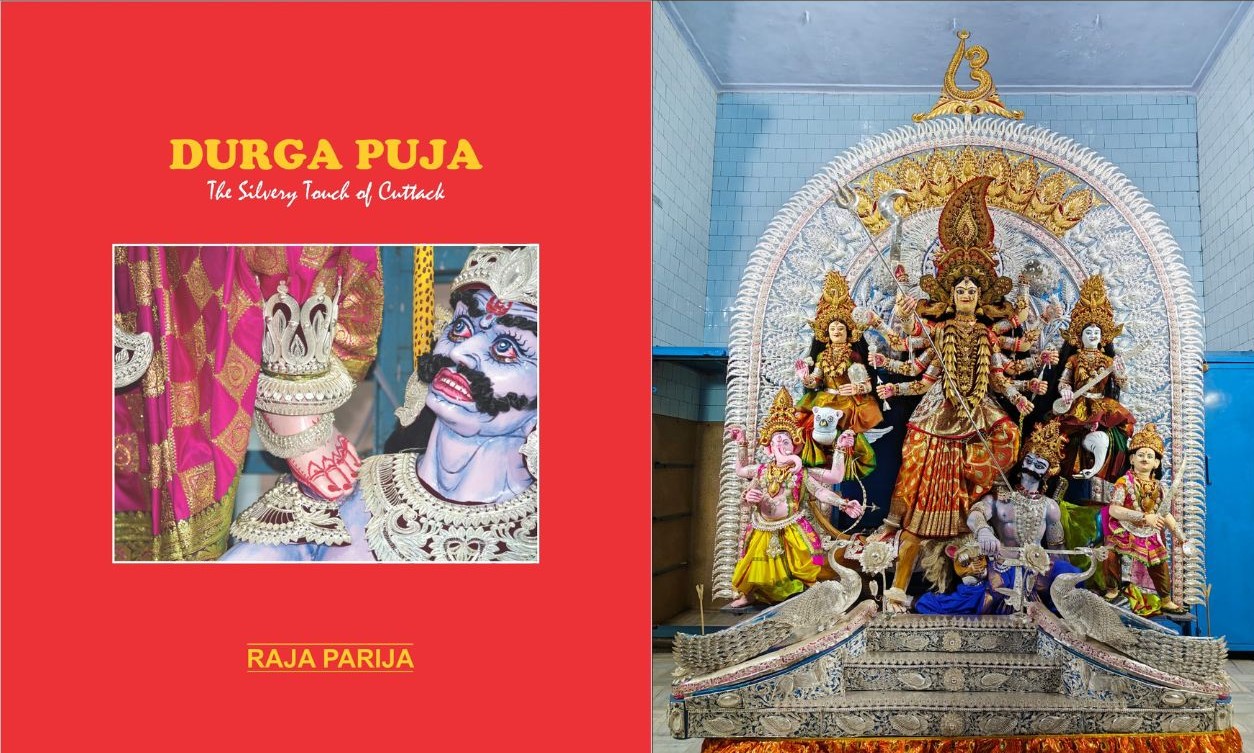
Cuttack: Author, photographer, and administrator Raja Parija has released his latest coffee-table book, “Durga Puja, the Silvery Touch of Cuttack”, a heartfelt tribute to the Millennium City and its centuries-old puja traditions. For Parija, who has spent his life in Cuttack—growing up here, finding his life partner, and chronicling Odisha’s cultural heritage—this book is both a personal and scholarly journey.
Known for his research-based writings, Parija captures how Cuttack’s Durga Puja, unlike its more globally celebrated Kolkata counterpart, is deeply rooted in royal patronage, temple rituals, and Shakta traditions. Historical accounts suggest that Durga Puja in Cuttack dates back to the 13th century at the Barabati Fort, where the deity was worshipped as the royal goddess. Later, traditions flourished along the city’s river ghats, with the earliest documented puja traced to 1514 AD at Binod Bihari–Balubazaar Puja Mandap, witnessed by Sri Chaitanya. In modern times, Netaji Subhas Chandra Bose initiated Durga Puja at his ancestral home in 1916, a legacy that continues under the Durgabari Samiti.
Parija’s fascination with Cuttack’s silver filigree craft led him, during work on a 2016 book, to also begin documenting the city’s Durga Puja heritage. Though Cuttack has evolved since its establishment in 989 AD, he remains enchanted by its old-world charm and actively contributes to the Cuttack Heritage Walks group.
Speaking about the city’s spirit, Parija emphasizes that Cuttack has always been a “city of brotherhood,” where diversity is embraced and secularism thrives. Remarkably, many artisans who craft the grand silver tableaux for the puja, known as “Chandi Medhas”, come from the Muslim community. This unique blend of devotion and diversity, he believes, makes Cuttack’s puja special.
He further points out that Odisha’s historic status as a Shakti Peetha and its Buddhist-Tantric roots make Durga Puja here far older than Kolkata’s 300-year-old tradition. Beyond devotion, the festival is also a major economic event, generating crores of rupees in transactions and creating livelihoods for skilled and unskilled workers alike.
The hallmark of Cuttack’s puja is the spectacular silver filigree work. The Choudhury Bazar Puja Mandap pioneered the first Chandi Medha in 1956, drawing massive crowds, and today, 34 pandals boast these intricate silver backdrops, with more being added each year. These massive structures, often 20–25 feet high and weighing up to 6 quintals of pure silver, showcase the unmatched artistry of Odia craftsmen and attract visitors from across India and abroad.
Parija spent nearly six years compiling this book, researching historical records, visiting Shakti Peethas and Puja Mandaps, interacting with puja committees, and observing filigree workshops. The most challenging task, he admits, was photographing the Chandi Medhas—possible only on Shasti Puja day before floral decorations cover the intricate details.
Parija argues that Cuttack’s Durga Puja deserves recognition at par with Kolkata’s, Mysore’s Dussehra, Mumbai’s Ganapati festival, and Goa’s Christmas celebrations. He strongly advocates for its inclusion in the UNESCO Intangible Cultural Heritage List, noting its 800-year-old legacy and grandeur.
Bhubaneswar: Property registration in Odisha is set for a major overhaul, with the State Government…
Hyderabad/Bhubaneswar: Odisha clinched the 11th Junior National Rugby 7s Championship (Girls) title after defeating Maharashtra…
Bhubaneswar: The Odisha Government has commenced the selection process for the Mukhyamantri Research Fellowship 2026-27,…
Bhubaneswar: Flood management, inter-state river disputes, infrastructure projects and digital governance dominated discussions at the…
Bhubaneswar: Odisha received a major boost to its railway network on Saturday with the launch…
Bhubaneswar: With continuous rainfall pushing up the water level of the Baitarani River, the Odisha…
