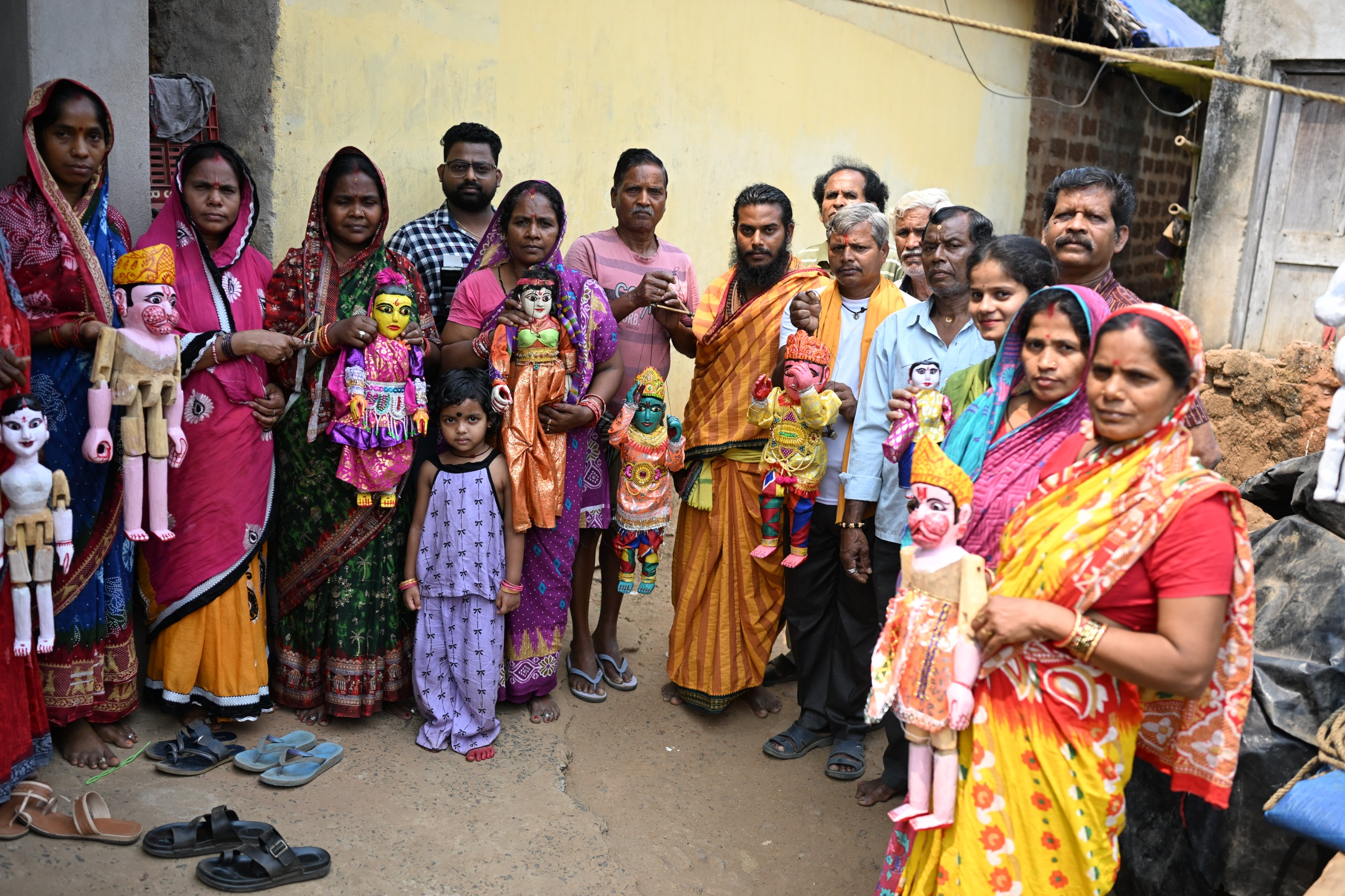
Dhenkanal: The fading yet resilient tradition of Kandhei Nacha came into focus during the 35th edition of Dhenkanal Heritage Walks, where participants visited the village of Raidihi—considered one of the last strongholds of the traditional string puppet art in the state.
Around 30 participants, led by DHW convener Suresh Prasad Mishra, explored the village on Sunday and interacted with local puppeteers who continue to keep the art alive despite limited recognition and financial challenges. The visit highlighted both the cultural richness of the tradition and the urgent need for measures to preserve it.
The puppetry tradition in Raidihi dates back to 1952, when two villagers, Shatrughana Jena and Banshidhar Dhala, were inspired by puppet performances they witnessed in Ganjam district. Determined to introduce the art in their own village, they adapted the craft and gradually turned Raidihi into a hub of puppet theatre.
Over the years, the art form became closely tied to the village’s social and cultural life. In a unique tradition, fathers would gift a Kandhei Nacha puppet set to their daughters at the time of marriage, enabling them and their families to sustain themselves through performances.
India is known for four main styles of puppetry—string, rod, shadow and glove—and Odisha remains the only state where all four traditions survive. Among these, the Suta Kandhei, or string puppet form, has found its strongest presence in Raidihi.
At present, the village has 17 active puppet troupes, with each group comprising around eight to ten artists who perform traditional puppet plays accompanied by music and narration. Many of these troupes still travel across the state to stage performances.
Despite its cultural significance, the art form faces growing challenges. Puppeteers say declining patronage and the rise of digital entertainment have reduced opportunities for performances, making it increasingly difficult to sustain a livelihood through the craft. Younger members of the community are also hesitant to continue the tradition as they look for more stable career options.
In view of the village’s unique cultural contribution, organisers of the heritage walk and local residents have urged authorities to recognise Raidihi as a “Heritage Puppet Village.” They believe such recognition could help attract tourism, institutional support and government grants for the preservation of the art.
Participants at the heritage walk observed that Raidihi stands as a living archive of Odisha’s folk traditions, and safeguarding the village’s puppetry heritage is essential to ensure that the vibrant legacy of Kandhei Nacha continues for future generations.