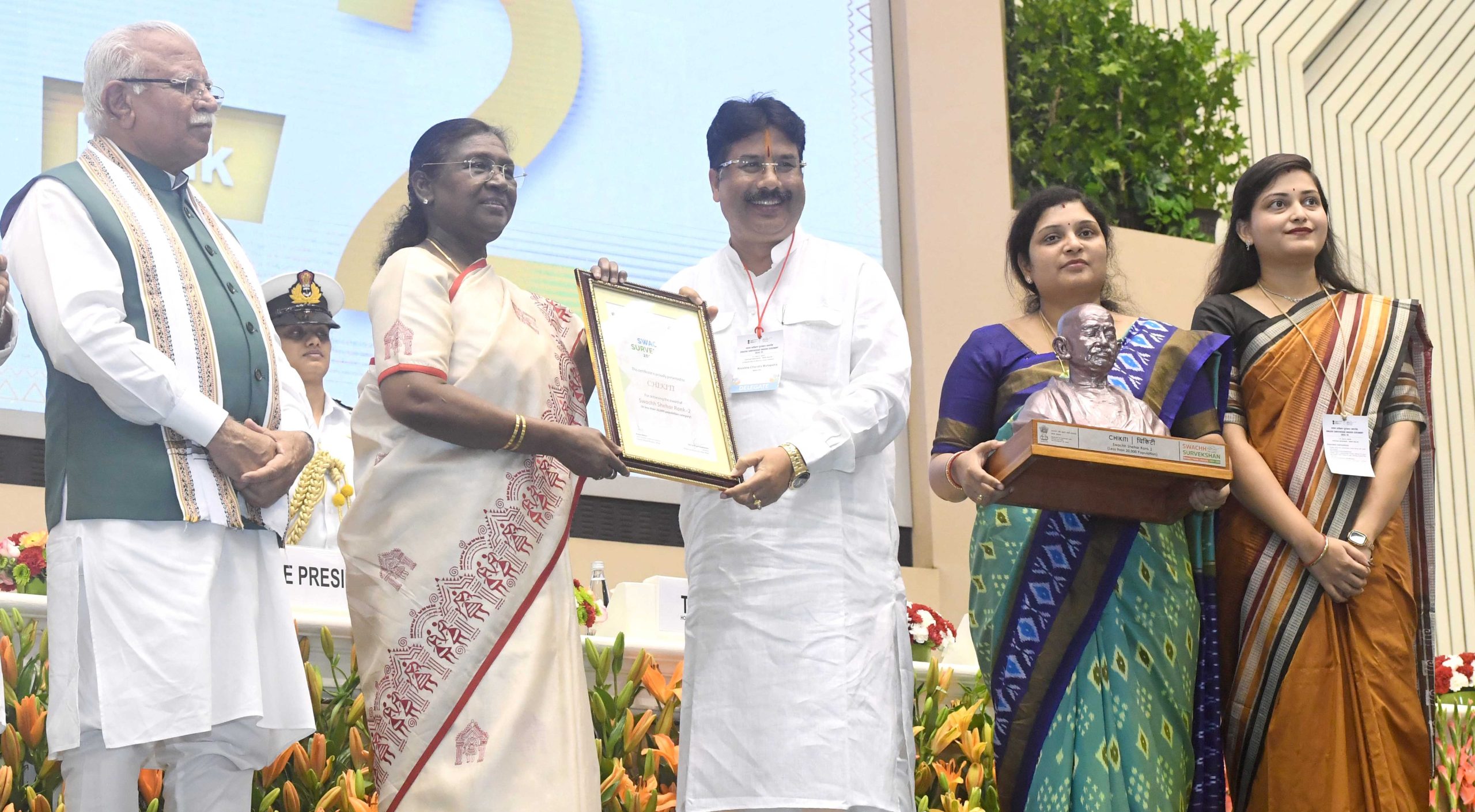
New Delhi: President of India,Droupadi Murmu, today presented the Swachh Survekshan Awards at a grand ceremony organized by the Ministry of Housing and Urban Affairs in New Delhi, recognizing outstanding contributions to cleanliness and sanitation by cities and citizens across the country.
Addressing the gathering, the President described Swachh Survekshan as a remarkable initiative that has successfully motivated urban India to work towards a cleaner and healthier environment. She praised the Ministry for conducting the world’s largest cleanliness survey for the year 2024, which saw enthusiastic participation from 14 crore citizens, state governments, urban local bodies, and multiple stakeholders.
Reflecting on India’s long-standing tradition of cleanliness, the President said that cultural and spiritual practices have always emphasized hygiene and sanitation. Quoting Mahatma Gandhi, she said, “Cleanliness is next to godliness”, and stressed that Gandhi regarded cleanliness as a foundation of religion, spirituality, and civic life.
Recounting her own journey, President Murmu shared that her public service began with cleanliness work as Vice President of a Notified Area Council, where she would personally inspect sanitation efforts in wards daily. She underscored the importance of individual responsibility and community participation in maintaining cleanliness.
Highlighting sustainable practices, the President said that the principles of reduce, reuse, and recycle have long existed in India’s traditional way of life, particularly among tribal communities who live in harmony with nature. She called for modern systems of circular economy to draw inspiration from such indigenous lifestyles, which minimize waste and promote environmental balance.
President Murmu emphasized source segregation as the cornerstone of effective waste management and urged all households to take this first step seriously. She also lauded the development of zero-waste colonies and expressed appreciation for the School Level Assessment initiative, which aims to instill cleanliness as a core life value in students.
On the subject of plastic and electronic waste, she acknowledged the significant threat they pose and reaffirmed the importance of regulatory frameworks such as the 2022 ban on certain single-use plastic items and guidelines on Extended Producer Responsibility (EPR). She stressed that compliance with these regulations is crucial and called upon producers, brand owners, and importers to fulfill their obligations.
Concluding her address, the President said that cleanliness efforts reflect India’s economic, cultural, and environmental consciousness, and expressed confidence that the Swachh Bharat Mission will continue to evolve with active public participation. She envisioned a developed and clean India by 2047, with the nation standing among the cleanest in the world.