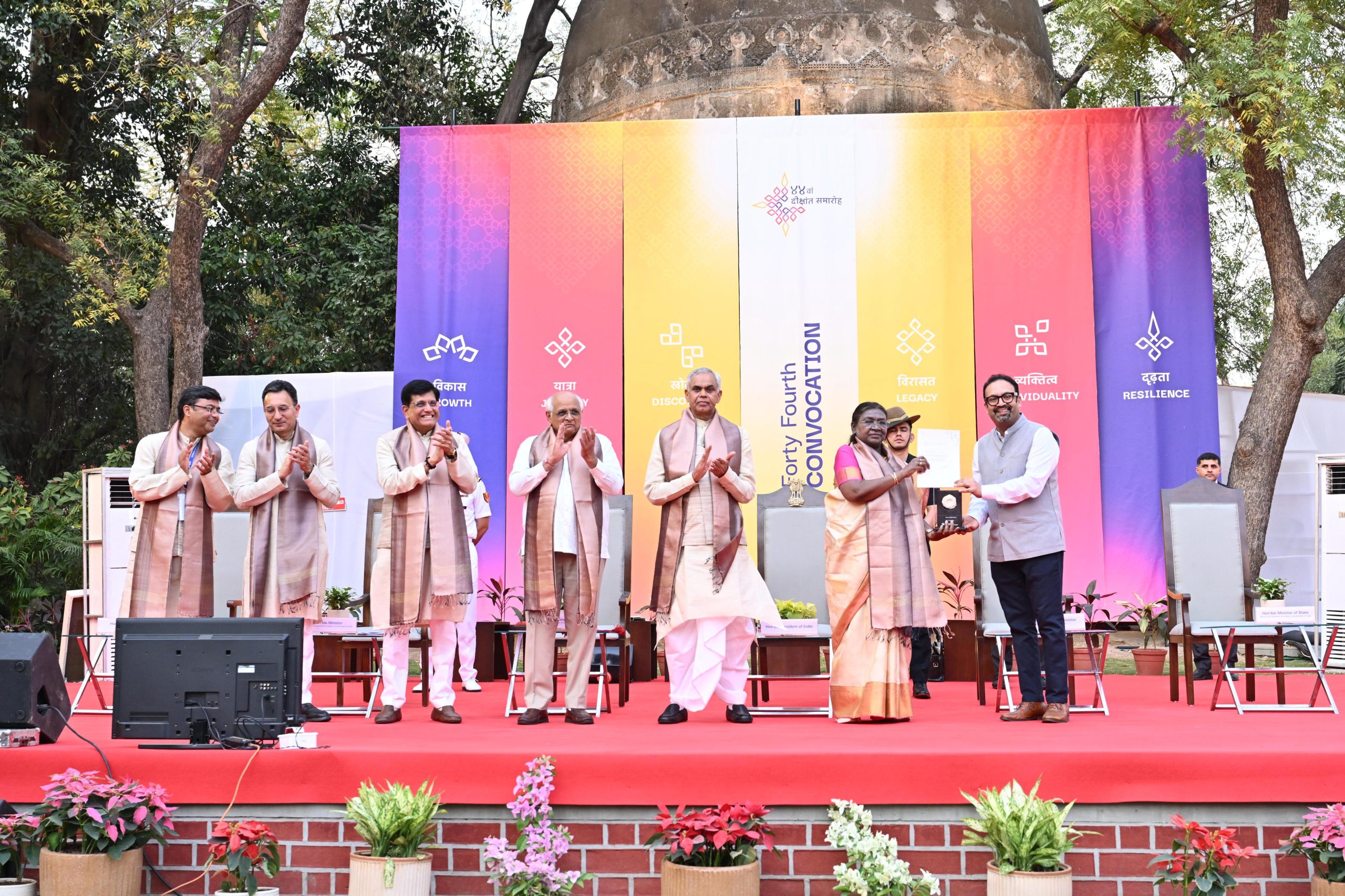
Ahmedabad: President Droupadi Murmu graced the convocation ceremony of the National Institute of Design (NID), Ahmedabad, where she emphasized the transformative power of design in addressing social and economic challenges. Addressing the graduating students, she highlighted how creative thinking and design interventions can enhance ease of living, particularly for underprivileged communities, without requiring significant resources.
The President underscored the critical role of design in nation-building, stating that while it often goes unnoticed, it remains a crucial factor in driving development. She lauded NID’s commitment to using design as a service for societal betterment, recognizing the institute’s contributions in shaping innovative and sustainable solutions for real-world problems.
Drawing from India’s rich cultural heritage, she stressed the importance of documenting and studying traditional design systems, which have been interwoven into daily life for centuries. She noted that the knowledge and practices of indigenous communities hold the key to solving many contemporary global challenges, and their revitalization could contribute to both national and global progress.
President Murmu highlighted how designers in India have played a pivotal role in bringing positive social change, particularly in sectors such as healthcare, housing, and sanitation. By applying their skills to real-world challenges, they are bridging the urban-rural divide and improving the quality of life for marginalized communities.
Addressing the students, she urged them to never lose sight of the functional aspect of design, reminding them that while creating aesthetically pleasing objects is rewarding, solving pressing societal issues should remain their primary goal. She encouraged them to spend time in villages and remote areas, where they could gain new perspectives and apply their knowledge to empower local communities.
Referring to Mahatma Gandhi’s vision, she spoke about the humble charkha (spinning wheel), which Gandhi transformed into a symbol of self-reliance and economic empowerment. She urged students to follow his example, using design to uplift and improve lives rather than merely chasing commercial success.
Bhubaneswar: Odisha has stepped up its disaster preparedness as a weather system over the region…
Bhubaneswar: Odisha has intensified its efforts to tackle drug abuse in six identified narcotics hotspots,…
Bhubaneswar: Bamboo artisans, entrepreneurs and self-help groups in Odisha now have a dedicated marketplace to…
Gurgaon: Shunya Agritech has launched FodrPulse, a free mobile application designed to help hydroponic fodder…
Bhubaneswar: The Bhubaneswar Development Authority (BDA) has opened the online application process for allotment of…
Bhubaneswar: Odisha is looking to make irrigation projects more closely linked with farm production and…