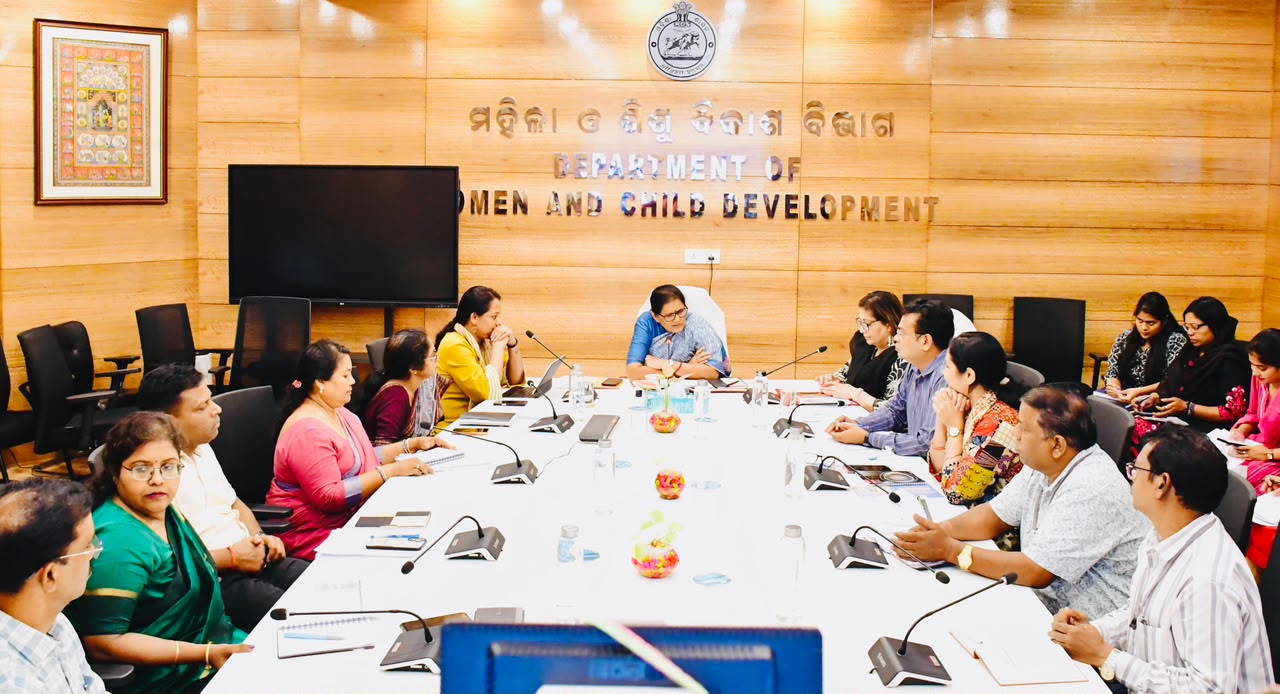
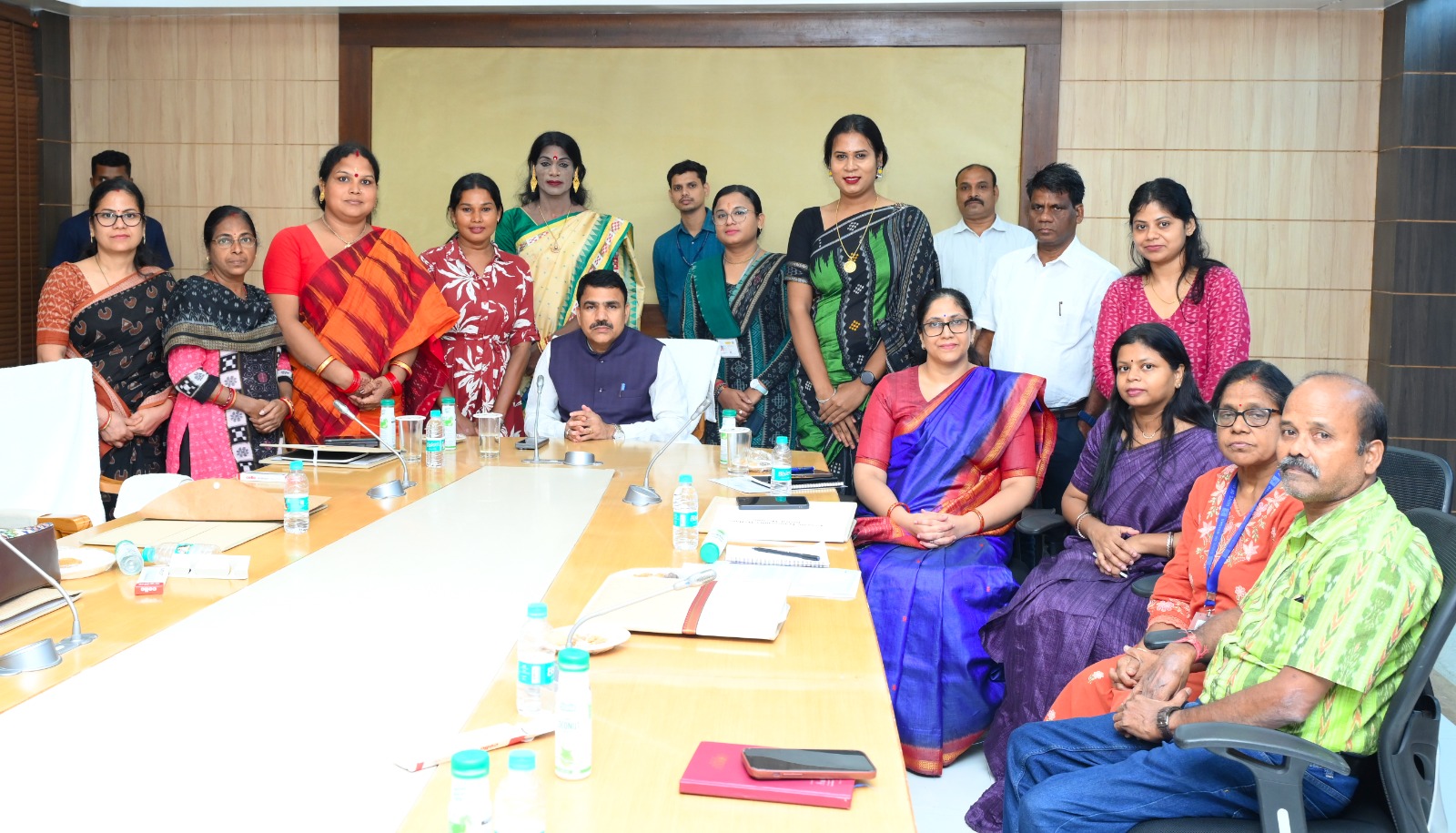
Bhubaneswar: The Odisha government has stepped up efforts to strengthen welfare and protection measures for the transgender community, with the reconstituted State Transgender Welfare Board holding its first meeting on Thursday to review existing schemes and discuss new measures related to healthcare, education, housing, employment and safety.
The meeting was chaired by Social Security & Empowerment of Persons with Disabilities (SSEPD) Minister Nityananda Gond and attended by senior government officials and representatives of the transgender community.
Principal Secretary, SSEPD, Suresh Kumar Vashishth; Director Parul Patawari; Additional Secretaries Sonia Behera and Deepak Routrai, along with representatives from Balangir and officials from the Women & Child Development, Higher Education, School & Mass Education, Health & Family Welfare, and Panchayati Raj & Drinking Water departments participated in the meeting.
Community representatives from TG SURAKHYA TRUST, CHETANA, Balugaon, and other transgender groups also took part in the deliberations.
Reviewing the progress of existing welfare measures, Minister Gond said the state has taken several steps to promote economic independence and social security among transgender persons. Under the Sweekruti scheme, 80 Transgender Self-Help Groups have been formed, of which 41 have received one-time financial assistance of ₹50,000 to support livelihood and entrepreneurship activities.
Under the SMILE scheme, 3,159 transgender certificates and identity cards have been issued in the state. The rollout of Ayushman Bharat TG Plus health cards is also underway, while the Garima Greh shelter home in Bhubaneswar is currently providing accommodation and rehabilitation support to 25 transgender persons.
The Board also discussed measures to ensure greater participation of transgender persons in public employment. The Minister reiterated that government recruitment portals and examination rules should clearly provide “Transgender/Third Gender” as a separate gender option.
Safety and legal protection emerged as another key area of discussion. The Board stressed the need to operationalise District Transgender Protection Cells under the chairmanship of District Collectors to facilitate registration of complaints, investigation of offences and timely legal assistance.
Proposals were also discussed to address online harassment and defamation of transgender persons, including the creation of a dedicated Transgender Cyber Protection Cell and a toll-free helpline.
The Board considered several measures aimed at improving access to healthcare. These included providing gender-affirmation surgeries free of cost at government medical colleges and establishing dedicated healthcare facilities for transgender persons.
In the area of housing, proposals were discussed to extend benefits under schemes such as PM-AWAS and Basundhara to eligible transgender beneficiaries.
The Board also deliberated on measures to improve educational access, including a proposed one per cent reservation, tuition fee waivers, separate hostel facilities and dedicated toilets for transgender students in educational institutions.
Other proposals included construction of a community hall in Puri and conducting a comprehensive census of the LGBT community to generate reliable data for future welfare planning and policy interventions.
The government said the deliberations were aimed at strengthening institutional mechanisms and ensuring that welfare measures reach the transgender community effectively while promoting dignity, equal opportunity and social inclusion.