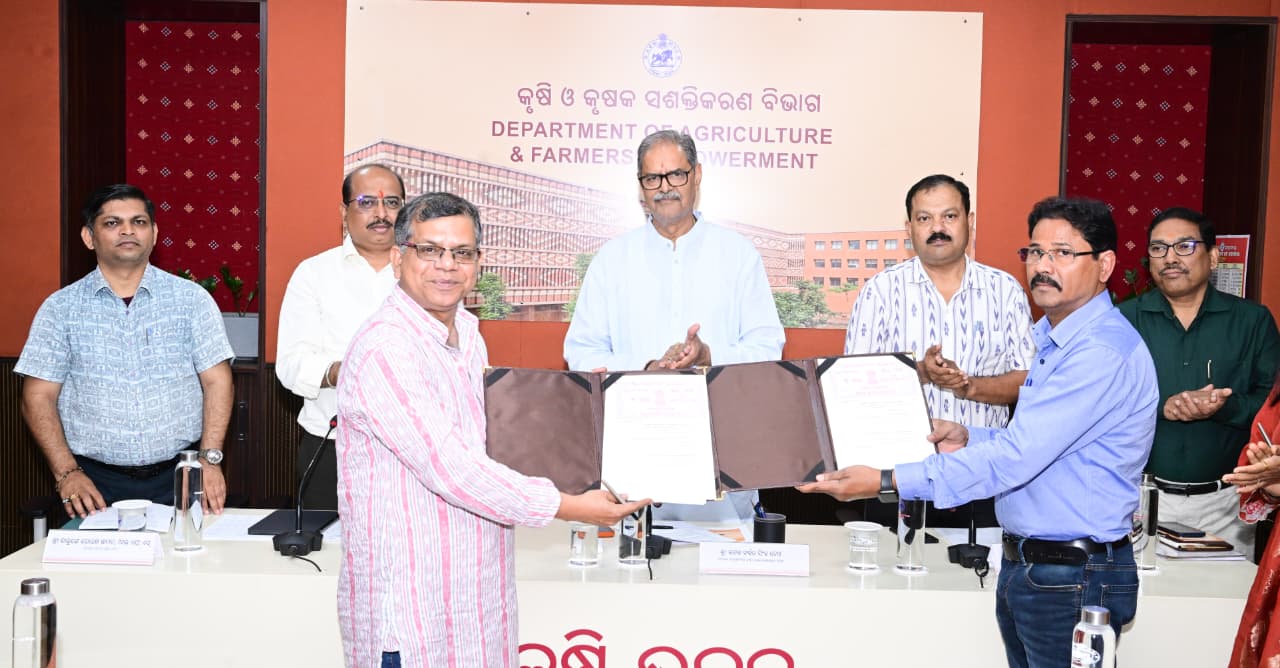
Bhubaneswar: In a major push towards sustainable agriculture and biodiversity conservation, the Department of Agriculture and Farmers’ Empowerment, Government of Odisha has signed a Memorandum of Agreement (MoA) with Watershed Support Service and Activities Network (WASSAN) to revive forgotten foods and neglected crops across the state.
The initiative, with an outlay of ₹247.024 crore, will be implemented over a five-year period from 2025–26 to 2029–30, covering 25 biodiversity-rich blocks across 15 districts. Key regions include Gandhamardhan, Niyamgiri, Sunabeda, Satkosia, Gupteswar, Malyagiri and Similipal.
The programme aims to preserve and promote traditional crops and indigenous seed varieties that are gradually disappearing from mainstream agriculture. It will focus on conservation, documentation, and large-scale revival of neglected crops while also supporting their commercialisation to improve farmers’ livelihoods.
Deputy Chief Minister Kanak Vardhan Singh Deo highlighted the cultural significance of the initiative, stating that food traditions are deeply linked to identity and heritage, and their protection is vital for preserving Odisha’s legacy.
Officials said the project will undertake multiple interventions, including multiplication of indigenous seed varieties, establishment of State Resource Centres, farmer field schools, and nutrition profiling of traditional foods. It will also promote value addition and market linkages for products derived from these crops.
The initiative will include the Kamala Pujari Fellowship Programme, aimed at encouraging grassroots conservation efforts and recognising traditional knowledge systems.
Senior officials present during the MoA signing included Sachin Ramachandra Jadhav, Commissioner-cum-Secretary of the department, Kalunge Gorakh Waman, Director of Horticulture, Subrat Kumar Panda, Director of Soil Conservation and Watershed Development, and Ganeshwar Jena, Additional Secretary.
Officials noted that the programme aligns with Odisha’s broader vision of promoting climate-resilient farming, nutritional security, and biodiversity conservation, while strengthening the livelihoods of small and marginal farmers.