Bhubaneswar: The Government of Odisha today hosted the National Conference on Bamboo and Medicinal Plants at the Convention Centre of Lok Seva Bhawan, bringing together senior officials, technical institutions, industry experts, and community organisations to explore new pathways for strengthening livelihoods linked to bamboo and medicinal plant sectors.
The conference opened with a welcome address by Dr. K. Murugesan, IFS, Project Director, OFSDP, setting the tone for a day of technical deliberations and collaborative dialogue. This was followed by a detailed presentation of the State Vision Plan for Bamboo and SMPB by V. Karthick, IFS, CE, SMPB & SMD, OBDA, outlining Odisha’s long-term strategy for conservation, cultivation, value addition and access to markets.
Suresh Pant, IFS, PCCF & HoFF, delivered the Guest of Honour address, while Satyabrata Sahu, IAS, Additional Chief Secretary, FE&CC Department, shared the State’s priorities in promoting sustainable economic opportunities rooted in natural resource management.
Addressing the gathering, Forest and Environment Minister Ganesh Ram Singhkhuntia reaffirmed Odisha’s commitment to fostering a robust bamboo and herbal sector, noting its potential to create green livelihoods across rural and tribal regions.
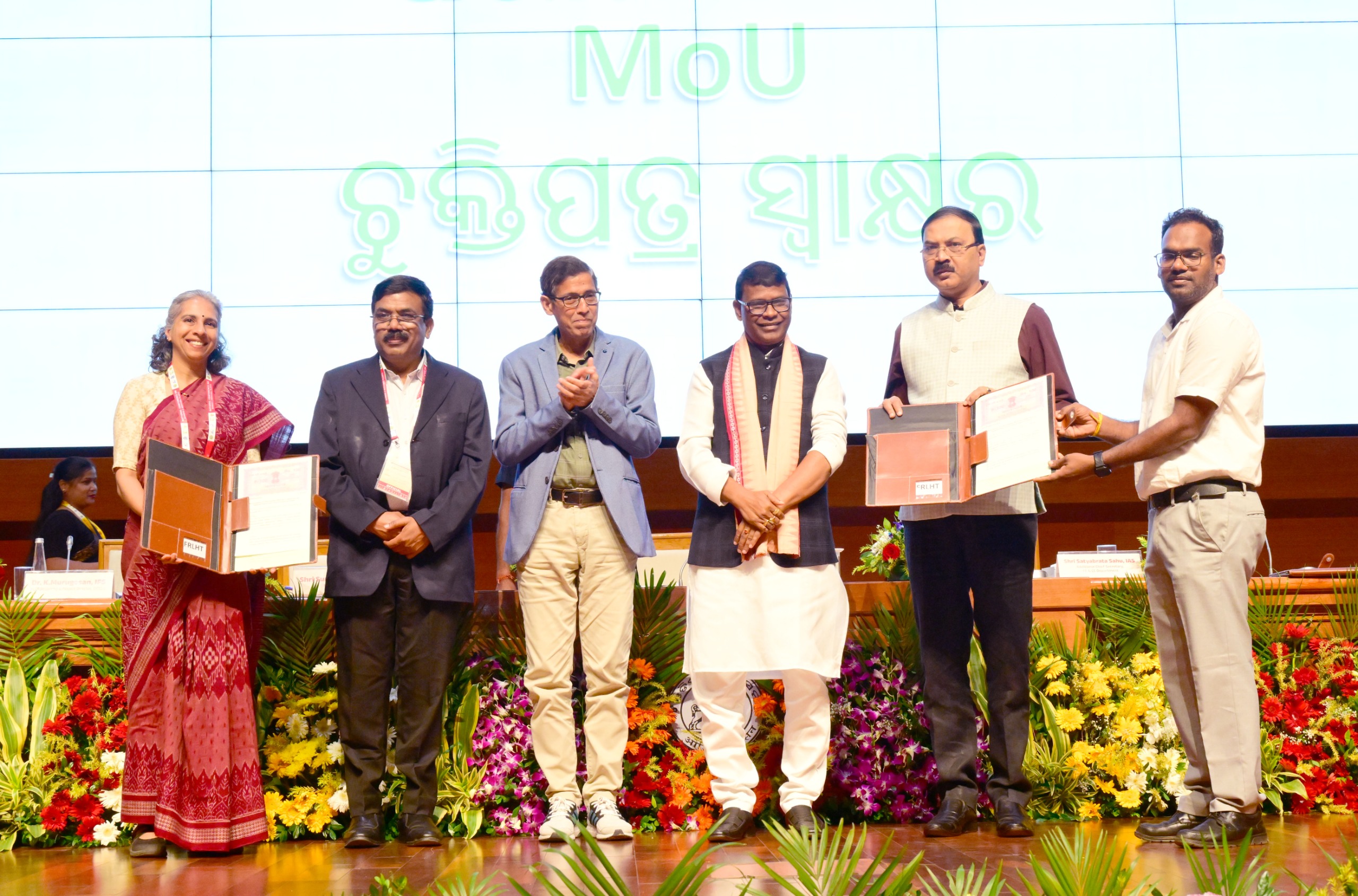
A major highlight of the conference was the signing of several significant MoUs. OBDA formalised partnerships with KFRI, INBAR, and NID, while SMPB signed MoUs with FRLHT (TDU), MSSRF, and IRMA. These collaborations aim to boost scientific research, design innovation, conservation practices, and commercialisation of herbal products.
The State also launched the Odisha Bamboo Haat website—an online platform to expand digital marketing and market access for bamboo-based products.
Technical sessions through the day featured presentations and panel discussions by experts from organisations such as KONBAC, KFRI, INBAR, URAVU, CGBMT, Common Ground, Vindhya Herbals, TNMPHC, and Chhattisgarh Herbs. Discussions centred on livelihood models, sustainable construction, design advancements, best practices in medicinal plant cultivation, and strengthening value chains.