Bhubaneswar: Odisha is looking to make its irrigation systems more efficient and responsive to farmers’ needs by adopting digital technologies, real-time monitoring and data-driven water management practices.
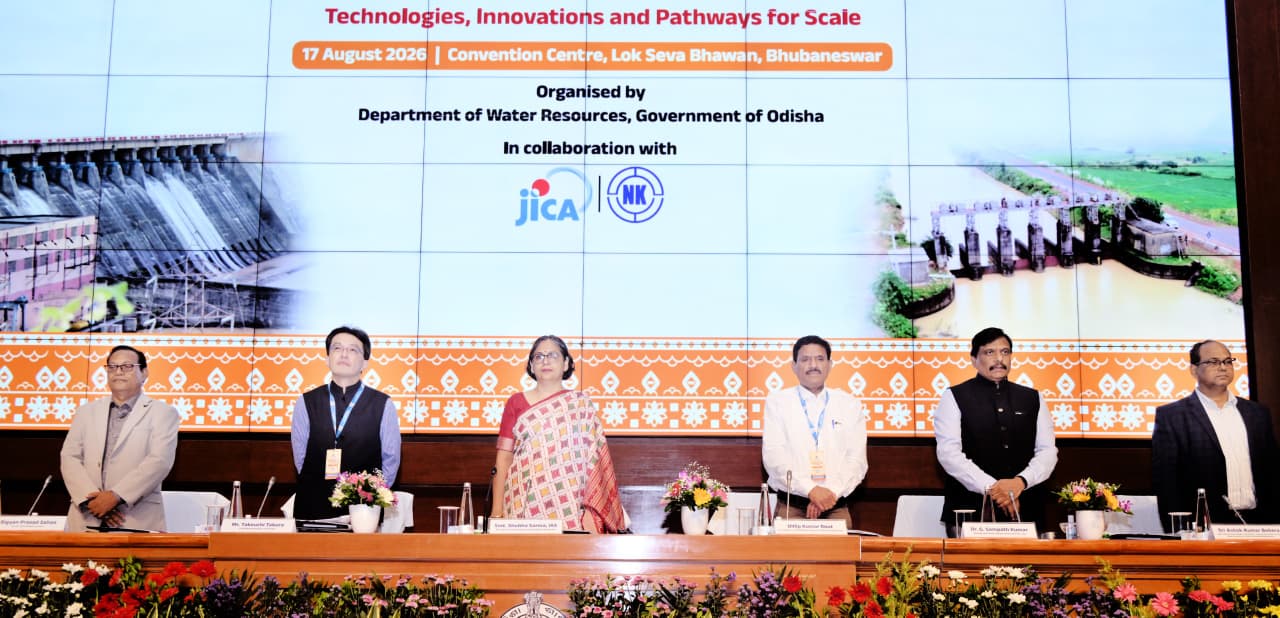
The Department of Water Resources organised a one-day workshop on “Smart Irrigation and Demand-Driven Water Management – Technologies, Innovations & Pathways to Scale” at the Convention Centre, Lok Seva Bhawan, on Monday. Organised in collaboration with JICA and Nippon Koei, the workshop brought together policymakers, senior officials, engineers and technical experts to discuss new approaches to irrigation and water management.
Principal Secretary, Water Resources Department, Shubha Sarma, along with the department’s Engineer-in-Chiefs and senior officials, attended the workshop. JICA India Chief Representative Takeuchi Takuro and Nippon Koei India Managing Director Dr G. Sampath Kumar were also present.
The workshop assumed significance against the backdrop of changing rainfall patterns, climate variability and rising demand for water across different sectors. Discussions focused on the need to move beyond creating irrigation infrastructure and place greater emphasis on efficient water use, improved irrigation services and timely information to meet farmers’ requirements.
Sarma emphasised the need to ensure that irrigation translates into higher agricultural productivity and improved livelihoods. She highlighted the importance of linking assured irrigation with crop diversification, better farm productivity and enhanced incomes of farmers.
The technical sessions showcased experiences from Odisha, other states and international partners. A presentation on OIIPCRA highlighted climate-resilient irrigation practices, rehabilitation of minor irrigation tanks and farmer-centric water management. The discussions also covered the role of Pani Panchayats, climate-resilient agriculture and convergence of irrigation with fisheries and livelihood activities.
JICA shared its experience of supporting agriculture and irrigation initiatives in India, while the Himachal Pradesh Crop Diversification Promotion Project provided insights into climate-resilient agriculture and diversification of farming practices.
Participants also discussed best practices in drip irrigation and crop diversification from Jharkhand and lessons from the Rajasthan Water Sector Livelihood Improvement Project.
International experiences in digital transformation of water management in Japan and Indonesia were also presented during the workshop. Experts discussed how digital tools can improve monitoring, planning and decision-making in irrigation systems.
The sessions also explored data-driven approaches to flood and watershed management, including lessons from Tokyo, and examined how such technologies could be adapted to Odisha’s requirements.
A major focus of the deliberations was on the use of real-time information, digital platforms, technology-enabled monitoring and data-based decision-making to improve irrigation efficiency. Experts stressed that technology adoption should remain closely aligned with field-level institutions and the practical needs of farmers.
The workshop provided a platform for engineers associated with irrigation projects and river basins, senior officials, technical experts and representatives of JICA and Nippon Koei India to exchange field experiences and discuss scalable solutions for Odisha.
The deliberations are expected to contribute to the State’s efforts to develop a more efficient, climate-responsive and farmer-centric irrigation system, with technology and innovation playing a greater role in managing its water resources.