Bhubaneswar: Odisha is set to strengthen its environmental monitoring framework with greater use of technology, scientific research and real-time data, as the state government pushes for a more transparent and citizen-focused approach to pollution control.
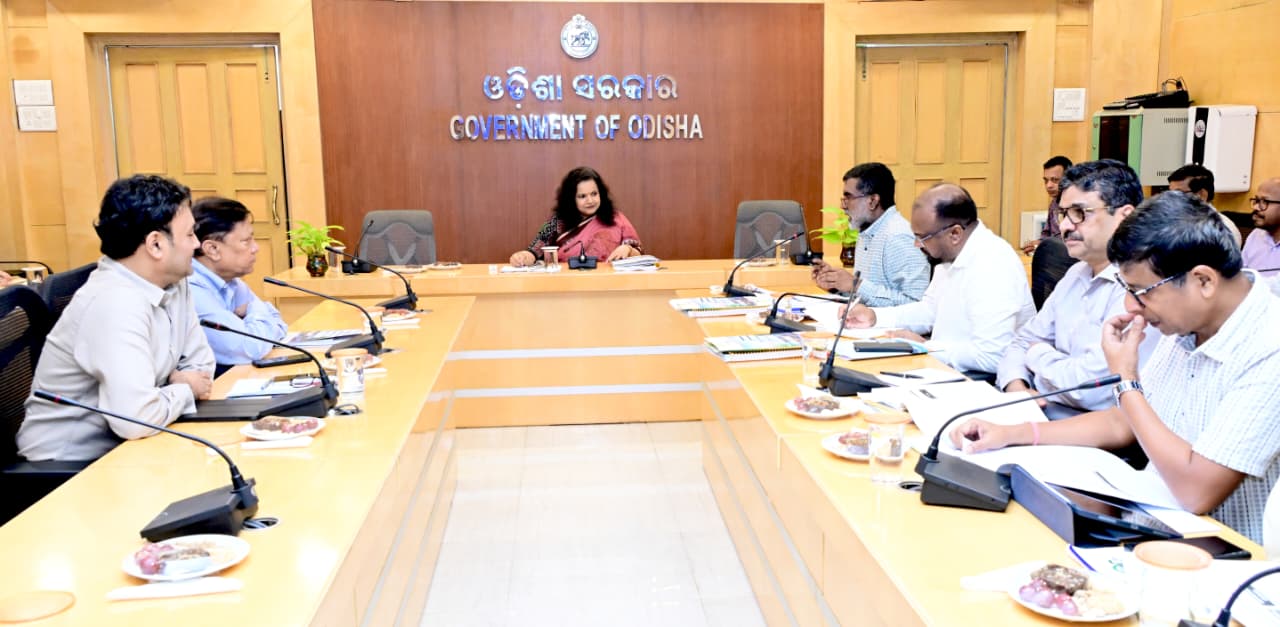
A series of measures to upgrade the Odisha State Pollution Control Board (OSPCB) were discussed at the Board’s 135th meeting, chaired by Chief Secretary Anu Garg at Lok Seva Bhawan on Wednesday.
The meeting focused on enhancing the Board’s institutional and technical capabilities, modernising laboratories, expanding environmental research and strengthening monitoring of the state’s coastal ecosystem.
One of the key proposals was to develop the Centre for Marine and Coastal Environment (CMCE) at Paradeep as a nodal Centre of Excellence for coastal environmental monitoring and analysis.
Garg stressed that the facility should move beyond functioning as a conventional laboratory and evolve into an integrated centre using science, data and modern technology to monitor and protect Odisha’s coastal environment.
The meeting also considered the construction of permanent regional office buildings of the OSPCB at Kataka, Jharsuguda, Koraput, Kalinganagar, Bhubaneswar, Kendujhar and Sambalpur.
Modernisation of the Board’s Patia laboratory was also discussed.
The Chief Secretary directed that proposed infrastructure should incorporate environment-friendly features such as rainwater harvesting, solar energy systems and vermicomposting.
To support faster and evidence-based environmental decision-making, the Board discussed establishing a Command-and-Control Centre at its headquarters in Nayapalli.
The proposed facility would integrate laboratory information, water sample analysis and field-monitoring data, enabling officials to access and analyse environmental information through a centralised system.
The meeting also called for wider use of robotic technology to assess water quality in rivers, ponds, estuaries and coastal waters.
Drones are also proposed to be deployed for field surveillance and environmental monitoring.
The Board also discussed measures for more scientific management and utilisation of fly ash generated by industries and power plants.
A proposal was made to prepare an Odisha Fly Ash Atlas that would map the generation, availability, demand and movement of fly ash from generators to end users.
The Board will also explore research on fly ash bio-stabilisation and bio-transformation in collaboration with reputed academic and research institutions.
The meeting also emphasised the need to make environmental information easier for citizens to understand.
The OSPCB Annual Report could be redesigned using charts, visuals, simplified information and digital formats to improve accessibility and public understanding of environmental data.
As part of efforts to raise environmental awareness among younger generations, the meeting also proposed distributing comic and e-comic books among school and college students.
Garg called for coordinated efforts to establish an environmental governance system that is scientific, technology-enabled, transparent and citizen-centric.
“OSPCB should stand as a symbol of our care and responsibility towards the environment,” she said.
The initiatives discussed at the meeting are aimed at strengthening the Board’s ability to monitor pollution, undertake scientific research and use technology for more effective environmental decision-making.
OSPCB Member Secretary Manoj V Nair, board members and senior officials attended the meeting.