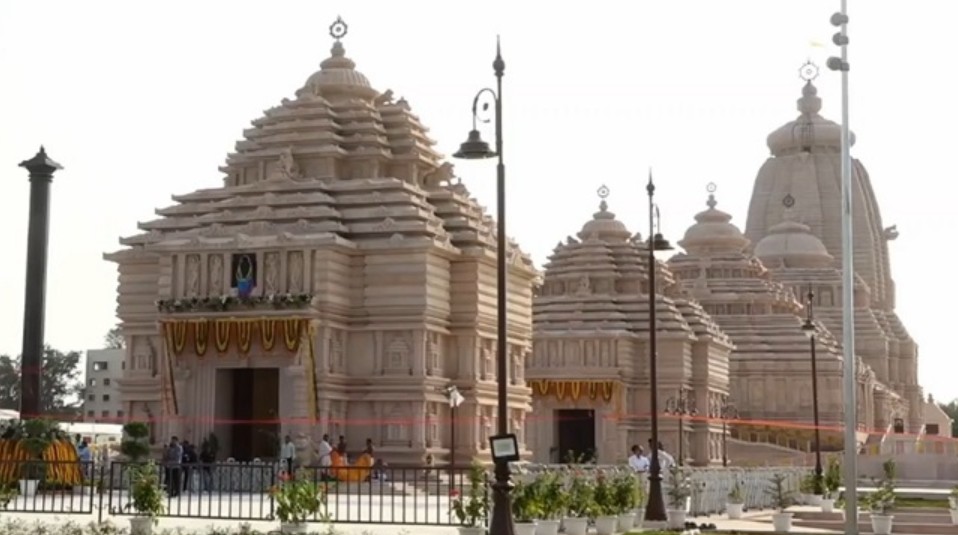
Bhubaneswar: Odisha Law Minister Prithviraj Harichandan on Monday firmly dismissed reports that surplus sacred wood (Daru) from the Nabakalebar ceremony of Puri’s Shree Jagannath Temple was used to carve idols for the newly constructed Jagannath temple in Digha, West Bengal.
Addressing the media, the Minister clarified that the “balaka” Daru — surplus logs left after the sacred idol-making during Nabakalebar — were not used in any way for the Digha temple idols. “After consultation with the servitors and Maharana sculptors involved in the Puri temple rituals, it was confirmed that carving a 2.5-foot idol from this type of surplus wood is simply not feasible,” Harichandan said.
The clarification comes amid a swirl of speculation and historical confusion stemming from past administrative decisions. The Minister pointed out that during the 1995–96 tenure, a misstep occurred when certain pieces of surplus wood were placed under the Daitapati Nijog house, deviating from traditional practices prescribed in the Shapata Lipi — the sacred record that guides temple procedures. “As per tradition, all surplus Daru must be kept under the Daru house near the Suara Mahasuara Nijog’s residence,” he emphasized.
To address the matter with transparency, the Shree Jagannath Temple Administration (SJTA) formed a five-member committee tasked with physically counting and verifying the location of all surplus Daru wood. Based on the committee’s report, the administration has now decided to relocate all balaka wood to the Daru house to maintain ritual sanctity and accountability.
In a further development, Harichandan revealed that the Odisha government will request the West Bengal government to refrain from using the term ‘Dham’ for the Digha temple, suggesting that the term may lead to misinterpretations regarding the temple’s ritual status in comparison to the Shree Jagannath Temple in Puri, which is recognized as one of the Char Dhams.