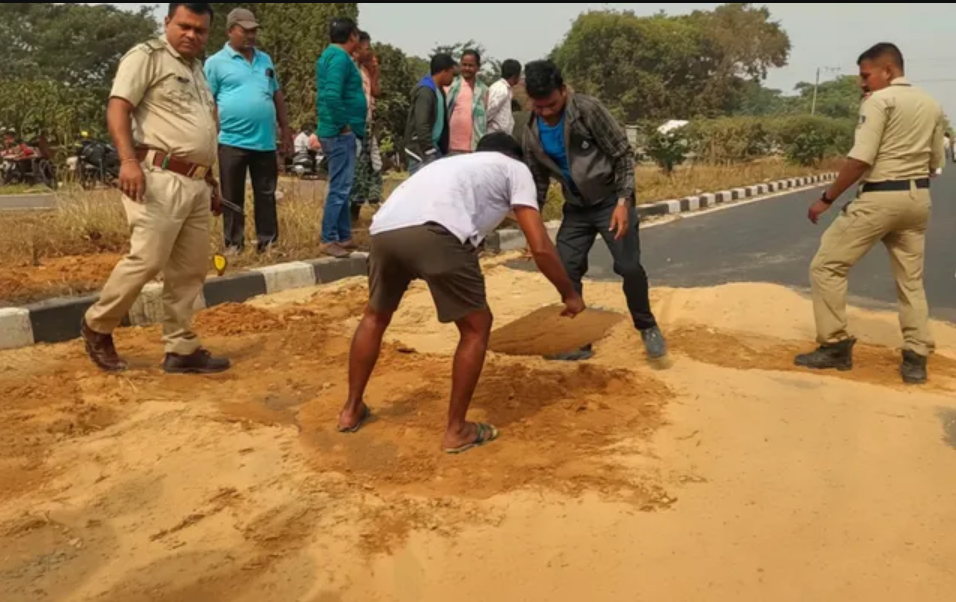
Bhubaneswar: Alarmed by a spate of accidents triggered by loose sand, soil and construction debris on roads, the Odisha government has issued fresh directions to ensure regular sweeping and cleaning of road surfaces across the state, placing clear accountability on road-owning agencies and urban local bodies.
The move comes in the wake of several recent fatal and serious mishaps, particularly involving two-wheelers losing control due to slippery and poorly maintained roads. A circular to this effect has been issued by the Office of the Transport Commissioner-cum-Chairman, State Transport Authority (STA), Odisha, and sent to the National Highways Authority of India (Odisha), Chief Engineers of state and national highways, Municipal Commissioners, and Executive Officers of all NACs and municipalities.
The circular makes it clear that while enforcement agencies act against unsafe transportation of sand and construction materials, the onus of keeping roads clean and safe lies squarely with the authorities responsible for their maintenance. Roads, it said, must be fit for traffic at all times and free from hazards that could endanger commuters.
Citing provisions of the Motor Vehicles Act, 1988, along with Indian Roads Congress (IRC) standards and Ministry of Road Transport and Highways (MoRTH) specifications, the directive warned that failure to maintain clean and skid-resistant roads could lead to legal liability in case of accidents caused by known and unattended hazards.
Under the new instructions, road-sweeping machines are to be deployed on National Highways, State Highways, major district roads and key urban arterial and collector roads. Special emphasis has been laid on increasing sweeping frequency in accident-prone stretches, construction zones, mining belts and high-traffic areas. Authorities have been directed to immediately remove debris and spillage and put up cautionary signage, without waiting for action against errant vehicles.
The government has also asked agencies to prepare and regularly update a list of high-risk locations such as sharp curves, busy junctions, downgrades and urban merging points, and ensure intensified monitoring and cleaning in these areas. Field engineers and municipal officers have been instructed to work closely with RTOs and police, conduct joint inspections and take preventive steps wherever the problem recurs.
Warning of strict consequences, the Transport Commissioner stated that non-compliance with these measures would be treated as dereliction of statutory duty, attracting both administrative and legal action.
The state government has called upon all concerned authorities to implement the directions without delay to reduce accident risks and improve road safety for commuters throughout Odisha.