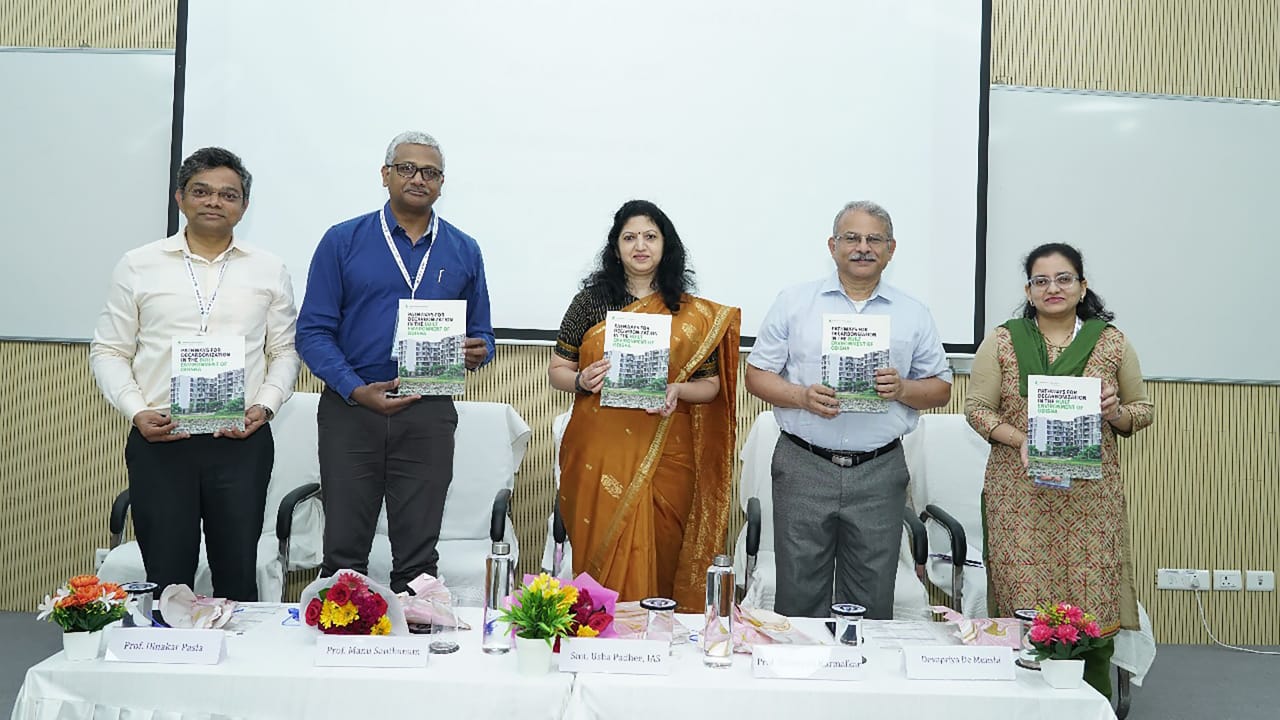
Bhubaneswar: In a decisive move toward sustainable urban transformation, Odisha has placed climate-conscious construction at the heart of its development agenda. A one-day workshop on “Mainstreaming Low-Carbon Building Materials to Transform the Built Environment in Odisha”, jointly organised by IIT Bhubaneswar and Development Alternatives at the IIT Madras campus, underscored the State’s commitment to creating eco-friendly and resilient cities.
Usha Padhee, IAS, Principal Secretary, Housing and Urban Development Department, Government of Odisha, graced the event as the Chief Guest. In her address, she stressed the need for collective conviction and thoughtful planning to ensure that every aspect of construction contributes to environmental well-being.
“Whatever we do in construction must consciously contribute to a healthier environment. We can only progress if we believe we can — and ensure our development is greener and eco-friendly,” said Padhee.
She highlighted that Odisha’s vision for sustainable urbanisation goes beyond policies — it is about embedding innovation, inclusivity, and responsibility in every development project. By promoting materials such as Construction and Demolition (C&D) waste products and Limestone Calcined Clay Cement (LC3), the State aims to drastically reduce carbon emissions from the building sector while fostering entrepreneurship and green industry growth.
The workshop brought together academics, industry leaders, researchers, and government representatives to explore pathways for integrating low-carbon materials into mainstream infrastructure projects.
Prof. Manu Santhanam of IIT Madras, attending as the Guest of Honour, called for the construction industry to “move beyond conventional practices” and adopt scalable, low-carbon alternatives to safeguard natural resources and ensure long-term sustainability.