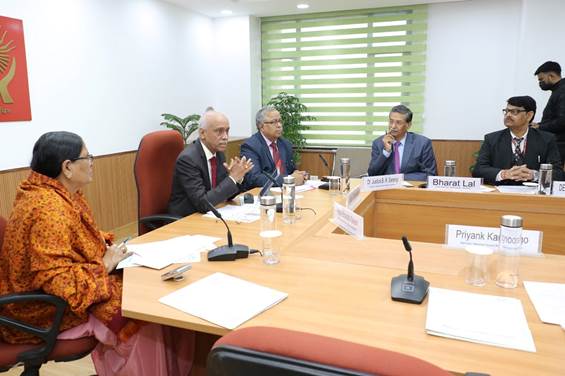
New Delhi: The National Human Rights Commission (NHRC), India, organized an open house discussion on the theme “Dignity and Liberty of the Individuals – Rights of Manual Scavengers” at its headquarters in New Delhi. The hybrid event was chaired by NHRC Chairperson Justice V. Ramasubramanian, with participation from members, senior officials, and a diverse group of stakeholders, including representatives from ministries, state governments, NGOs, human rights defenders, UN agencies, and private organizations.
Justice Ramasubramanian expressed concern over continuing deaths of sanitation workers despite legal provisions banning manual scavenging. He emphasized the necessity of understanding root causes to devise effective remedial measures and proposed a pilot project using robotic technology for sewer cleaning, which could be replicated nationwide.
“This issue is being tackled legislatively, managed executively, and supervised judicially, yet the ground realities call for deeper action,” said Justice Ramasubramanian.
NHRC Secretary General Bharat Lal highlighted the Commission’s efforts in advocating mechanized cleaning processes across states. He noted that some states have initiated three-year programs for urban local bodies in compliance with Supreme Court guidelines from the Dr. Balram Singh v/s Union of India case. Lal also drew attention to the disproportionate impact of manual scavenging on specific castes and communities.
The discussion was structured around three technical sessions addressing critical themes:
Participants included notable speakers like Bezwada Wilson, National Convenor of Safai Karamchari Andholan; Prabhat Kumar Singh, MD of the National Safai Karamchari Finance & Development Corporation; UNICEF specialists Sujoy Majumdar and Yusuf Kabir; and industry innovators like Rashid Karimbanakkal, Director of Genrobotics Innovations.
The discussions yielded actionable suggestions to address gaps in policy implementation and ensure the dignity of manual scavengers:
The NHRC affirmed its commitment to deliberating on these recommendations to strengthen legal and policy frameworks. The Commission aims to eradicate manual scavenging and ensure the effective rehabilitation of those involved, promoting their dignity and socio-economic empowerment.
“The fight against manual scavenging is a collective responsibility, and sustained efforts are needed to end this inhumane practice,” Justice Ramasubramanian concluded.
Bhubaneswar: Responding to mounting criticism and political consensus, the Odisha government has begun the process…
Bhubaneswar: The inaugural edition of the National Indoor Athletics Championships concluded on a high note…
Bhubaneswar: The Higher Education Department, Government of Odisha has announced that the Common PG Entrance…
Bhubaneswar: The Government of Odisha has nearly concluded paddy procurement for the 2025–26 Kharif season,…
Bhubaneswar: Strengthening its efforts to stabilise farm incomes and streamline agricultural marketing, the Odisha Rural…
Bhubaneswar: With a growing focus on sustainable agriculture and income diversification, the Agricultural Promotion and…