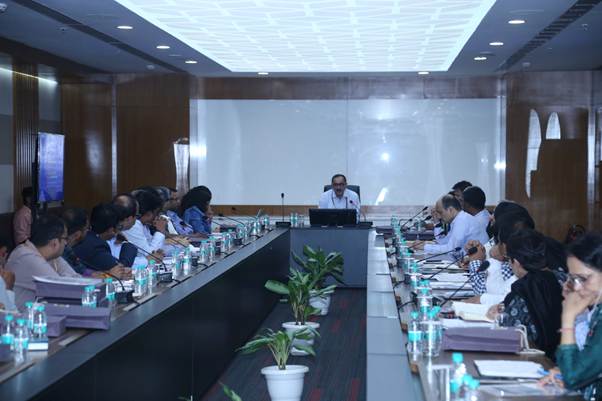
New Delhi: To strengthen public participation and investment in tribal development, the Ministry of Tribal Affairs (MoTA) today organised the Delhi Chapter of Adi Shapath—a half-day interactive session with stakeholders working towards the upliftment of tribal communities across India. The event was held at Dr. Ambedkar International Centre in the national capital.
More than 20 stakeholders, including public sector undertakings (PSUs), private companies, donor organizations, and philanthropic foundations from the Delhi-NCR region participated in the session. The initiative was part of MoTA’s broader Janbhagidari (public participation) campaign aimed at encouraging greater Corporate Social Responsibility (CSR) involvement, volunteer support, and donor engagement for tribal welfare.
The session focused on showcasing ongoing developmental projects in tribal areas and emphasized the importance of a collaborative model to achieve inclusive growth. Discussions highlighted the need for a dedicated national-level platform to both present existing initiatives and identify new opportunities for engagement in a more structured manner.
Representatives from key organizations expressed their willingness to deepen their partnerships with the Ministry and expand the scale of their current initiatives. Health, education, livelihood generation, and cultural preservation emerged as the primary sectors identified for future collaboration.
Senior officials from the Ministry, including Shri T. Roumuan Paite, Joint Secretary, MoTA and Chairman & Managing Director of NSTFDC, and Shri Anant Prakash Pandey, Joint Secretary, Ministry of Tribal Affairs, participated in the event along with other senior ministry officials.
Notable participating organizations included Oil India, HUDCO, GAIL, Tata Trust, Gates Foundation, American India Foundation, HCL Technologies, and Bharti Airtel, among others. Their representatives shared insights from their work in tribal regions and expressed commitment to aligning their CSR activities with the aspirations of tribal communities.