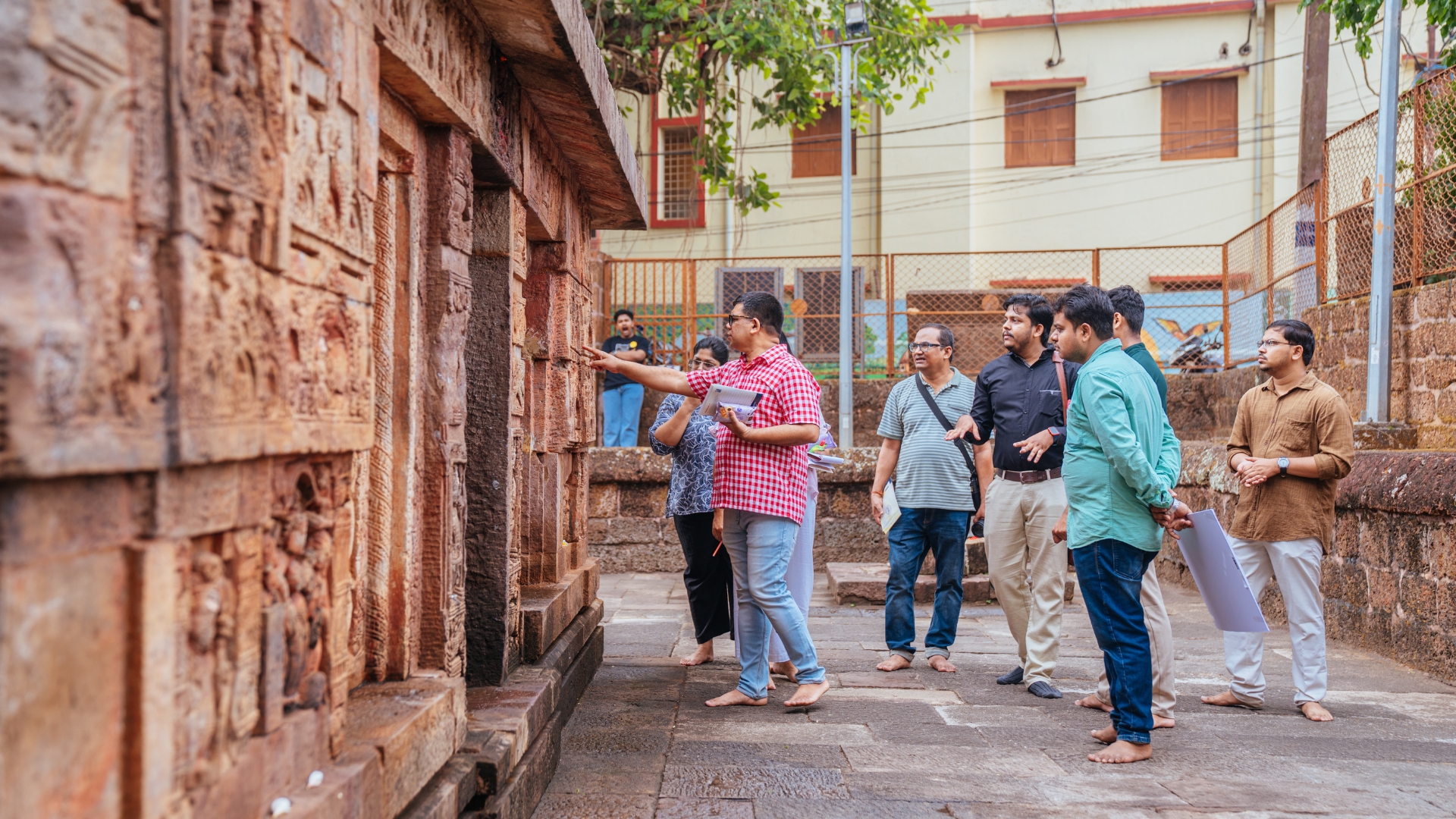
Jagatsinghpur: The sixth edition of the Jagatsinghpur Heritage Walks (JHW) offered participants a journey through mythology, community traditions, and architectural marvels as it explored the ancient Grameswar Temple at Panchapalli village on Sunday. Around 40 heritage enthusiasts from across Odisha joined the immersive walk, gaining insight into a site revered for centuries and steeped in rich folklore.
Panchapalli, a cluster of five hamlets—Gobindapur, Patana, Paniendula, Naradia, and Tikarapara—is a region marked by strong spiritual identity, with five village goddesses worshipped by the local communities. At the heart of this sacred region stands Shree Grameswar Mahadev Temple, situated on the serene banks of the Hansua River. Known as Garga Peetha in Vedic texts, the temple holds both religious and historical significance.
According to local legends, the temple’s origins trace back to a divine incident witnessed by a cowboy in the kingdom of Bishunpur. The cowboy noticed one of his cows repeatedly oozing milk at a particular spot. Upon learning of this, the king ordered the site to be excavated. A Shiva Lingam was discovered, and its root could not be traced—leading to the belief that it was divine. Since the deity appeared in the heart of the village (grama), the king named it Grameswar Mahadev, or Lord Shiva of the village.
A parallel story, drawn from Puranic texts, credits Sage Garga, the son of Lord Brahma, with installing the lingam. After his death, the lingam was lost and later rediscovered through the cow’s mysterious behavior. A shrine dedicated to Sage Garga still stands within the temple complex, underscoring the site’s spiritual antiquity.
The original wooden structure built by the king has long been replaced. Today, the temple boasts a 71-foot-tall sanctum constructed through the efforts of a community-led temple trust, supported by the Endowment Commission and local devotees. The temple’s intricate wall carvings and its vibrant festivals continue to draw pilgrims from Odisha and beyond. Alongside Lord Shiva, the temple also houses idols of Lord Jagannath, Balabhadra, and Subhadra, who are worshipped in an adjoining Nrusinghnath temple.
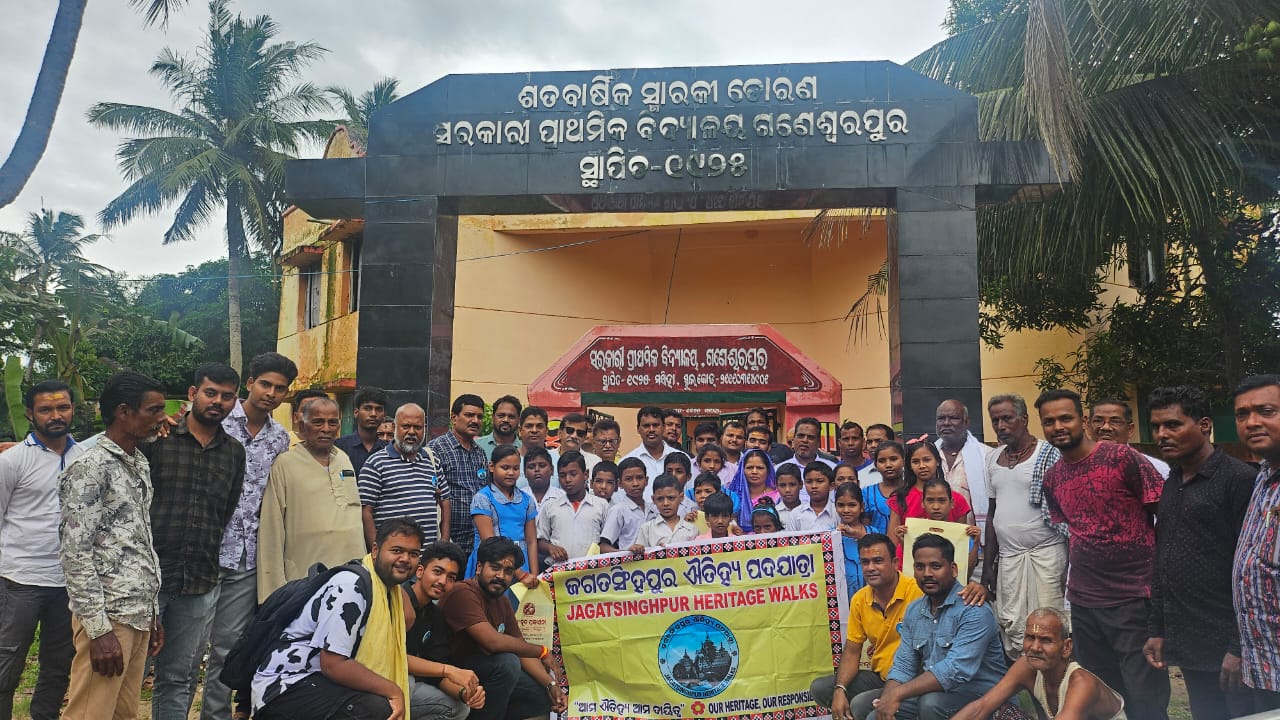
As part of the heritage walk, participants also visited a 100-year-old primary school, recently celebrating its centenary. The group was welcomed by Headmistress Laxmipriya Swain and retired Headmaster Shuva Narayan Nayak. Addressing the students, Dipak Samantarai, convener of Cuttack Heritage Walks, spoke about the importance of preserving Odisha’s heritage. Pravanshu Samantaray of Dibyaduta Publication distributed Odia storybooks, engaging the children in a discussion on local culture.
At the temple site, JHW convener Srikanta Singh welcomed members of the temple trust committee, villagers, and special guests including Sishir Kumar Biswal and Jivananda Mishra of Vidyapuri Publication. The event concluded with a vote of thanks from Biswaranjan Dehury of Odisha Heritage Walks, who lauded the local community’s continued efforts to keep their heritage alive.