New Delhi: In a significant step for global space collaboration, India and the United States are set to jointly launch the NASA-ISRO Synthetic Aperture Radar (NISAR) satellite on July 30, marking a major milestone in Earth observation technology and international scientific cooperation.
The satellite, developed over a decade by NASA and ISRO, will lift off at 5:40 p.m. from the Satish Dhawan Space Centre in Sriharikota aboard India’s GSLV-F16 rocket. This mission will be the first to use a GSLV for placing a satellite in a sun-synchronous polar orbit, reflecting ISRO’s growing technological prowess.
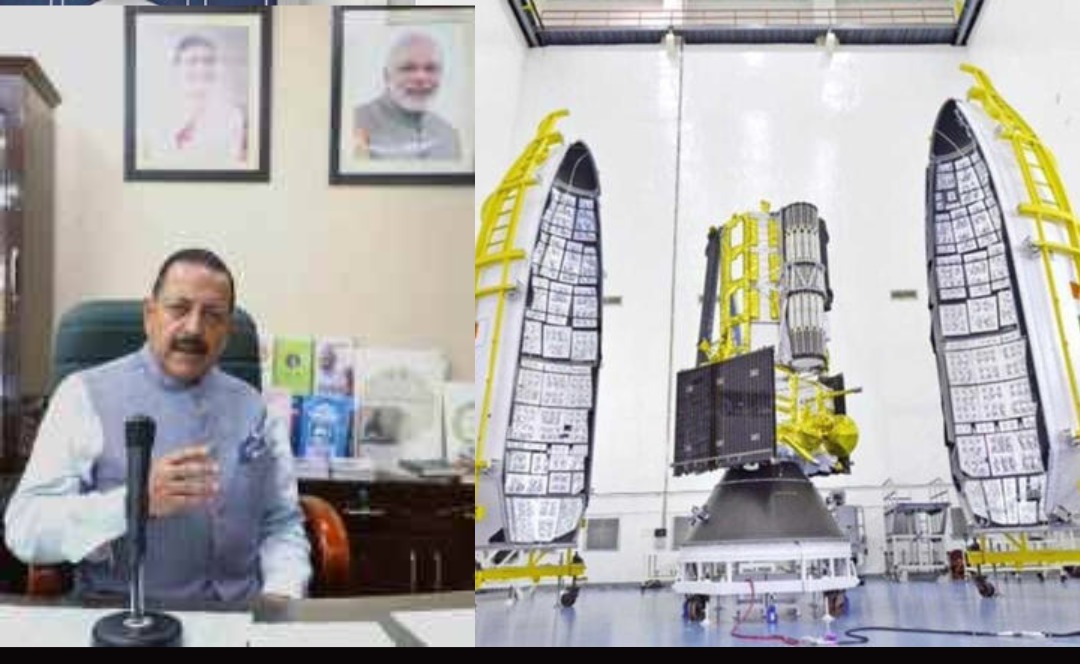
Calling the mission “India’s scientific handshake with the world,” Union Minister of State for Science and Technology Dr Jitendra Singh said the launch is a symbol of the deepening Indo-US strategic partnership in the space domain. “It’s not just a satellite launch—it’s a mission with global relevance that will provide critical data for disaster management, climate monitoring, agriculture and more,” he said.
The NISAR satellite, weighing 2,392 kilograms, is designed to scan the Earth’s surface every 12 days, detecting subtle movements and environmental changes. The data collected will be vital for responding to natural disasters and monitoring long-term climate patterns.
NASA has contributed the L-band radar system, GPS receivers, a high-rate telecom system, and a 12-metre deployable antenna, while ISRO has provided the S-band radar, satellite platform, and the launch vehicle.
Highlighting the broader benefits, Dr Singh emphasized that the mission will offer open-access data within one to two days of observation—faster during emergencies—making it invaluable to developing nations lacking advanced space infrastructure.
He added that the initiative reflects Prime Minister Narendra Modi’s vision of India as a “Vishwa Bandhu” (global partner) committed to sharing knowledge and solutions for the collective good of humanity.
“NISAR is a testament to how two democratic nations can combine strengths for the benefit of the planet,” Dr Singh said.