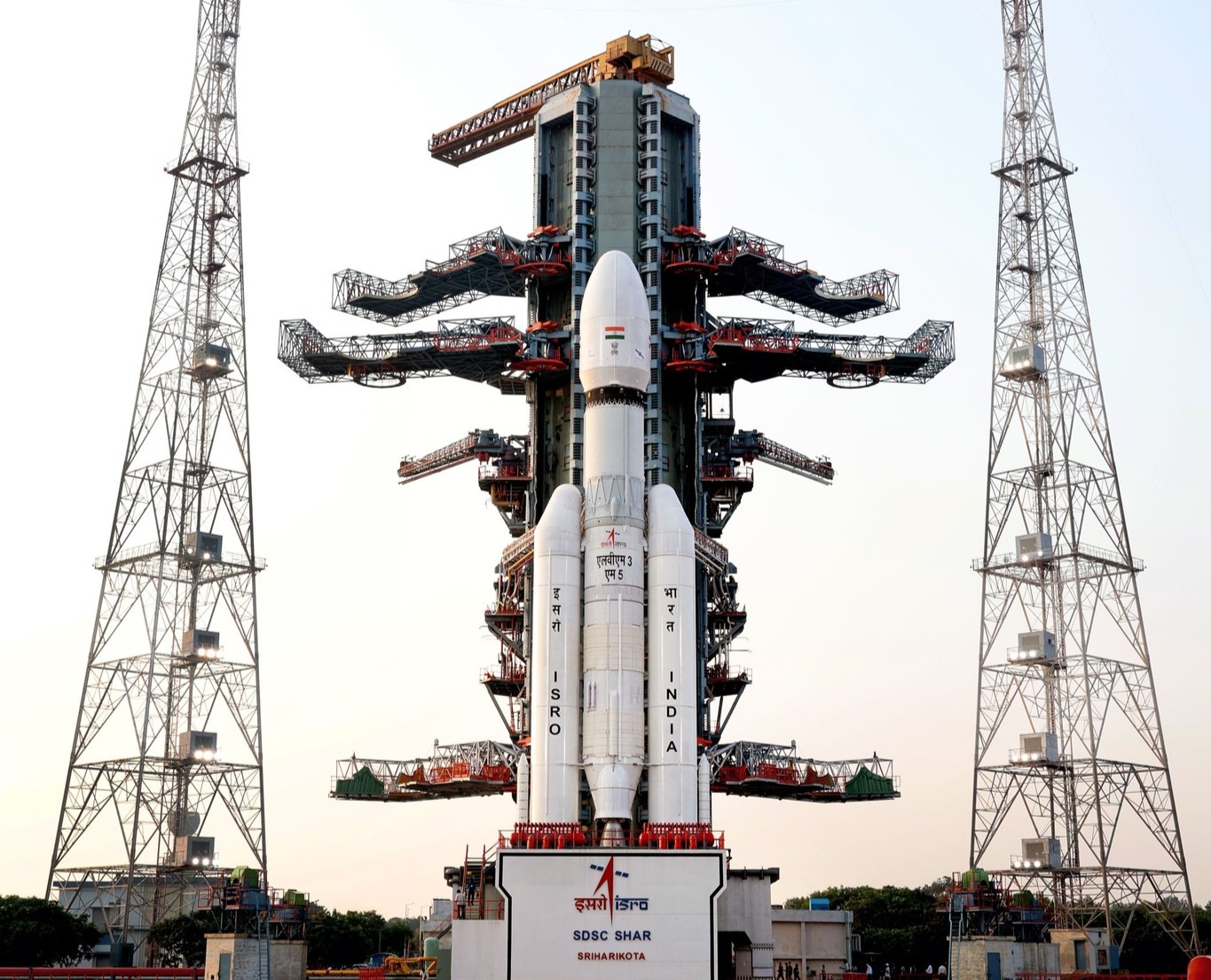
New Delhi, Oct 23: India’s space ambitions reached a new height on Sunday as the Indian Space Research Organisation (ISRO) successfully launched its heaviest communication satellite, CMS-03, from the Satish Dhawan Space Centre in Sriharikota. The satellite was carried by the country’s most powerful launch vehicle, the LVM3-M5 rocket, marking another major milestone in India’s journey toward space self-reliance.
The launch, described by experts as a “monumental achievement”, showcased India’s growing ability to design, build, and deploy large, complex satellites crucial for national security and advanced communications. With CMS-03 now in its intended orbit, India has strengthened its network for secure communications across the mainland and the Indian Ocean Region.
Lt. Gen. A.K. Bhatt (Retd.), Director General of the Indian Space Association (ISpA), praised the success as a defining moment in India’s strategic space programme. “The successful launch of CMS-03 by the LVM3 rocket is a monumental achievement for India, powerfully demonstrating our sovereign capability to launch heavy-payload satellites,” he said. “This satellite will be a game-changer for maritime and national security, providing advanced and secure communication links vital for the Indian Ocean Region and beyond.”
He added that the success of CMS-03 also reflects the growing participation of India’s private space sector, which is increasingly contributing to national missions. “This launch by ISRO signals a vibrant future for private sector collaboration and cements India’s position as a formidable space power,” Bhatt noted.
According to P. Madhuri, Deputy Project Director of the SSLV Launch Complex, the satellite was successfully placed in its designated orbit following a flawless sequence of operations. “The satellite has been delivered to its intended orbit,” she confirmed, moments after the final stage separation.
The LVM3-M5, also known as the ‘Bahubali’ rocket, represents the pinnacle of India’s heavy-lift launch capability. Powered by a mix of solid, liquid, and cryogenic engines, it can carry payloads of up to 8,000 kg to low-earth orbit and 4,000 kg to geosynchronous orbit. The 43-metre-tall launcher completed all its phases seamlessly — from ignition of the S200 solid boosters to the operation of the L110 liquid stage and C25 cryogenic upper stage — reaching a terminal velocity of 4.6 km per second.
With CMS-03 in orbit, ISRO has reaffirmed its ability to deliver cutting-edge space assets for national communication, defence, and technological advancement. The mission stands as a testament to India’s expanding capabilities in space science and its determination to achieve global leadership in the sector.