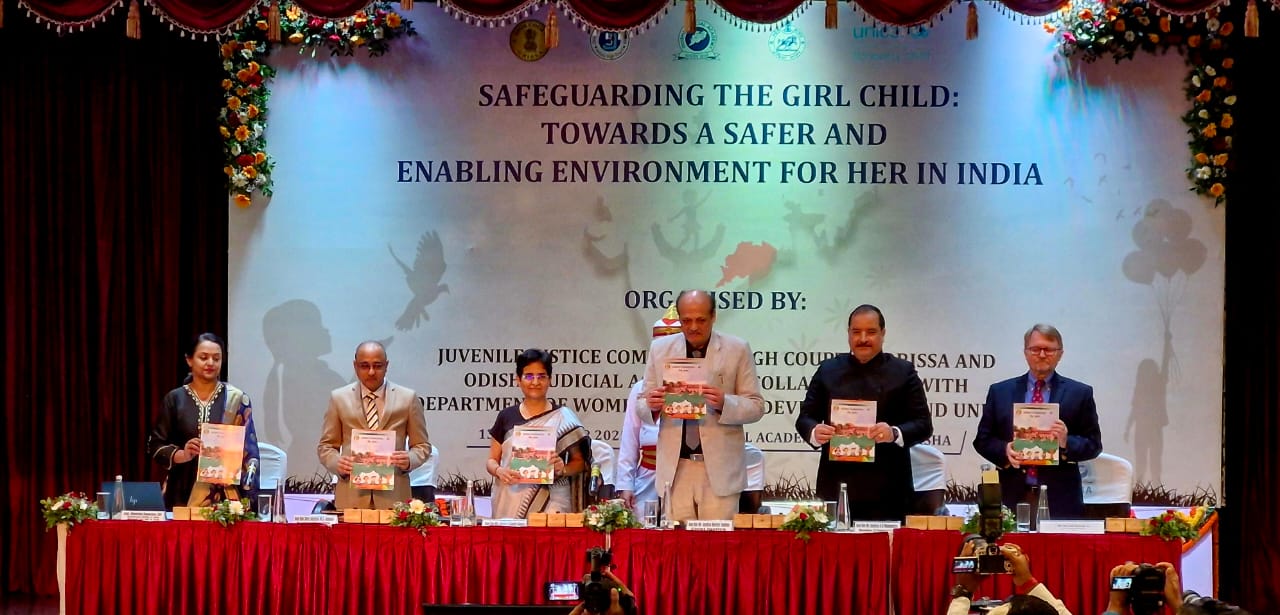
Cuttack: The Juvenile Justice Committee of the High Court of Orissa, in collaboration with the Department of Women and Child Development (WCD), Government of Odisha, and UNICEF, today organised a State Level Juvenile Justice Consultation on the theme “Safeguarding the Girl Child: Towards a Safer and Enabling Environment for Her in India” at the Odisha Judicial Academy, Cuttack.
Inaugurating the consultation, Chief Justice Harish Tandon stressed the urgent need for strong institutional mechanisms and community-based efforts to protect girls from violence, child marriage, and exploitation. Drawing from his personal experiences, he reflected on the provisions of the Prohibition of Child Marriage Act, 2006, and the Juvenile Justice (Care and Protection of Children) Act, 2015. His Lordship expressed hope that the deliberations during the technical sessions would generate concrete ideas and solutions to ensure a safe and enabling environment for girls.
Delivering the welcome address, Miss Justice Savitri Ratho, Judge and Chairperson of the Juvenile Justice Committee, highlighted the broader purpose of the consultation. She drew from history to illustrate how women’s empowerment has always been a story of reverence and resistance, and emphasized that safeguarding the girl child is not merely a responsibility but also a solemn promise to the future. “When a girl is safe, empowered, and truly free, the world knows real progress,” she said, underlining the importance of ensuring girls’ access to education, healthcare, and equal opportunities.
As part of the inaugural session, Justice A.K. Mohapatra, Judge and member of the Juvenile Justice Committee, introduced the Committee’s newsletter Sishu Surakhya, first published in 2017. The 2025 edition of the newsletter was formally unveiled by Chief Justice Shri Harish Tandon on the occasion.
Addressing the gathering, Monisha Banerjee, Director, WCD Department, described safeguarding the girl child as both a moral and societal imperative. “Every statistic of child marriage, school dropouts, and trafficking shows a system that devalues the girl child, making her future negotiable and her identity expendable,” she said, urging all institutions to treat child protection as a matter of justice and dignity.
William Hanlon, Jr., Chief of Field Office, UNICEF Odisha, also spoke at the event, describing violence against children as not only a violation of fundamental rights but also a public health crisis with long-term consequences for society. He underscored the importance of collective action: “Ending violence against girls and all children is not just necessary; it is possible. By strengthening our laws, raising awareness, and fostering strong collaboration across all sectors—from government to civil society—we can create a future where every child is safe, valued, and able to thrive.”
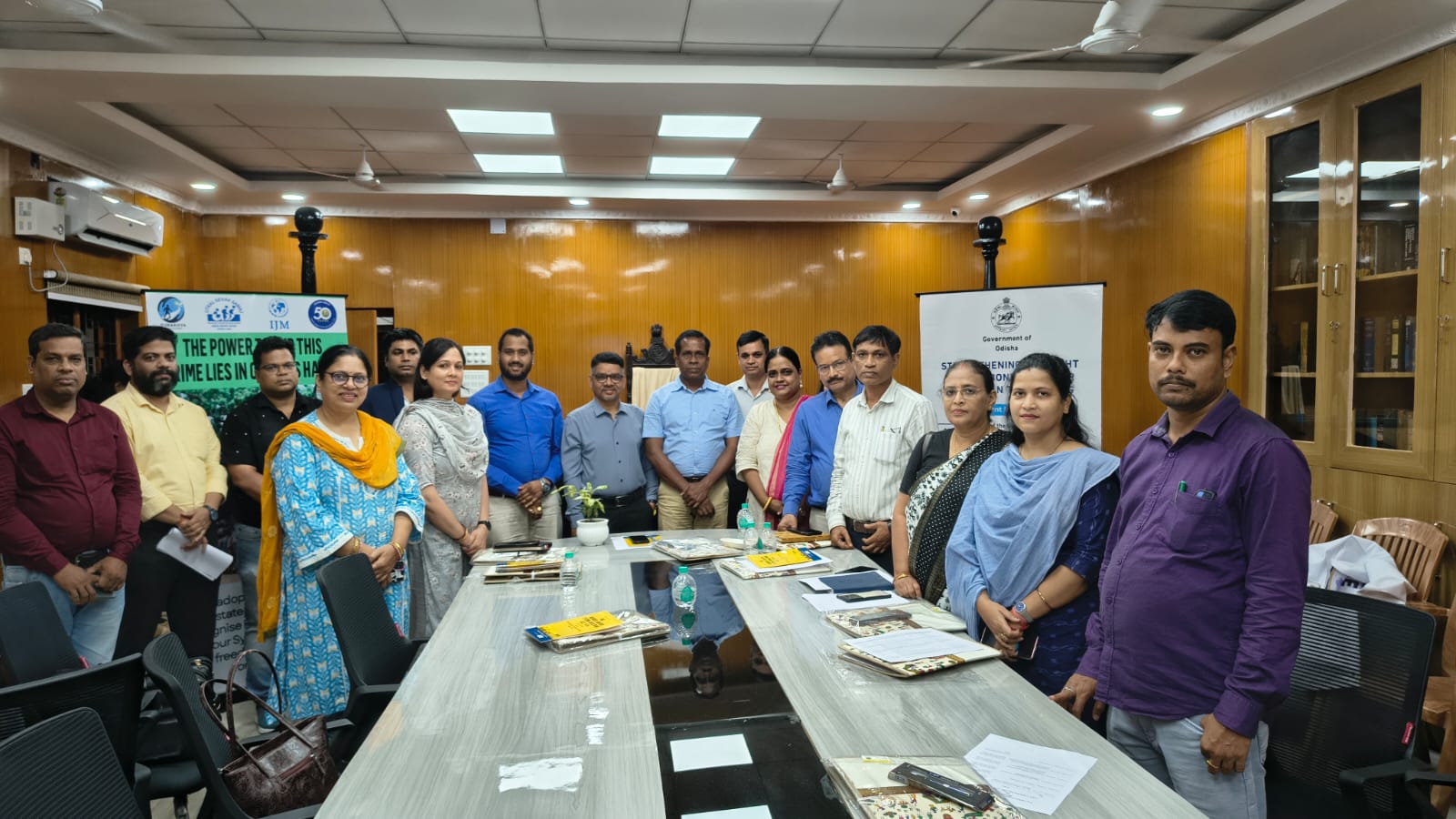
The consultation saw active participation from Judges of the High Court of Orissa, senior government officials, judicial officers, law enforcement authorities, child rights experts, and representatives from multiple departments. Officials from the Departments of Women & Child Development, School & Mass Education, Health & Family Welfare, Panchayati Raj, Social Security & Empowerment of Persons with Disabilities, and Odisha Police shared updates on departmental initiatives and pledged greater coordination to protect children.
The consultation concluded with a strong message: ensuring the safety, dignity, and empowerment of every girl child requires united action, stronger institutional frameworks, and deeper community engagement across Odisha.