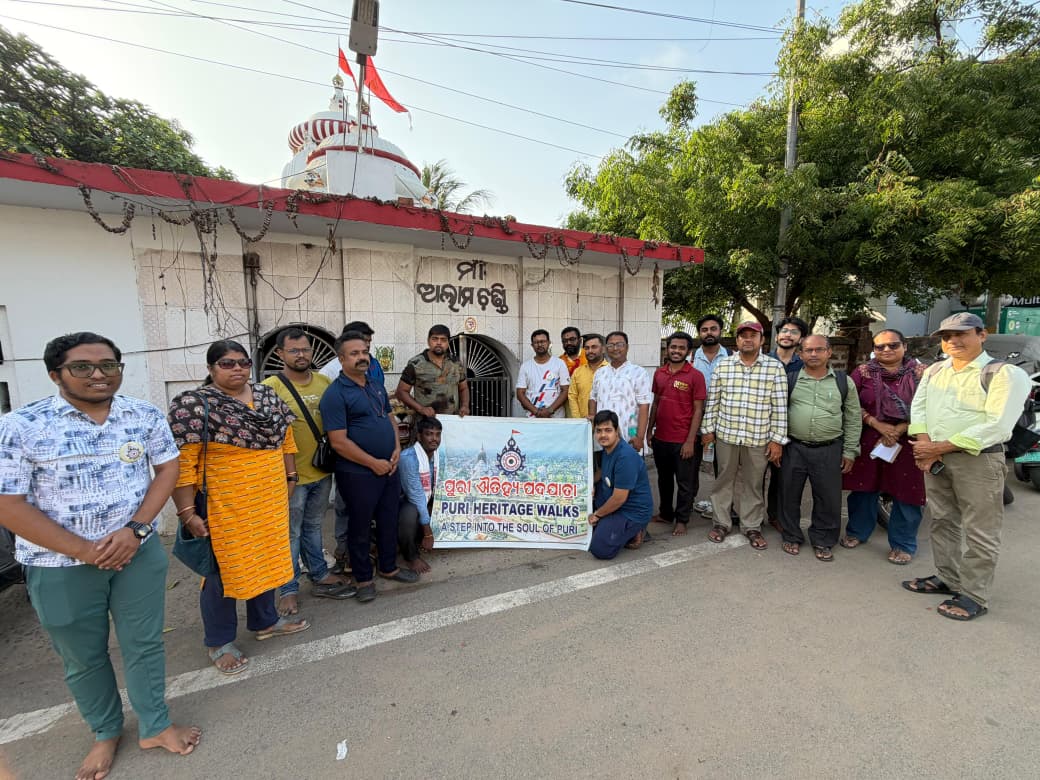
Puri: Blending history, culture, and living traditions, the latest edition of the Puri Heritage Walks offered participants an immersive journey through the lesser-explored heritage landscape of the pilgrim town. The 20th edition of the walk brought together heritage enthusiasts to explore Kumharapada village and its deep-rooted connection with the rituals of Mahaprabhu Shri Jagannath.
The walk began at the historic Alamchandi Temple near Atharanala, a site of immense religious significance. Revered as one of the Ashta Chandi deities of Puri, Goddess Alamchandi is closely associated with the Nabakalebara rituals, during which temple servitors halt here while carrying sacred neem logs. Participants were introduced to the temple’s unique traditions, rituals, and iconography, including the rare seated posture of the four-armed deity.
Moving ahead, the group visited the iconic Atharanala Bridge, a structure known for its eighteen arches and believed to date back to the 13th century during the reign of King Bhanu Deva I. Apart from its architectural importance, the bridge is steeped in folklore and once served as a vital entry point for pilgrims entering Puri. Experts also highlighted the historical relevance of nearby ghats, including Atharanala and Harini Ghats.
The trail further included visits to notable religious sites such as the Makardhwaja Mahavir Temple and Budha Banambar Temple. Participants learned about unique local beliefs and rare depictions of deities, including the idol of Makardhwaja Mahavir, believed by some to be linked to the son of Lord Hanuman.
A key highlight of the walk was the visit to Kumharapada, the traditional potters’ village that plays a crucial role in the Jagannath Temple’s ritual ecosystem. Participants witnessed live pottery-making demonstrations, gaining insight into the crafting of earthen vessels like Adharapana handis and other items used in temple rituals. The process—from clay collection and wheel shaping to drying and kiln firing—offered a glimpse into a centuries-old craft still practiced by local artisans.
The heritage walk also covered sites such as Banambar Temple, Rajballav Math, and Bipada Mochana Mahavir Temple, while participants observed local youth preparing for the upcoming Pana Sankranti festival through traditional physical exercises.
Conducted under the leadership of Dr. Kumar Arojyoti and Ashok Manjari Nayak, and guided by heritage researcher Debi Prasanna Nanda, the event saw active participation from students and heritage lovers from across Odisha. The initiative continues to highlight the importance of preserving and celebrating the region’s tangible and intangible cultural heritage.