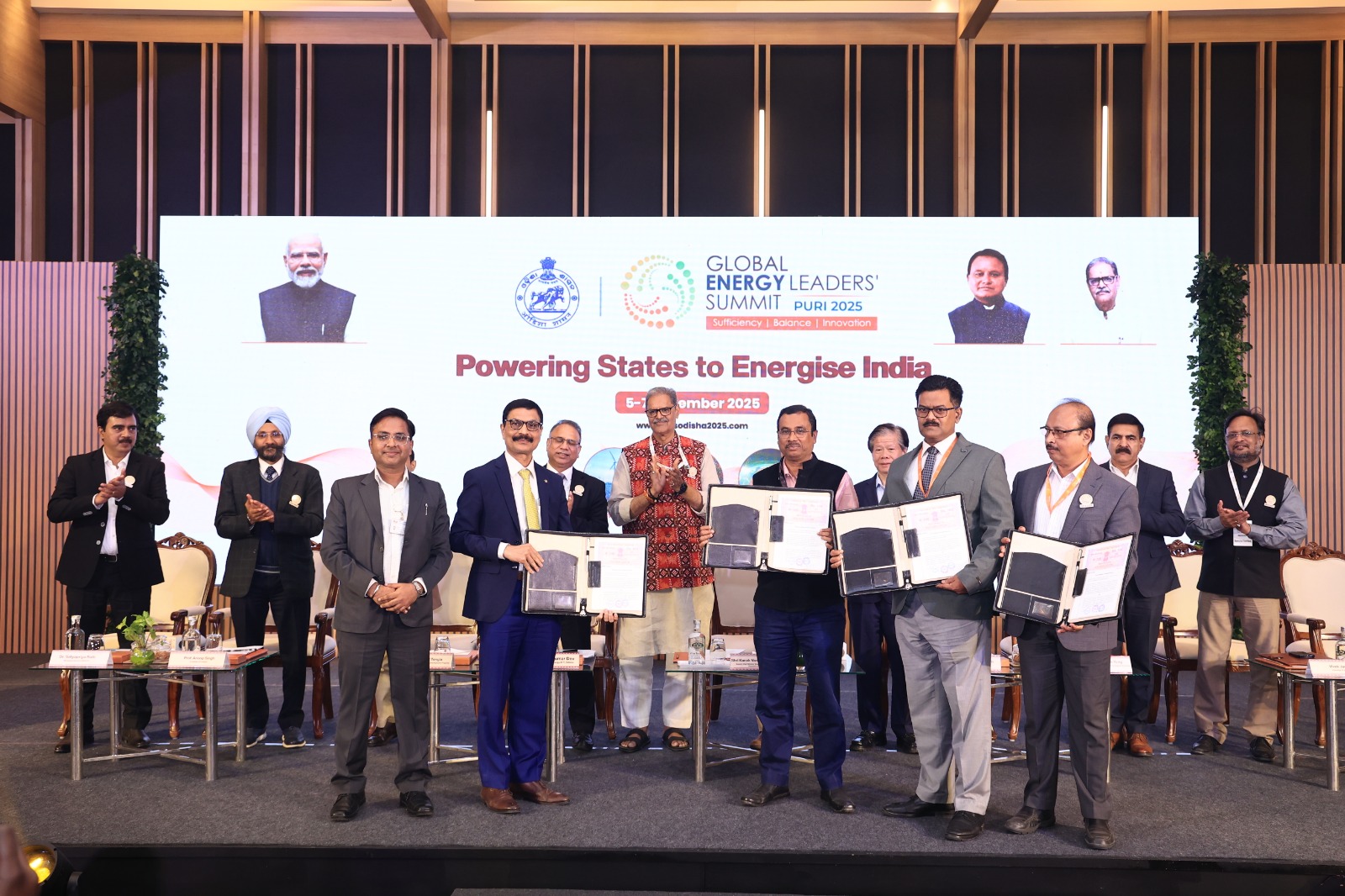
Puri: The Global Energy Leaders’ Summit 2025 (GELS 2025), conceptualised as India’s first COP-style platform for interstate coordination, concluded with a high-level press briefing in Puri, marking a significant step towards building a collaborative and future-ready clean energy ecosystem in the country.
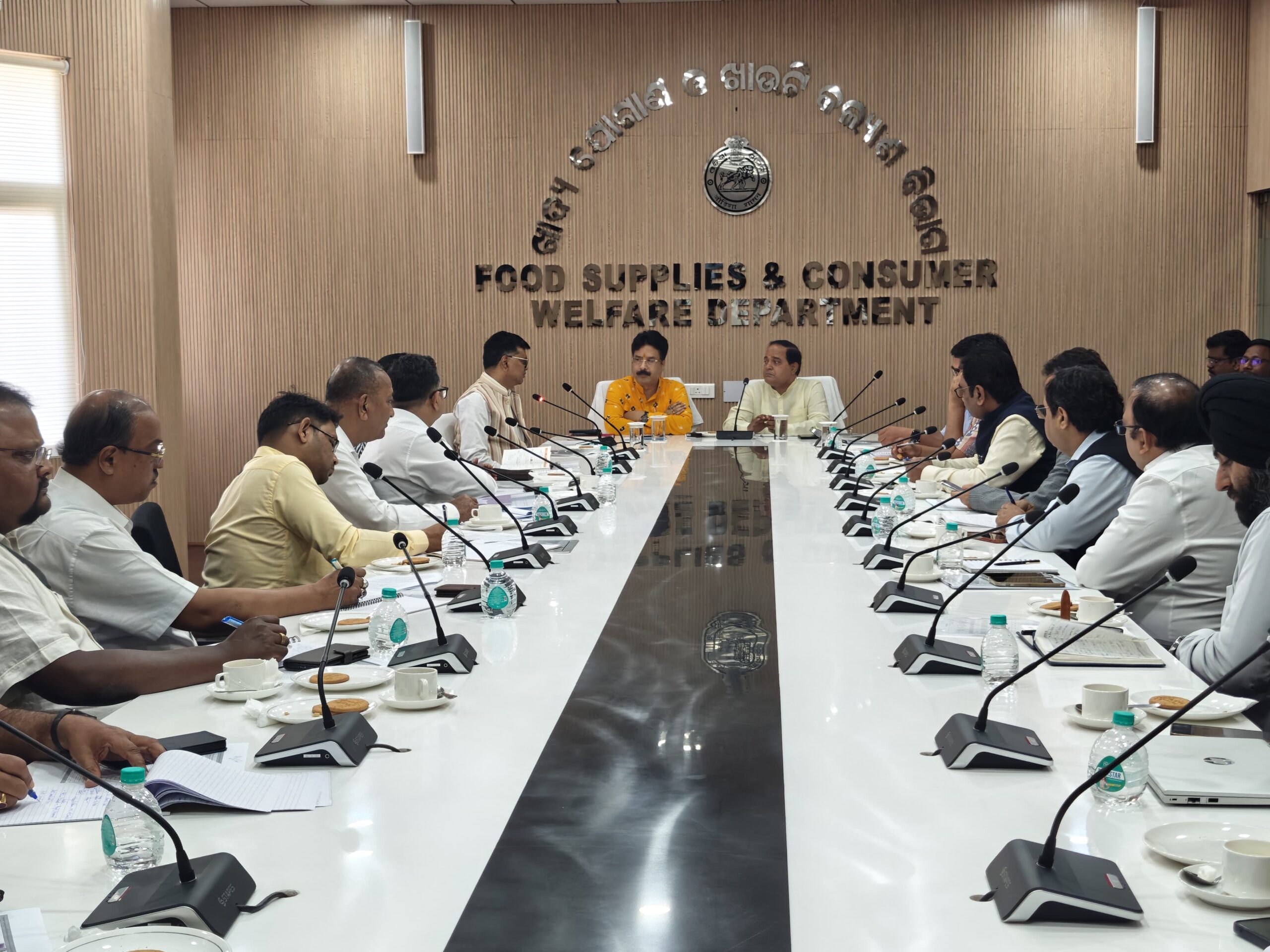
Addressing the media, Deputy Chief Minister (Energy, Agriculture & Farmers’ Empowerment) Kanak Vardhan Singh Deo, Principal Secretary (Energy and Electronics & IT) Vishal Dev, and Vivek Agarwal, Country Head, Tony Blair Institute for Global Change, outlined the key outcomes of the two-day summit and its long-term vision for India’s energy sector.
Over two days, GELS 2025 brought together senior policymakers, industry leaders, global experts, researchers and institutional partners for an intensive series of closed-door consultations, thematic panel discussions and technical sessions. The deliberations focused on emerging priorities such as AI-enabled grid security, carbon markets, innovative financing mechanisms, clean technology deployment and institutional reforms. Collectively, the discussions laid the foundation for a sustained, cooperative framework aimed at accelerating India’s transition to a clean, resilient and innovation-driven energy future.
A major highlight of the summit was the signing of four strategic Memoranda of Understanding (MoUs) to advance innovation, institutional strengthening and renewable energy deployment in Odisha. These included a trilateral MoU between Nanyang Technological University (NTU) Singapore, GRIDCO and IIT Bhubaneswar for renewable energy pilot projects and applied research, and a multi-institutional agreement between GRIDCO, ReNew, IIT Bhubaneswar and Avaada to establish a Green Hydrogen Centre of Excellence in the state.
In addition, a tripartite MoU between NLC India Renewables Ltd, OREDA and GEDCOL was signed to jointly develop renewable energy projects across Odisha, while another multi-agency agreement involving SECI, OHPC, GEDCOL and OREDA aims to accelerate integrated renewable energy planning and deployment.
Based on the extensive deliberations during the summit and inputs from the Union Ministry of Power and the Ministry of New and Renewable Energy, a draft of the Puri Declaration was formally presented. The draft has been circulated to states for consultation and consensus-building, with the aim of ensuring collective ownership. Emphasising the spirit of cooperation, Deputy Chief Minister Kanak Vardhan Singh Deo said the declaration represents a shared acknowledgement that “no one state can go alone,” and a collective commitment to work together on India’s clean energy journey.
NITI Aayog CEO B.V.R. Subrahmanyam congratulated the Odisha government for leading a summit of such scale and urged that GELS be held annually as a platform for deeper interstate collaboration. Vishal Dev noted that the summit demonstrated a strong appetite among states and institutions for coordinated action and shared reform frameworks over the coming decade. Offering the vote of thanks, Professor Anoop Singh observed that GELS had evolved into a platform where leaders not only discuss challenges but co-create solutions.
GELS 2025 also set a benchmark in sustainability, being organised in accordance with ISO 20121 standards. The summit achieved carbon neutrality, with a total assessed footprint of 45.33 tonnes of CO₂ emissions—including international travel—neutralised through the plantation of 1,130 trees in Nuapada district.
As the summit drew to a close, leaders reaffirmed that GELS 2025 marks the beginning of a long-term collaborative process. The Puri Declaration is expected to guide future working groups, interstate coordination mechanisms and annual follow-ups, with Odisha positioned at the forefront of driving India’s inclusive and coordinated clean energy transformation in line with its Net Zero ambitions.