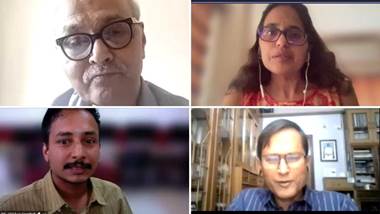
New Delhi: The CSIR-National Institute of Science Communication and Policy Research (NIScPR) organized a virtual workshop today on “Interactive and New Approaches to Communicate Science in Assamese.” The workshop aimed to enhance science communication skills, covering popular science writing, video production, podcasts, and social media engagement in Assamese. Aspiring and experienced science communicators, teachers, and researchers from various universities, institutions, and colleges in Assam participated in the event, fostering a network within the field.
The workshop began with an introduction by Dr. Paramananda Barman, Scientist at CSIR-NIScPR and the workshop’s coordinator. Prof. Ranjana Aggarwal, Director of CSIR-NIScPR, delivered the welcome address, highlighting the institute’s commitment to science communication in Indian languages. Prof. Aggarwal discussed CSIR-NIScPR’s initiatives, including the SVASTIK program disseminating validated traditional knowledge in 17 Indian languages and the publication of popular science magazines.
The Chief Guest, Dr. Dinesh Chandra Goswami, Scientist G (Retd.) at CSIR-NEIST and a prominent Assamese science communicator, stressed the importance of using simple language in popular science writing. He also emphasized the need for financial support to nurture budding science communicators in the field of science writing.
The first technical session focused on “Popular Science Writing” and featured talks by leading Assamese science communicators Dr. Ramesh Chandra Goswami, Dr. PC Tamuly, and Dr. Paban Kumar Sahariah. Dr. Goswami highlighted the significance of popular science writing and shared insights to enhance writing skills. Dr. Tamuly emphasized the importance of science fiction in engaging a broader readership and encouraged diverse reading to improve writing skills. Dr. Sahariah discussed the necessity of promoting science writing in Indian languages and delved into the use of AI for translations, cautioning against potential pitfalls. Ms. Arati Halbe, Managing Editor of Research Matters, provided insights into writing stories in English and Marathi, emphasizing the use of local examples and cultural practices.
The second technical session covered “Science Filmmaking, Social Media & Podcasts for SciComm.” Shri Vivek Kannadi of Science Media Centre, IISER Pune, discussed the importance of films in science communication, covering essential aspects of filmmaking such as scriptwriting and storyboarding. Dr. Paramananda Barman and his team used examples from the SVASTIK program to demonstrate creating infographics, short videos, reels, and podcasts using free online tools. The daylong session concluded with a brainstorming discussion on strengthening science communication and outreach strategies in Assamese. The workshop has laid the foundation for fostering effective science communication in Assamese, contributing to the wider dissemination of scientific knowledge in the region.
Bhubaneswar: Responding to mounting criticism and political consensus, the Odisha government has begun the process…
Bhubaneswar: The inaugural edition of the National Indoor Athletics Championships concluded on a high note…
Bhubaneswar: The Higher Education Department, Government of Odisha has announced that the Common PG Entrance…
Bhubaneswar: The Government of Odisha has nearly concluded paddy procurement for the 2025–26 Kharif season,…
Bhubaneswar: Strengthening its efforts to stabilise farm incomes and streamline agricultural marketing, the Odisha Rural…
Bhubaneswar: With a growing focus on sustainable agriculture and income diversification, the Agricultural Promotion and…
