Kendrapara: As monsoon fury grips Odisha, the district of Kendrapara finds itself battling not just devastating floods, but an alarming rise in wildlife threats. With rivers breaching their banks after days of relentless rain, floodwaters have invaded homes, schools, and streets—bringing with them crocodiles and snakes, terrifying already-stranded residents.
At least 30 villages have been inundated, displacing hundreds of families. Submerged roads and fields have forced many to seek refuge on higher ground or in government relief shelters. The rising water levels have turned daily life into a struggle, especially in low-lying areas where access to food and medical care is severely hampered.
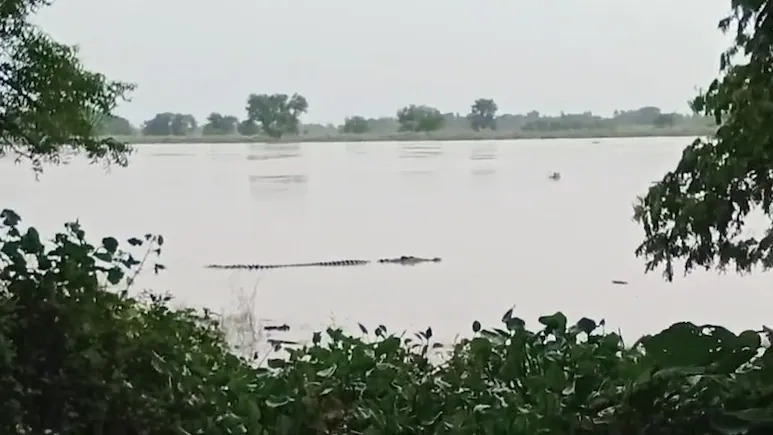
But it’s the surge in crocodile sightings that has escalated fear. Videos and photos shared by locals show crocodiles swimming through waterlogged streets and farmlands. Residents have also reported frequent encounters with snakes. The Forest Department has responded by issuing urgent advisories, warning people not to walk through floodwaters and to report any animal sightings immediately.
“We are not just dealing with water now—there are crocodiles right outside our houses. It’s terrifying,” said a resident of a flooded village near the Rajnagar block.
Kendrapara, which borders the Bhitarkanika National Park—a protected area home to a large population of estuarine crocodiles—often experiences such wildlife movement during seasonal floods. However, officials say this year’s flooding has triggered one of the most severe spillovers in recent memory.
The district administration, with support from ODRAF and local emergency teams, is providing relief materials, including dry food, drinking water, medicines, and tarpaulin sheets. Rescue boats have been deployed to evacuate people trapped in waterlogged zones, and mobile health teams are working to prevent the outbreak of diseases.
The situation remains tense as the India Meteorological Department (IMD) has predicted more heavy rainfall in the coming days, increasing the threat of further flooding and potential breaches in embankments.
Officials have termed it a “dual disaster”—a combination of natural calamity and wildlife intrusion. Forest personnel are on continuous patrol and have stepped up monitoring in and around human settlements.
Environmental experts have emphasized the growing impact of climate change in intensifying extreme weather events and have called for urgent ecological planning and flood-resilient infrastructure, especially in districts bordering wildlife habitats.