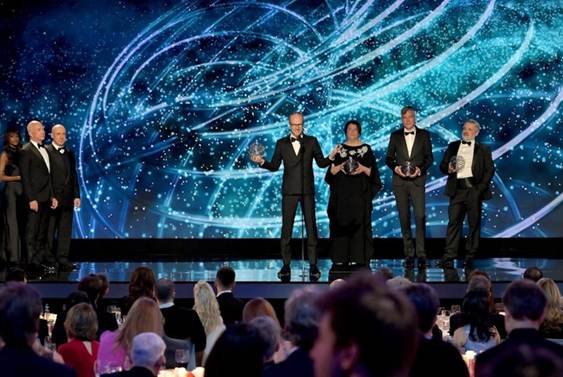
Bhubaneswar/Kolkata: In a historic recognition of India’s contributions to high-energy physics, the Experimental High Energy Physics (HEP) group of the Bose Institute, Kolkata, has been awarded the Breakthrough Prize 2025 in Fundamental Physics. The recognition comes as part of the global collaboration ALICE at CERN, a project exploring the earliest moments of the universe through the study of Quark-Gluon Plasma (QGP).
The $3 million prize, often referred to as the “Oscars of Science,” honors researchers across four major CERN collaborations—ATLAS, CMS, ALICE, and LHCb. The ALICE collaboration, in which the Bose Institute plays a vital role, has received $500,000, to be shared among its 1,869 contributing scientists.
The Bose Institute is the only autonomous institute under the Department of Science and Technology, Government of India, participating in ALICE. Its Experimental HEP group, currently comprising Prof. Supriya Das, Dr. Sidharth Kumar Prasad, Dr. Saikat Biswas, Dr. Sanchari Thakur (PDF), and Mintu Haldar (SRF), has played a crucial role in the collaboration.
“This is a moment of immense pride, not just for Bose Institute but for all Indian physicists working in large-scale science projects,” said Prof. Kaustuv Sanyal, Director, Bose Institute. “It will inspire young talent to pursue fundamental research and engage with international collaborations.”
The group’s involvement dates back to the leadership of Prof. Sibaji Raha, former Director of Bose Institute, who spearheaded its entry into the ALICE experiment.
One of Bose Institute’s significant technical contributions was the design and deployment of the Photon Multiplicity Detector (PMD)—a highly granular, proportional counter-based system for photon detection at forward rapidity. Commissioned in 2008, the PMD remained operational until 2018, with Bose Institute leading its operation and data management during its final years.
Post-operations, the team took responsibility for data cleanup, calibration, and quality assurance, ensuring that PMD’s vast datasets were optimized for physics analysis. These efforts were undertaken in collaboration with students and researchers from across Indian universities involved in ALICE.
In recent years, the Bose Institute team has also contributed to the Time Projection Chamber (TPC) upgrade of ALICE, supporting the deployment of Micro-Pattern Gas Detectors (MPGD) with Gas Electron Multiplier (GEM) technology. These upgrades cater to the high-luminosity conditions at the Large Hadron Collider (LHC), enhancing performance while maintaining stability and energy resolution.
Bose Institute researchers have led six key publications in ALICE’s scientific program and contributed to several others, covering areas from detector physics to particle collisions and QGP analysis. The team has earned international recognition for its rigorous approach and sustained engagement in both hardware and data-driven aspects of the collaboration.
Congratulating all participants, ALICE Spokesperson Prof. Marco Van Leeuwen stated, “This well-deserved recognition celebrates the collective scientific advancements we’ve achieved. All authors of publications based on Run 2 data up to July 15, 2024, will be recognized as laureates.”
Notable members of the Bose Institute’s extended HEP team include Prof. Sanjay Kumar Ghosh, Dr. Rathijit Biswas, Dr. Abhi Modak, Dr. Debjani Banerjee, Dr. Prottoy Das, and Dr. Md. Asif Bhatt.
The Breakthrough Prize allocation will also fund new PhD studentships, allowing selected students to spend up to two years at CERN, working on cutting-edge physics research.