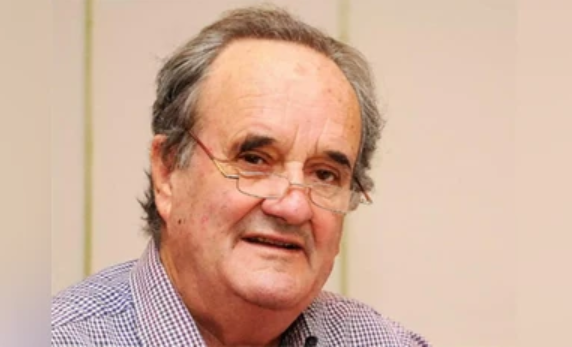
New Delhi: Mark Tully, the veteran journalist, celebrated author and one of the most respected foreign voices on India, passed away on Sunday at a private hospital in Delhi. He was 90. His death was confirmed by senior journalist and close associate Satish Jacob, who said Tully died at Max Hospital, Saket, where he had been undergoing treatment.
Tully had been unwell for several weeks and was admitted to the hospital on January 21. Hospital sources said he was being treated under the nephrology department, and his condition had been closely monitored.
Born in Calcutta (now Kolkata) on October 24, 1935, to British parents, Mark Tully developed a lifelong association with India that went far beyond professional reporting. He served as the BBC’s New Delhi bureau chief for 22 years, becoming one of the most recognisable and trusted voices interpreting India for international audiences.
Over the course of his distinguished career, Tully reported on some of the most defining moments in India’s modern history, earning a reputation for balanced, thoughtful and deeply informed journalism. His calm delivery and nuanced understanding of Indian society made his broadcasts authoritative, especially during periods of political upheaval.
Apart from news reporting, Tully presented the BBC Radio 4 programme Something Understood and worked on several documentaries exploring themes such as the British Raj, Indian Railways, and the country’s social and cultural transitions. His long engagement with India was also reflected in his writing.
A prolific author, Tully wrote several influential books on India, including No Full Stops in India, India in Slow Motion and The Heart of India, which offered rare insights into the country’s complexities through the eyes of a deeply empathetic observer.
In recognition of his contribution to journalism and his close association with India, Tully was knighted in 2002. He was later awarded the Padma Bhushan by the Government of India in 2005.
Tributes poured in from political leaders, journalists and public figures across the country, remembering him as a journalist whose work shaped public understanding of India for decades. Union Minister Hardeep Singh Puri said he was “deeply saddened” by Tully’s demise, recalling that for generations, his “calm and unmistakable voice was synonymous with news.”
In a post on X, Puri noted that as the BBC’s long-time correspondent and bureau chief in India, Tully reported on many of the subcontinent’s most critical moments. He also recalled interacting with Tully in 1978, describing his reportage during the Emergency as “incisive, insightful and credible.”
Former Rajya Sabha MP and columnist Swapan Dasgupta described Tully as a journalist who combined professional rigour with a sense of adventure. He noted that in an era of limited communication, Tully’s BBC broadcasts were often regarded as the final word on unfolding events, even in remote parts of the country. Calling him an “old India lover” with deep roots in Calcutta, Dasgupta said Tully would be sorely missed.
Mark Tully’s death marks the end of an era in international journalism on India, leaving behind a legacy defined by credibility, curiosity and an enduring bond with the country he chronicled for more than half a century.