Bhubaneswar: Strengthening early childhood care and education through better nutrition, healthcare, early stimulation and play-based learning was the focus of a two-day National ECCE and Education Conclave that began in Bhubaneswar on Wednesday.
Organised by the Department of Women and Child Development, Government of Odisha, in collaboration with Rocket Learning, the conclave is being held on November 11 and 12 at LYFE Hotels. It brings together policymakers, government officials, health and education experts and development partners to discuss ways to improve early childhood development during the first six years of a child’s life.
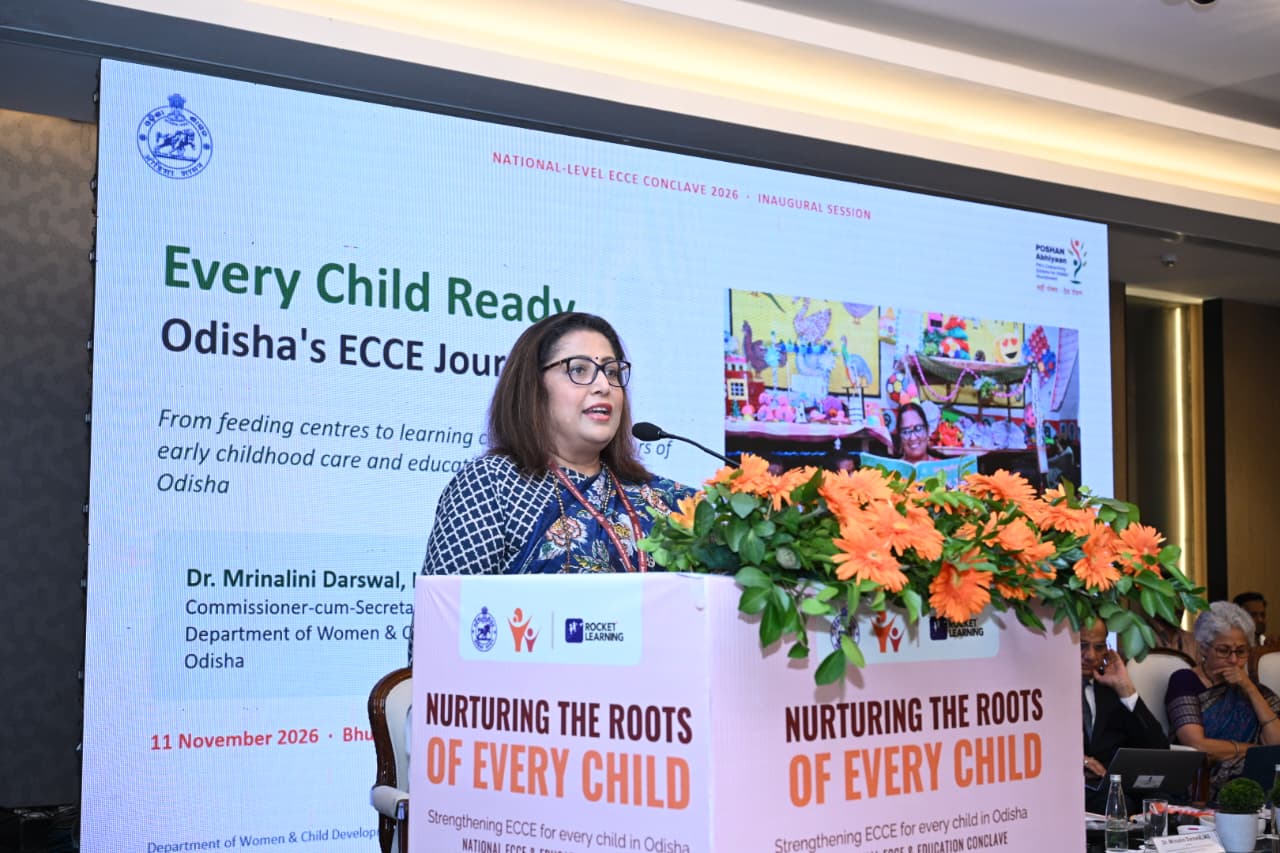
Director of Women and Child Development Monisha Banerjee delivered the welcome address, while Commissioner-cum-Secretary of the department Dr Mrinalini Darswal outlined Odisha’s efforts to strengthen Early Childhood Care and Education (ECCE).
In her keynote address, paediatrician and former Deputy Director of the World Health Organization Dr Soumya Swaminathan highlighted the importance of the first six years in shaping a child’s lifelong health, learning and development. Former NITI Aayog Member Dr V.K. Paul emphasised the need to empower Anganwadi workers and adopt a holistic approach to early childhood development.
Speaking about the state’s ‘Asa Kheliba Asa Sikhiba’ (Come, Let’s Play, Let’s Learn) initiative, Dr Darswal highlighted the role of technology, trained educators and active parental participation in improving early learning. She also stressed the need for collaboration between the government and development partners to expand quality early childhood services.
Three initiatives were unveiled during the inaugural session. These include digital Information, Education and Communication (IEC) materials for children aged 0–6 years to promote early care, learning and parental engagement; a video on the importance of early childhood and responsive parenting; and ‘Supalana’, Rocket Learning’s Birth-to-3 programme aimed at strengthening early childhood development.
The first day also featured three panel discussions covering different stages and aspects of early childhood development.
The first session, ‘The First Three Years: Nurturing Health, Nutrition and Early Stimulation (0–3 Years)’, focused on essential care, nutrition, early stimulation and Odisha’s community-based ECCE model. The panel included public health consultant Dr Ramya Pinnamaneni, Cuttack Collector Dattatraya Bhausaheb Shinde and Inspector General of Police, Central Range, Odisha, Dr Satyajit Naik. Sukhna Sawhney, Education and Content Lead at Rocket Learning, moderated the discussion.
The second session, ‘Building School Readiness: Play-Based Learning and Model Anganwadi Centre Delivery (3–6 Years)’, examined the national roadmap for pre-school education and ways to strengthen Anganwadi Centres as early learning spaces. The panel comprised Dr Rita Pattnaik, Additional Director, SPNIWCD; Chandrika Nayak, Deputy Director, SCERT; Dr Beena Koshy, Professor at CMC Vellore; and Radhika Jha from the Union Ministry of Women and Child Development, who joined virtually. Monisha Banerjee moderated the session.
The third discussion, ‘Partnerships for Early Childhood Development’, explored interdepartmental coordination, public-private partnerships and CSR-led interventions, drawing on Meghalaya’s Early Childhood Development Mission. The panellists included Ronald Kynta, COO of the Meghalaya ECD Mission; Nirupa Behera, Deputy Director, Pedagogy, OSEPA; and Itishree Das, OAS, Special Secretary to the Odisha Government’s W&CD Department. Radhika Mathur, State Initiative and Policy Lead, moderated the session.
Additional Secretary, ECCE, Women and Child Development Department, Swayamprava Mohanty, proposed the vote of thanks at the inaugural session.
The discussions on the first day underlined the need for an integrated approach to early childhood development, bringing together nutrition, healthcare, early learning, an empowered Anganwadi workforce, parental involvement and coordination among government departments.