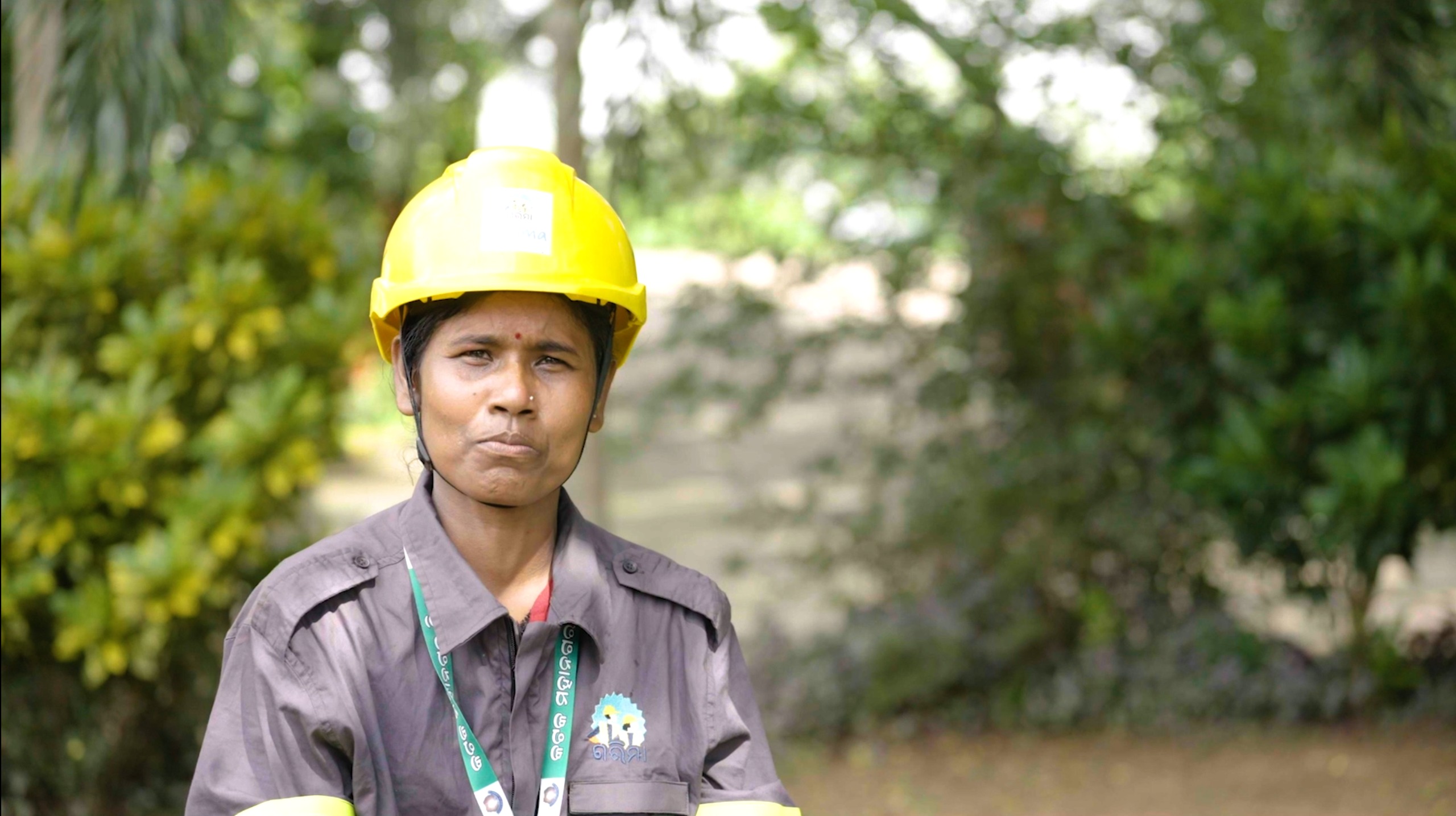
Bhubaneswar: For Jhunulata Naik of Cuttack, survival once meant cleaning toilets at a nursing home and raising her seven-year-old son alone after her husband left. Today, she wears a uniform, works with safety equipment and earns a regular income as Odisha’s first woman desludger—a transformation she credits to an opportunity under the State government’s GARIMA Scheme.
Jhunulata’s journey is one of resilience, but also of how skills, institutional support and safer working conditions can change the lives of sanitation workers.
After being left by her husband, Jhunulata became the sole breadwinner for her young son. She took up work at a nursing home, where she cleaned toilets to support her family. The job was physically demanding and offered little security or recognition, but she continued working to ensure that her son had food and a future.
A turning point came when she was brought under the GARIMA Scheme, the Odisha government’s initiative aimed at improving the safety, dignity, skills and social security of Core Sanitation Workers.
Through the Cuttack Municipal Corporation (CMC), Jhunulata received specialised training in desludging onsite sanitation systems. Equipped with technical skills and the necessary safety measures, she entered a field traditionally dominated by men.
She went on to become Odisha’s first woman desludger.
For Jhunulata, the transition was about much more than changing jobs. Her new work has given her a formal professional identity, regular remuneration, protective equipment and greater confidence while carrying out an essential public sanitation service.
Her journey has also challenged a gender stereotype in sanitation work. By entering desludging as a trained professional, she has demonstrated that women can take up technically demanding sanitation jobs when they are provided with appropriate training, equipment and a safe working environment.
Yet, her greatest motivation remains her son.
Jhunulata dreams of providing him with a good education and enabling him to pursue higher studies—opportunities that she herself could not easily access amid financial hardship. Her work today is therefore closely tied to her hope of creating a different future for her child.
Her story reflects the larger objective of GARIMA, which seeks to move sanitation work away from unsafe and undignified practices by promoting mechanisation, skill development, protective equipment, social security and professional recognition for Core Sanitation Workers.
The State’s commitment to worker safety has also received further emphasis with Chief Minister Mohan Charan Majhi announcing life insurance coverage for Core Sanitation Workers engaged in hazardous sanitation work at the previous national conclave, along with compensation in cases of death during duty.
The focus now shifts to the 2nd National GARIMA Conclave 2026, scheduled to be held on August 22 under the theme “Mission Zero: Ending Fatalities in Sanitation Work.”
The mission seeks to put worker safety at the centre of sanitation systems, with the larger goal of preventing fatalities rather than merely responding to them after an accident.
Jhunulata’s story gives that objective a human face. From cleaning toilets to becoming the State’s first woman desludger, she has moved from an uncertain livelihood to a skilled profession that provides her with greater security and dignity.
Her journey is a reminder that dignity at work is not merely about earning a livelihood—it is also about having the skills, safety, recognition and opportunity to hold one’s head high while doing work that keeps communities healthy.