Cuttack: The 79th heritage trail under the Cuttack Heritage Walks (CHW) offered participants a reflective and enriching experience with a visit to a historically significant Bodhi tree located within the Satyabrata Stadium premises. The tree, planted in 1978 by Fuji Maharaj of Japan, stands as a symbol of peace, cultural exchange and Indo-Japanese friendship, adding a meaningful dimension to the city’s lesser-known historical narratives.
The heritage walk took participants through several iconic landmarks in and around the Barabati Fort precinct, offering insights into Cuttack’s layered past. Key sites covered during the trail included the remains of Barabati Fort, the historic Shahid Qila Masjid, the colonial-era Cuttack Club, and the revered Gadchandi Temple.
Participants were briefed on the architectural, cultural and socio-political significance of each location, helping them understand the evolution of Cuttack as a centre of power, culture and coexistence across different historical periods.
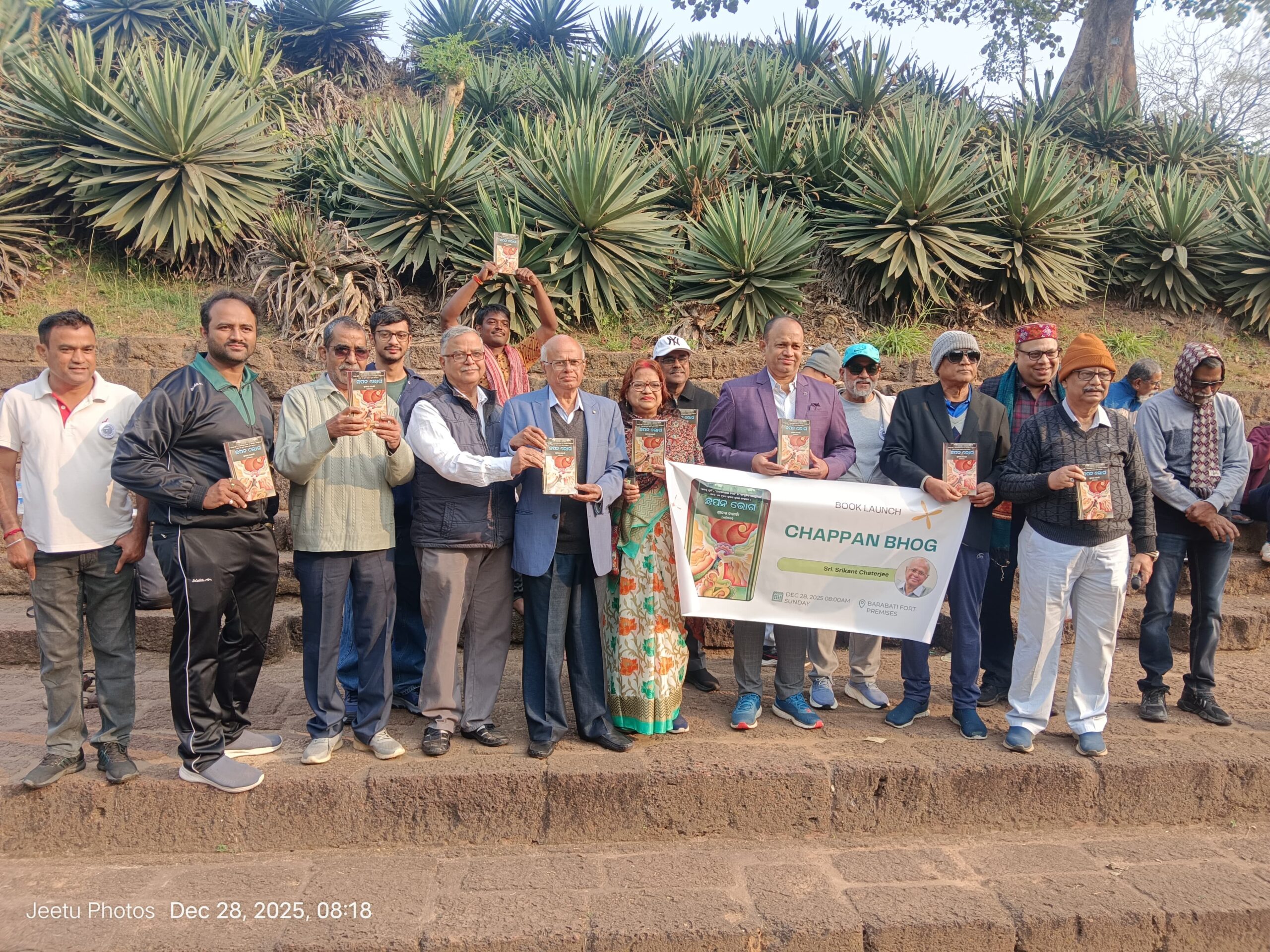
A special highlight of the event was the release of the book “Chappan Bhog”, a collection of essays authored by Sreekant Chatterjee, Retired Principal Commissioner, Income Tax Department, Mumbai. The book was released by Rajendra Kumar Jena, Printer and Publisher of the daily The Samaja, who lauded the author’s contribution to socio-cultural writing. Published by Grantha Mandira, Cuttack, the book reflects a wide range of social, cultural and intellectual themes drawn from the author’s long public and professional engagements.
The heritage walk witnessed the enthusiastic participation of around 30 members, including retired professionals, working individuals and students, highlighting a growing intergenerational interest in heritage awareness and conservation.