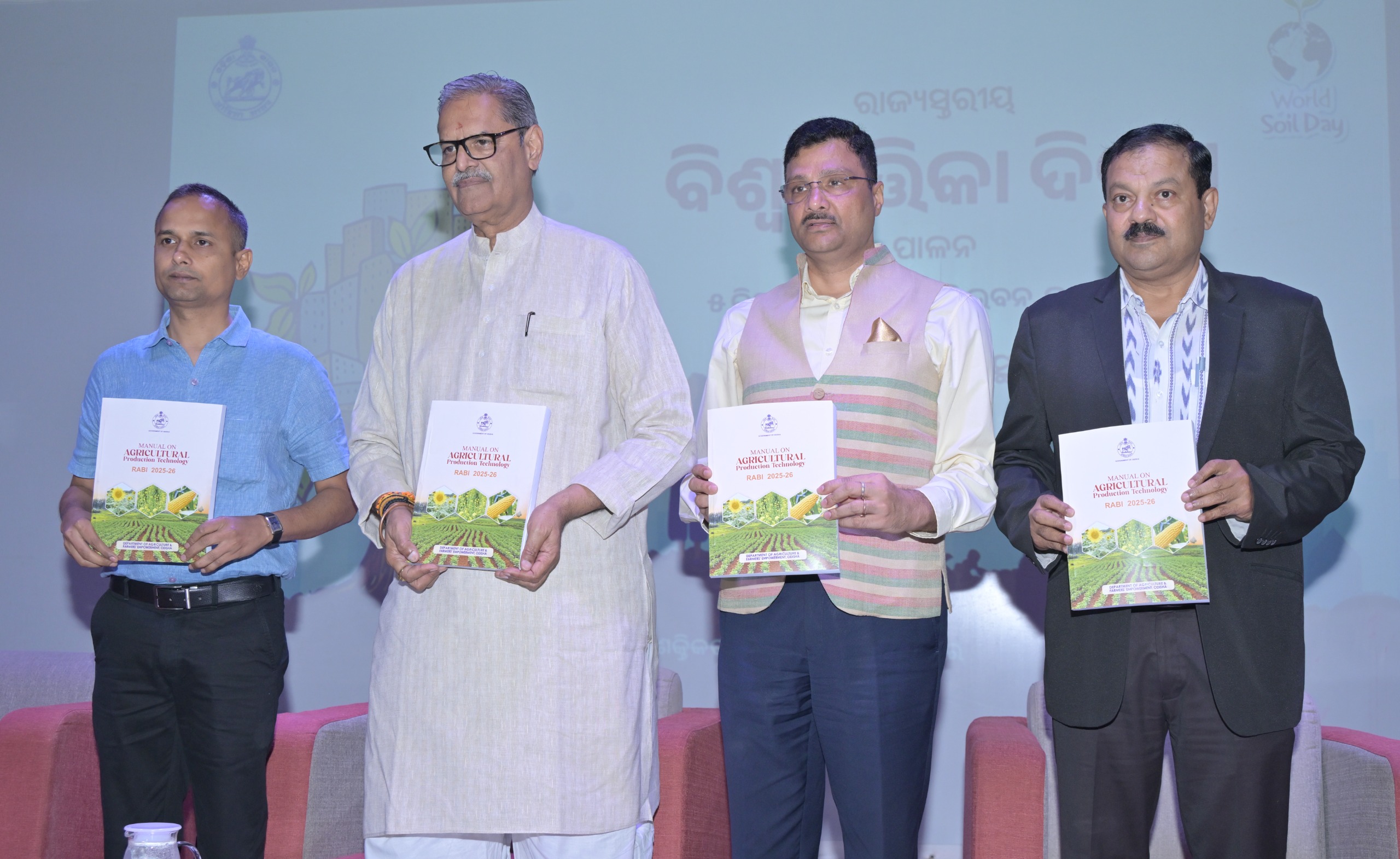
Bhubaneswar: The State Level celebration of World Soil Day 2025 was held on December 5 at the auditorium of Krushi Bhavan, Bhubaneswar, underscoring the vital role of soil health in sustainable development. Observed with the global theme “Healthy Soils for Healthy Cities”, the event highlighted the growing importance of protecting soil resources to ensure food security, environmental balance, clean water and improved quality of life in rapidly urbanising regions.
Addressing the gathering as the chief guest, Deputy Chief Minister in charge of Agriculture & Farmers’ Empowerment and Energy, Kanak Vardhan Singh Deo, called upon farmers, scientists and stakeholders to adopt sustainable soil management practices. He emphasised reduced dependence on chemical inputs, enrichment of soil organic matter and wider adoption of natural and climate-resilient farming methods to preserve soil fertility for future generations.
Principal Secretary, Agriculture & Farmers’ Empowerment Department, Dr. Arabinda Kumar Padhee highlighted the State Government’s initiatives to strengthen soil testing infrastructure and bridge knowledge gaps among farmers through scientific advisory services. He underlined that informed decision-making based on soil health data is crucial for long-term agricultural sustainability.
Director of Agriculture & Food Production, Odisha, Shri Shubham Saxena delivered the welcome address, stressing the relevance of the World Soil Day theme in the context of increasing urbanisation and changing land use patterns. A short video message on World Soil Day 2025 was screened, setting the tone for the programme.
During the event, the Deputy Chief Minister inaugurated the Manual on Agricultural Production Technology – Rabi 2025–26 and distributed Soil Health Cards to farmers, reinforcing the importance of scientific nutrient management. Exhibition stalls showcasing best practices in soil conservation and sustainable farming were also inaugurated.
The technical session featured experts sharing insights on sustainable soil management, natural farming techniques, use of city compost, urban gardening and effective utilisation of Soil Health Card recommendations. Progressive farmers also shared field-level experiences on maintaining soil vitality and productivity.