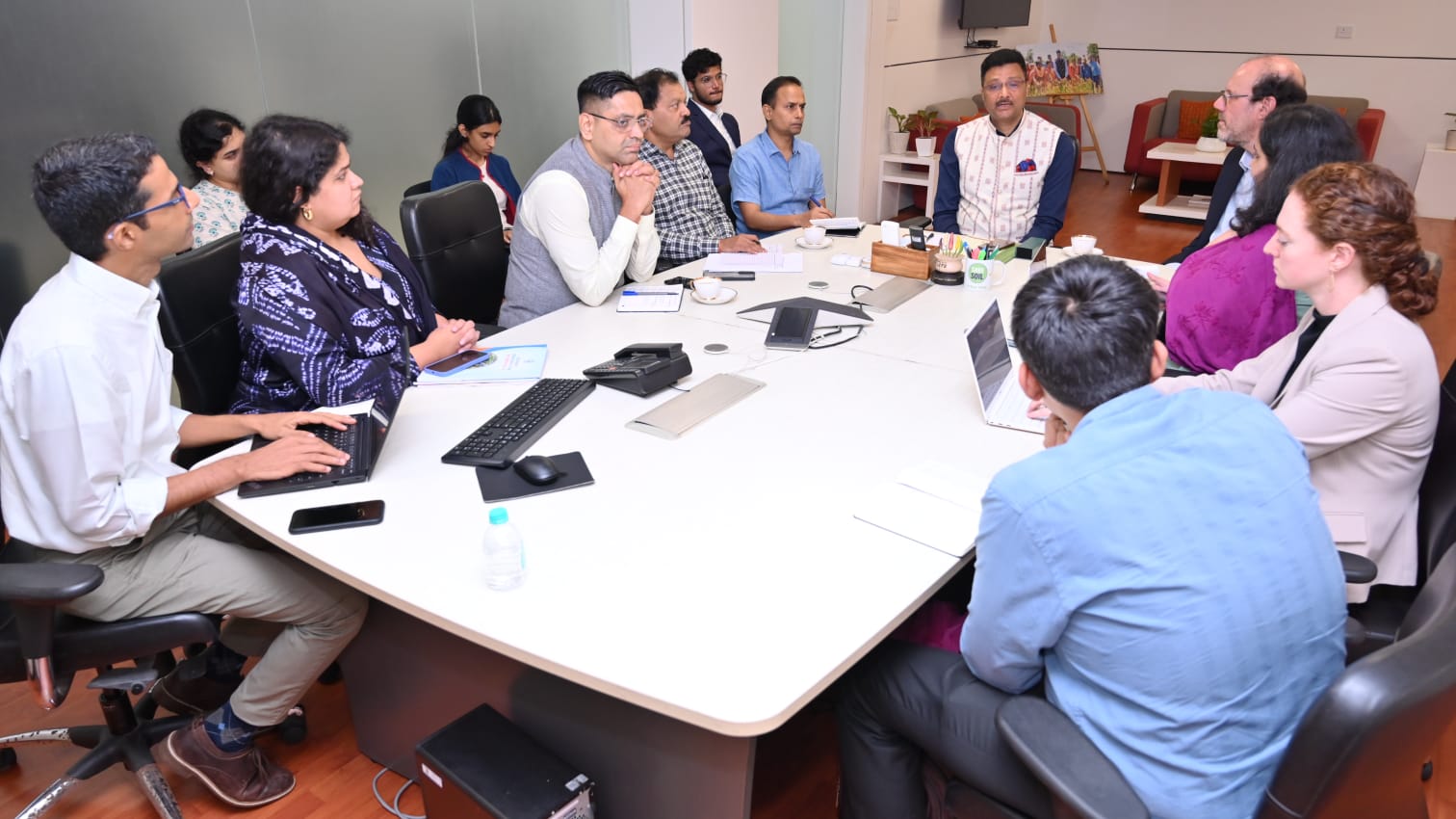
Bhubaneswar: Nobel Laureate Prof. Michael Kremer and a 12-member delegation from the University of Chicago on Saturday visited Krushi Bhavan to review their ongoing research on weather forecast dissemination systems and their effectiveness among Odisha’s farming communities.
At a meeting chaired by Dr. Arabinda Kumar Padhee, Principal Secretary of the Agriculture and Farmers’ Empowerment Department (DA & FE), Prof. Kremer praised the Krushi Samrudhi Helpline (KSH), noting that its wide outreach has been instrumental in helping last-mile farmers safeguard crops against climate-related challenges.
He recommended the integration of Artificial Intelligence (AI) into the forecasting system, factoring in rainfall, temperature, and humidity to predict pest incidence more accurately. “Such forecasting will enable farmers to adopt timely precautionary and preventive measures against abnormal weather events,” he said. Prof. Kremer further suggested combining multiple forecasting models with the existing KSH platform to strengthen the advisory system.
Highlighting Odisha’s resilience-focused strategies, Dr. Padhee outlined initiatives such as Comprehensive Rice Fallow Management, crop insurance schemes, customised agro-advisories, digital crop surveys, farmer registry through Krushak Odisha, adoption of stress-tolerant crop varieties, and digital pest monitoring. He also referred to the contingency plan developed with OUAT, which provides a framework to mitigate the impact of weather aberrations.
Prof. Kremer appreciated these initiatives and expressed hope for a long-term partnership in knowledge sharing and innovation between the University of Chicago and the Department.
The meeting was attended by Shubham Saxena, Director of Agriculture and Food Production; Subrat Kumar Panda, Director of Soil Conservation and Watershed Development; Additional Secretary; senior departmental officers; OUAT scientists; and members of the Climate Resilience Cell (CRC).