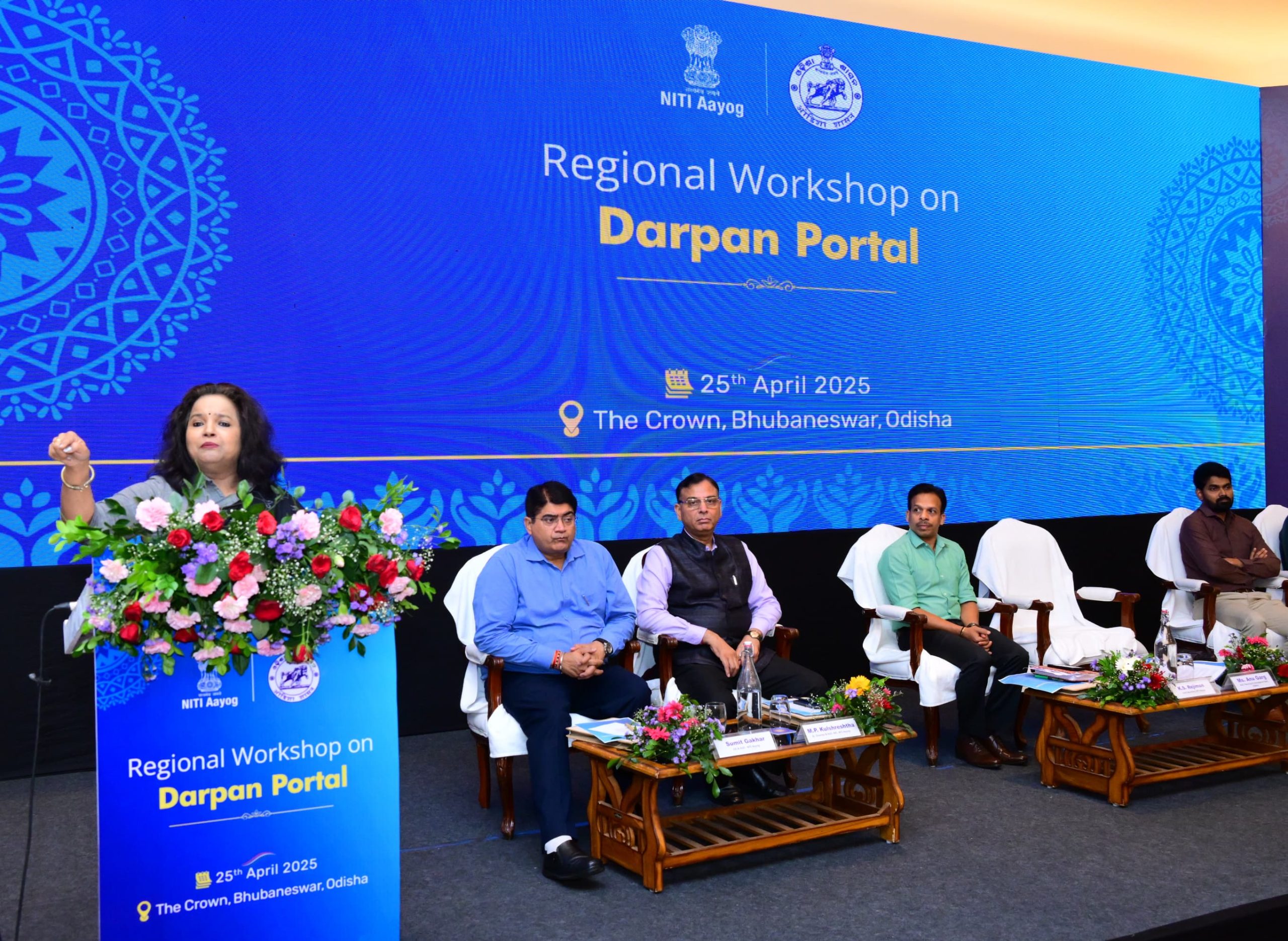
Bhubaneswar: At a regional workshop on the Darpan portal held in Bhubaneswar, Odisha’s Development Commissioner and Additional Chief Secretary Anu Garg emphasized the urgent need for States and Union Territories to adopt stricter measures in ensuring transparency in NGO operations. She called for making the Darpan Unique ID mandatory for all Non-Profit Organisations (NPOs) seeking government funding and urged authorities to ensure that no grants are disbursed without proper registration.
Garg noted that the Darpan portal, maintained by NITI Aayog since 2015, has become a vital tool in promoting accountability and tracking public funds allocated to the voluntary sector. She highlighted its potential to act as a centralized system for monitoring, evaluating, and regulating the growing number of NPOs across India.
During her address, she urged States and UTs to actively link their local NPO registration databases with the Darpan platform to build a more integrated national database. “A universal database powered by Darpan IDs will help eliminate redundancy and improve coordination across departments,” she said.
Pointing out the benefits of registration, Garg explained that the Darpan portal enhances visibility and credibility for NPOs while also serving as a critical decision-support tool for government agencies. The system includes a built-in mechanism to track financial disbursements through its integration with the Public Financial Management System (PFMS), and it also allows for blacklisting of non-compliant organizations.
She also stressed the importance of regularly updating records of blacklisted NGOs and ensuring that all stakeholders use the platform for planning and monitoring purposes. The portal, equipped with restricted-access dashboards for nodal officers, provides real-time analytics on grant disbursement, operational focus areas, and organizational performance.
Garg concluded by reaffirming the government’s commitment to transparent governance and said that adopting the Darpan portal widely will strengthen the partnership between the public sector and civil society, ensuring that public resources are used effectively for genuine social impact.