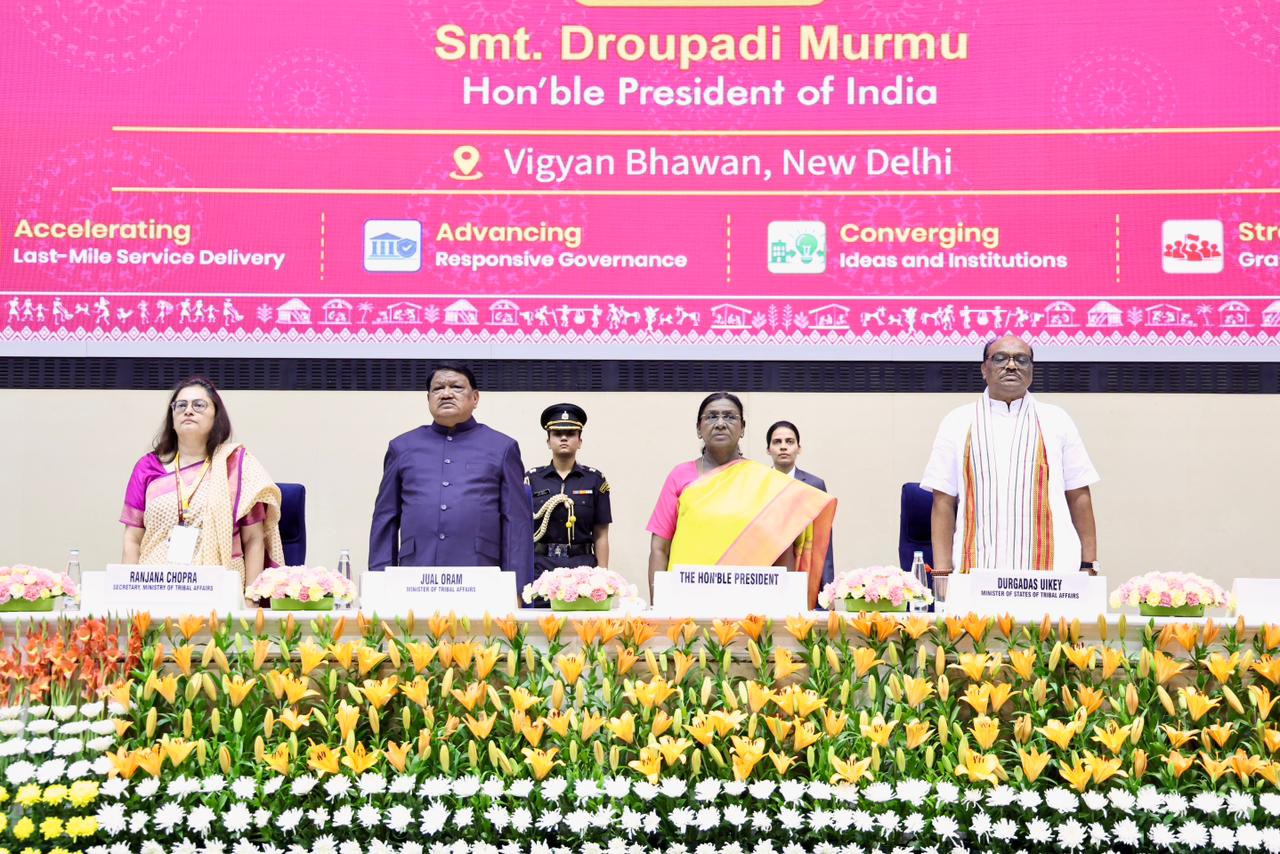
Bhubaneswar: In a major boost to science and technology education among tribal students, President of India Droupadi Murmu on Tuesday virtually inaugurated Space Labs in 75 Eklavya Model Residential Schools (EMRSs) across the country, paving the way for greater access to advanced scientific learning in remote and tribal areas.
The national initiative was launched in the presence of Union Tribal Affairs Minister Jual Oram and Union Minister of State for Tribal Affairs Durgadas Uikey. The programme aims to introduce tribal students to emerging fields such as space science, astronomy, robotics and satellite technology through hands-on learning and practical exposure.
Odisha has secured a significant place in the initiative, with 13 Eklavya Model Residential Schools selected for the establishment of Space Labs. The schools include EMRS Kotpad and Kundra in Koraput district, EMRS Mathili in Malkangiri, EMRS Thuamul Rampur in Kalahandi, EMRS Patana in Keonjhar, and eight EMRSs in Mayurbhanj district—Rairangpur, Thakurmunda, Baripada, Badasahi, Kaptipada, Koliana, Rasgovindpur and Udala.
Students, teachers, principals and education officials from EMRS institutions across different states joined the virtual inauguration ceremony. The event highlighted the Centre’s efforts to strengthen educational infrastructure and expand access to technology-driven learning opportunities in tribal-dominated regions.
Officials said the Space Labs will serve as innovation hubs within the schools, enabling students to explore scientific concepts through experimentation and interactive learning. The facilities are expected to foster curiosity, critical thinking and problem-solving skills while encouraging greater participation in STEM (Science, Technology, Engineering and Mathematics) education.
The initiative is also expected to inspire tribal students to pursue higher studies and careers in science, engineering, research and other technology-oriented sectors. By providing access to advanced learning tools and exposure to cutting-edge technologies, the programme seeks to bridge educational gaps and create new opportunities for tribal youth.
Education officials described the project as a transformative step towards empowering students in remote areas and nurturing future scientists, innovators and technology leaders from tribal communities.