The News Hashtag - 1
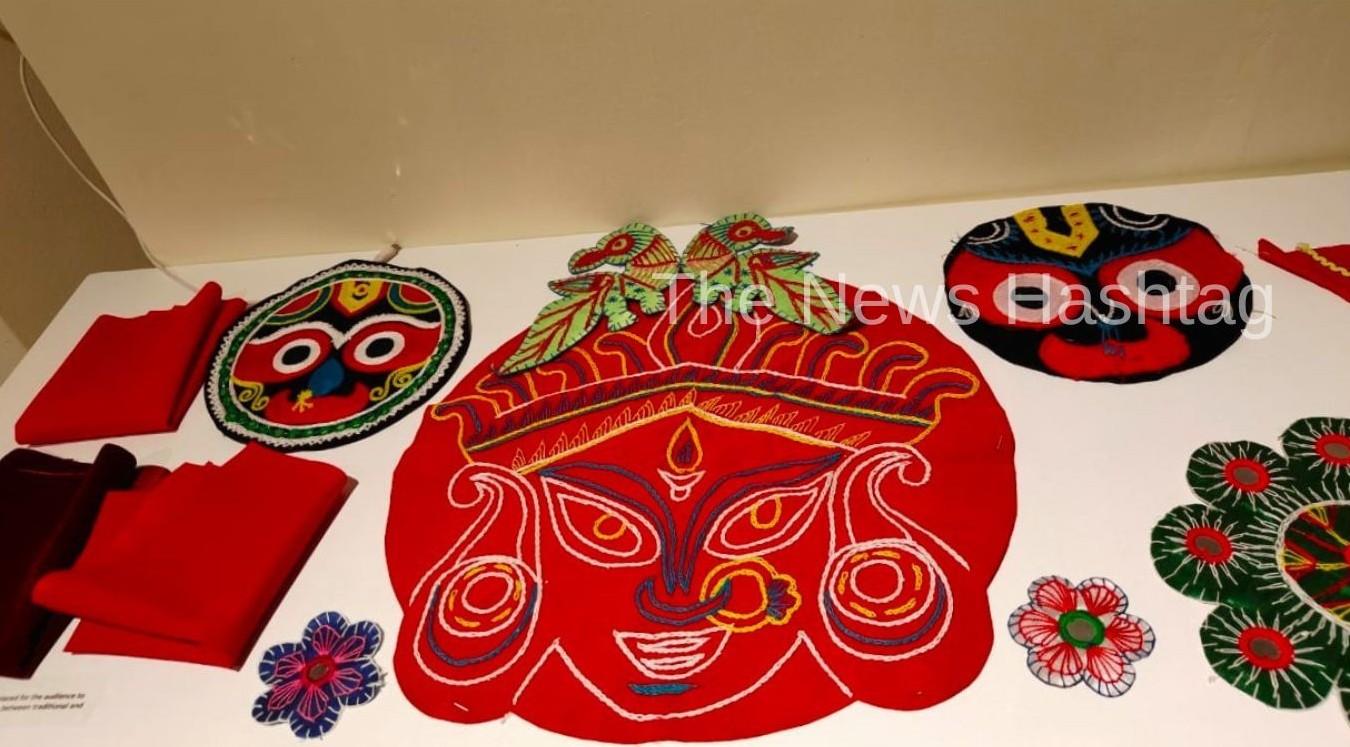
Bhubaneswar: Known across India for its vibrant appliqué work, the craft town of Pipili has long been synonymous with colourful canopies, chhatris, and banners that adorn Odisha’s temples and festivals. This centuries-old tradition, however, is more than just a decorative art — it is a living expression of cultural identity, shifting social dynamics, and community networks. It is this layered history and evolving practice that forms the heart of the exhibition “The Popular Pipli: Threads of Memory, Networks of Power,” presented under the Odisha Craft Odyssey Residency Programme 2025 at the Lalit Kala Akademi Regional Centre in Bhubaneswar.
Curated by Sibdas Sengupta, the exhibition marks the second edition of the state’s annual craft residency, following last year’s focus on the bell metal tradition. While bell metal symbolized a craft on the verge of extinction, appliqué represents resilience and expansion, yet one that is not free from the politics of representation. “Appliqué has always been celebrated as a sacred, woman-centric practice,” Sengupta observed. “But such portrayals are often romanticized. This exhibition interrogates those narratives and asks us to see the invisible systems of labour and power stitched into the fabric of this tradition.”
The show brings together research projects by residents Madhulika S. Naidu, Rhea Moras, and Raj Maurya, who explore the Pipili craft from diverse perspectives — tracing the evolution of motifs and techniques, documenting women’s stories of labour and identity, and examining archival memory through photography and cyanotype. Their work collectively challenges the homogenized view of Pipili, situating the appliqué beyond a singular craft village and highlighting its diffusion into wider networks across Odisha.
Sengupta stressed that Pipili today functions both as a physical craft hub and a symbolic construct. “To outsiders, Pipili is the sole face of appliqué, but in truth the practice now extends across clusters and communities,” he explained. “This homogenization erases heterogeneity. By revisiting Pipili, we are also questioning how regional identity is imagined, represented, and circulated.”
For the curator, the Odisha Craft Odyssey is as much about critical reflection as preservation. “Craft is not static,” Sengupta said. “It moves with time, with politics, with the hands and stories of its makers. This residency allows us to weave together lived histories and counter-narratives, making space for voices often sidelined in the story of heritage.”
Bhubaneswar: In a significant ruling concerning government land near the UNESCO-listed Konark Sun Temple, the…
Bhubaneswar: Odisha has set an ambitious target of becoming a $500 billion economy by 2036…
Bhubaneswar: The 19th Urban Mobility India (UMI) Conference and Exhibition 2026 opened in Bhubaneswar on…
Bhubaneswar: The Odisha Water Resources Department has stepped up its preparedness for potential cyclone-related situations,…
Bhubaneswar: East Coast Railway (ECoR) has achieved its October 2026 scrap sale target of ₹17…
New Delhi: Odisha is showcasing its rich rice heritage at the Bharat International Rice Conference…