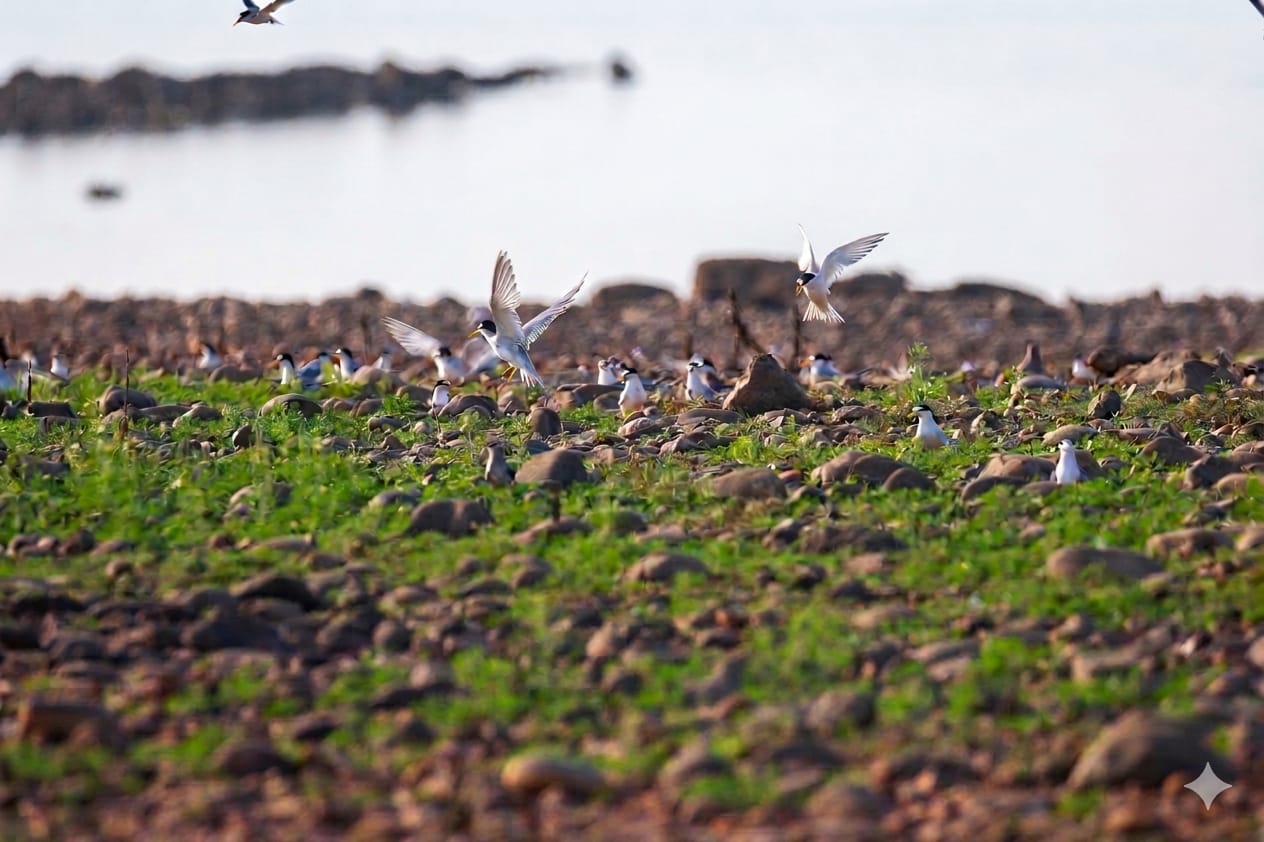
Bhubaneswar: Odisha’s Hirakud Wetland, a recognised Ramsar Site, has recorded a remarkable rise in summer bird nesting activity in 2026, signalling improving ecological conditions and the growing impact of sustained conservation efforts across the wetland ecosystem.
Fresh assessments carried out in June this year revealed that 19 bird species nested across the wetland and adjoining habitats during the summer season, compared to 10 species recorded during the first systematic survey conducted in May 2025. Officials said the increase reflects a healthier and more stable habitat capable of supporting breeding activity over a larger landscape.
The survey also documented an expansion in nesting locations. Breeding colonies were found across 28 islands this year, up from 26 islands last year, with Tupa Dungri and Bhalu Dunguri emerging as new nesting sites. Interestingly, some winter migratory species remained in Hirakud through the summer instead of returning to their usual destinations, contributing to the rise in breeding activity.
Forest officials attributed the encouraging trend to a combination of habitat protection, regulated human activity and continuous ecological management undertaken during the breeding season.
Natural nesting zones consisting of reeds, marshes, grasslands, shrubs and tree-covered islands were protected from disturbance. Stable water conditions supported by the Hirakud Dam further created favourable conditions for nesting, while feeding areas such as mudflats and shallow pools were retained for both adult birds and chicks.
Special measures were introduced to reduce disturbance around breeding sites. Fishing, livestock grazing and boat movement near nesting colonies were regulated and seasonal no-entry zones enforced. Since mid-April, fishing activities have remained restricted around all 28 nesting islands to ensure uninterrupted breeding.
Authorities also undertook measures to manage ecological threats, including monitoring feral dogs and removing invasive vegetation that could negatively affect nesting habitats.
Community participation played an important role in strengthening conservation outcomes. Awareness campaigns were conducted in over 100 villages surrounding Hirakud and Debrigarh to promote sanitation, reduce pollution and discourage dumping of waste into the wetland ecosystem. Under the ‘Debrigarh Abhinandan’ programme, Eco-Development Committees engaged local communities in protecting sensitive habitats.
Habitat management interventions throughout the year also focused on conserving native fish, aquatic plants, insects and amphibians to ensure sufficient food availability for both resident and migratory bird populations.
To further protect breeding grounds, authorities implemented a “Zero Summer Fire” initiative by establishing fire lines and conducting awareness campaigns against burning grasslands near ecologically sensitive zones.
Round-the-clock monitoring of breeding colonies continues through river patrolling teams, with surveys tracking nesting progress and fledgling success. The breeding season, which began in mid-April, is expected to continue until the end of July.
Officials said the increase in both the number of nesting species and the spread of breeding colonies highlights the improving ecological health of Hirakud Wetland and reinforces the importance of sustained conservation and community stewardship in protecting one of India’s internationally important wetland ecosystems.
Bhubaneswar: Braj Mohan Ram on Sunday took oath as the new Governor of Odisha at…
Bhubaneswar: Recognising their gold medal-winning performances at the 2026 Asian Games in Japan, Odisha Chief…
Bhubaneswar: Two school-going sisters from Odisha have used a multiplication table to deliver a social…
Bhubaneswar: The Satwalipi Committee on Mahaprabhu Lingaraj Temple has submitted its third interim report to…
Bhubaneswar: Odisha will organise a state-level summit to finalise priorities and accelerate the implementation of…
Bhubaneswar: The Housing and Urban Development Department has asked Urban Local Bodies (ULBs) across Odisha…

