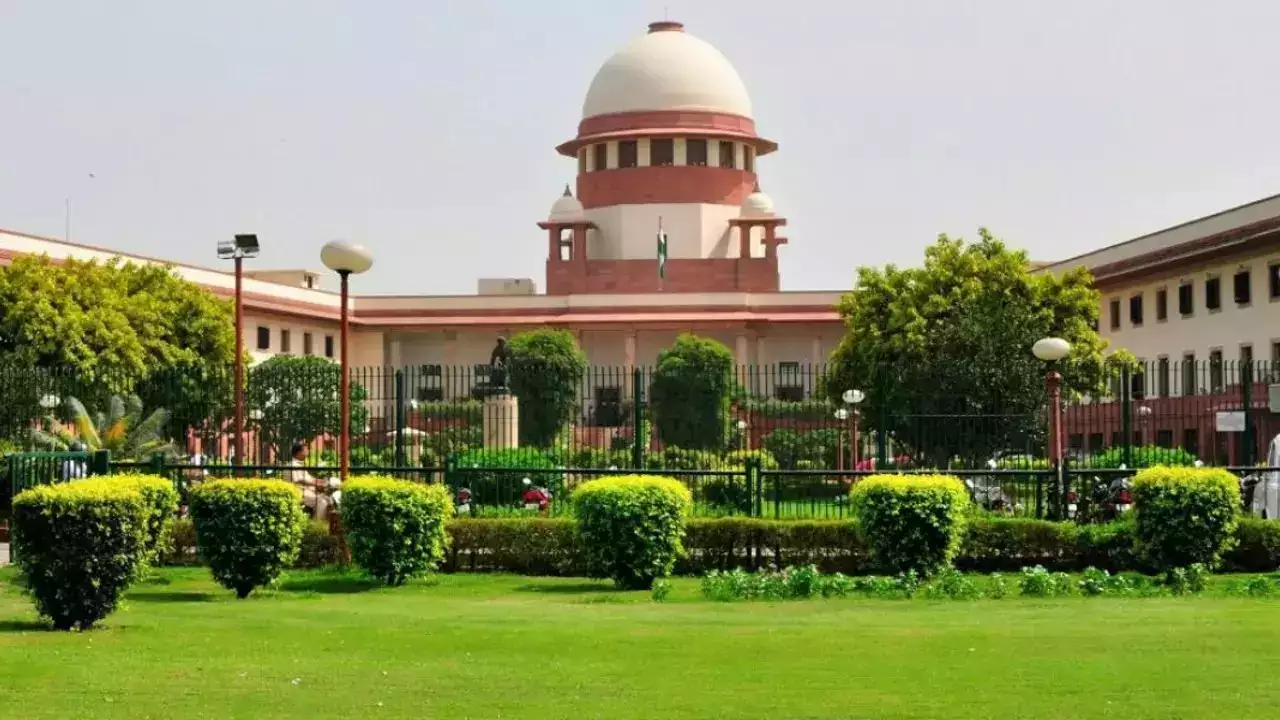
Supreme Court Strikes Down Electoral Bonds Scheme, Citing Violation of Right to Information
New Delhi: In a landmark judgment, the Supreme Court of India on Thursday unanimously struck down the controversial electoral bonds scheme that allowed anonymous donations to political parties. The five-judge Constitution bench, comprising Chief Justice of India DY Chandrachud and Justices Sanjiv Khanna, BR Gavai, JB Pardiwala, and Manoj Misra, quashed the scheme along with the amendments made to the Income Tax Act and the Representation of People Act that ensured the anonymity of donations.
The Court held that the electoral bonds scheme, due to its anonymous nature, violates the right to information and consequently infringes upon the right to free speech and expression under Article 19(1)(a) of the Constitution. The judgment stated, “Electoral Bonds Scheme, proviso to Section 29(1)(c) as amended by Section 139 of the Income Tax Act and Section 13(b) as amended by Finance Act 2017 is violative of Article 19(1)(a).”
The Court directed the State Bank of India (SBI), the issuing bank of electoral bonds, to provide details of political parties that received such bonds and all relevant particulars to the Election Commission of India (ECI) by March 6. The ECI is mandated to publish these details on its official website by March 13. Additionally, the Court ordered political parties to refund the electoral bond amounts to the purchasers’ accounts.
The judgment highlighted concerns that the electoral bonds scheme could provide an advantage to the party in power, as economic inequality could lead to varying levels of political engagement. It underscored the importance of transparency in political funding and rejected the argument that the scheme curbs black money in politics.
While acknowledging the privacy of donors, the Court emphasized that transparency in political funding cannot be sacrificed for absolute exemptions. The verdict concluded that the scheme, in its current form, poses challenges to democratic processes and allows for unchecked funding of political parties.
The electoral bonds scheme, introduced through the Finance Act, 2017, enabled donors to anonymously contribute funds to political parties by purchasing bearer bonds from the State Bank of India. The judgment comes after several petitions challenged the legal validity of the scheme, arguing that it opened the doors to unlimited and unchecked political funding. The apex court had reserved its judgment on November 2, 2023, after a three-day hearing, and the ruling marks a significant development in the regulation of political funding in India.
New Delhi: President Droupadi Murmu on Wednesday attended the award ceremony of the 65th National…
New Delhi: Union Agriculture and Farmers’ Welfare Minister Shivraj Singh Chouhan has called for developing…
Bhubaneswar: Odisha Chief Secretary Anu Garg has called for expanding livelihood opportunities for rural families…
Bhubaneswar: Odisha Chief Secretary Anu Garg has directed all concerned departments and District Collectors to…
Bhubaneswar: Higher secondary schools across Odisha must install CCTV cameras in examination halls and other…
Cuttack: Remembering police personnel who made the ultimate sacrifice in the service of the nation,…