
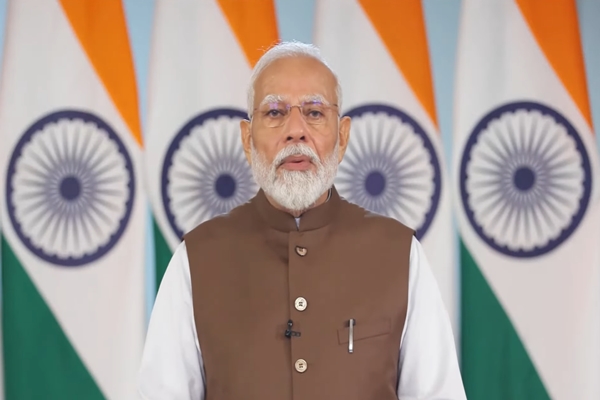
New Delhi: Prime Minister Narendra Modi today inaugurated the implementation of three transformative new criminal laws—Bharatiya Nyaya Sanhita (BNS), Bharatiya Nagarik Suraksha Sanhita (BNSS), and Bharatiya Sakshya Adhiniyam (BSA)—at a grand event in Chandigarh. Addressing the gathering, Modi emphasized the historical and transformative nature of these reforms, aligning them with the ideals of justice, equality, and democracy enshrined in the Indian Constitution.
The Prime Minister remarked that Chandigarh, named after Goddess Maa Chandi, symbolizes power, truth, and justice—values that form the foundation of the new criminal laws. Modi hailed the implementation of these laws as a significant milestone in India’s judicial journey, coinciding with the nation’s commitment to becoming a Viksit Bharat and celebrating 75 years of the Constitution.
Modi highlighted the exhaustive process behind drafting the new laws, involving consultations with constitutional experts, Supreme Court and High Court judges, legal institutions, and civil society organizations. He commended the Ministry of Home Affairs for spearheading this effort since January 2020, integrating suggestions from diverse stakeholders to ensure the laws addressed contemporary challenges and future needs.
“These laws are the result of intensive deliberations on the nation’s requirements in the modern world and the lessons learned from the judicial system’s challenges over the past seven decades,” the Prime Minister said.
The Prime Minister criticized the colonial-era laws, including the Indian Penal Code (IPC) and Indian Evidence Act, for their oppressive origins and outdated frameworks. He noted that despite periodic amendments, their core philosophy remained rooted in subjugation, hindering India’s progress.
“With the implementation of these new laws, India has taken another step towards shedding its colonial mindset and embracing a legal framework that embodies the principles of democracy—‘of the people, by the people, for the people,’” Modi asserted.
The Prime Minister stressed the inclusivity and sensitivity of the new laws, designed to empower citizens, especially the poor and marginalized. Key provisions include:
- Timely Justice: Strict timelines for filing chargesheets and delivering verdicts in cases of heinous crimes.
- Victim Rights: Mandatory updates to victims on case progress via digital services and safeguards against unwarranted detentions.
- Women’s Safety: Enhanced protection mechanisms, including expedited trials for crimes like rape.
- Modern Evidence Systems: Acceptance of digital evidence and mandatory videography to ensure transparency.
“These reforms not only strengthen civil rights but also promote ‘ease of justice,’ ensuring that every citizen feels empowered and secure under the law,” Shri Modi said.
Highlighting the broader implications, the Prime Minister emphasized that the new laws would reduce corruption, boost departmental productivity, and attract foreign investments by eliminating delays in justice delivery.
“The strength of a nation lies in its citizens, and the law of the land must serve to empower them. These reforms represent a decisive shift towards a justice system that is efficient, humane, and forward-looking,” he added.
Modi urged state governments, law enforcement agencies, and citizens to actively embrace the new laws, emphasizing awareness and effective implementation. He expressed optimism that the Bharatiya Nyaya Sanhitas would inspire confidence in the justice system, deter crime, and contribute to nation-building.
The event was attended by Punjab Governor and Chandigarh Administrator Gulab Chand Kataria, Union Home Minister Amit Shah, Rajya Sabha MP Satnam Singh Sandhu, and other dignitaries, marking the occasion as a pivotal moment in India’s legal and social landscape.