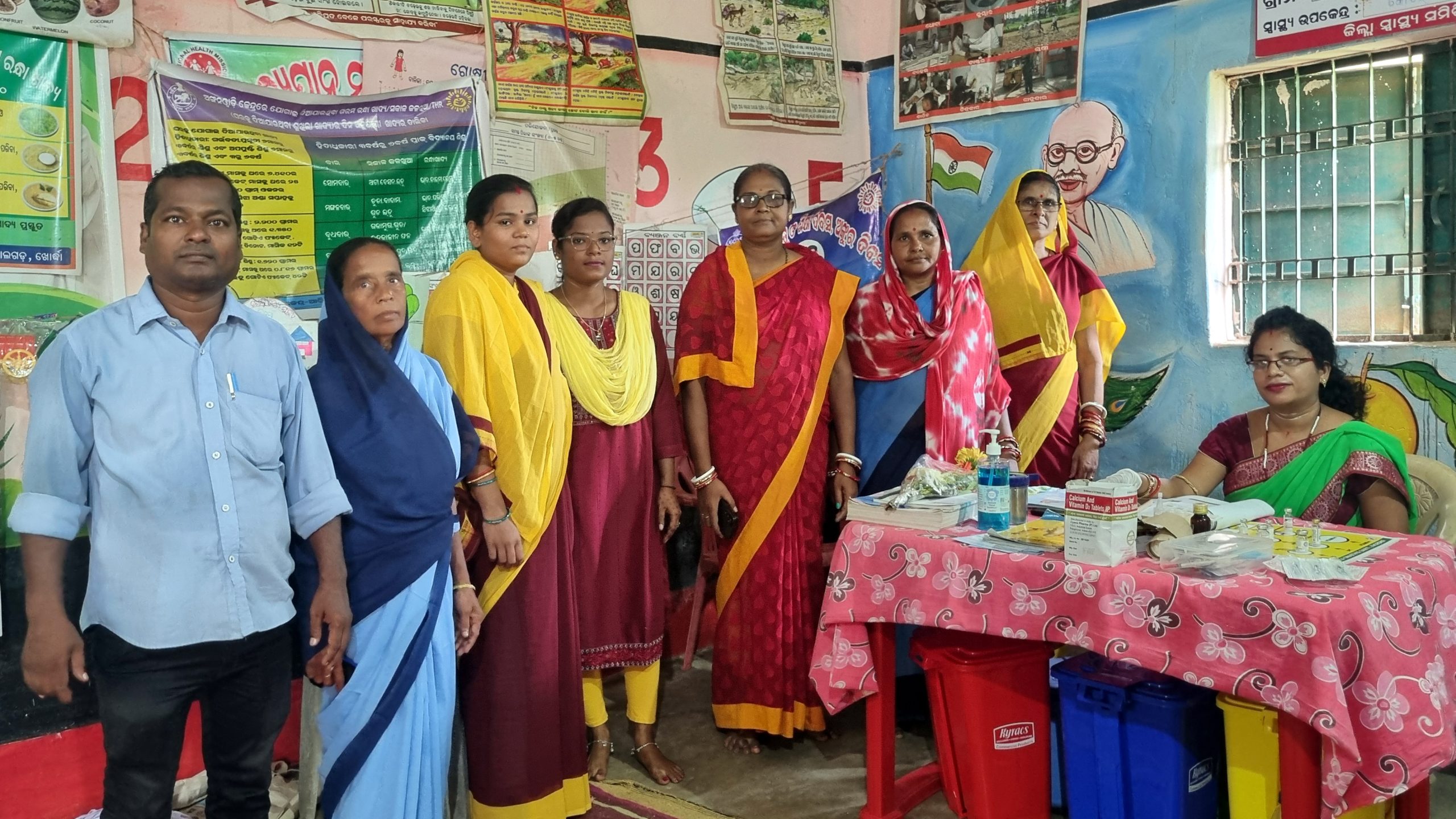
Bhubaneswar: Every Wednesday morning, the Anganwadi centre in Arikama, a small village in Odisha’s Khurda district, becomes a hub of activity. Mothers arrive with their children, engaging in friendly conversations as they prepare for Routine Immunization Day. Amidst the occasional cries of infants, the air is filled with a sense of purpose and community.
As mothers approach the Auxiliary Nurse Midwife (ANM) for vaccinations, they seek clarification about potential side effects, asking questions about fever or nausea. For Satyahema Sahoo, the dedicated Anganwadi worker who has been coordinating these immunization drives alongside the ANM, witnessing this growing trust and involvement is a rewarding experience. But things weren’t always this way.
When Satyahema first took on her role as an Anganwadi worker over a decade ago, she encountered strong resistance from the local community, especially from elder women like grandmothers. Deep-rooted beliefs and cultural practices led many to reject vaccines, believing their children had grown up healthy without them. “It was hard to convince them,” Satyahema recalls. “They felt immunization was unnecessary because their traditions had worked for generations.”
However, over the years, Satyahema has been equipped with new tools and strategies to combat vaccine hesitancy. Thanks to her training in social and behavior change (SBC) approaches, she has learned how to address the community’s concerns effectively. Through persistent efforts and meaningful engagement, Satyahema and other healthcare workers have managed to change the narrative around immunization in Arikama, inspiring caregivers to advocate for it themselves.
The shift in Arikama is emblematic of a broader transformation across Odisha, where SBC strategies are being employed to build trust in healthcare. Recognizing the effectiveness of these approaches, the state’s health department, with support from UNICEF, has implemented capacity-building programs like Tarang. These programs train frontline health workers in crucial skills like interpersonal communication, group facilitation, and community engagement to foster positive behavioral changes.
“Programmatic interventions alone are not enough,” says Sugata Roy, SBC Specialist at UNICEF. “Sustainable change happens when individuals and their peers are convinced, and when there’s an enabling environment. SBC helps foster positive behaviors by influencing knowledge, attitudes, and social norms.”
These strategies have had a significant impact. The regular training of field functionaries has empowered them to reach even the most remote populations, breaking through barriers of superstition and fear. “Convincing communities that rely on traditional healers is a challenge,” explains Subhanarayan Nayak, Additional District Public Health Communication Officer (ADPHCO) in Koraput. “But by engaging local leaders and faith-based figures, we develop strategies that resonate with these communities, ensuring no one is left behind.”
The results speak for themselves. According to the National Family Health Survey (NFHS), Odisha’s immunization coverage has increased from 78.6% (NFHS-4) to 90.5% (NFHS-5), well above the national average of 76.1%.
Arikama, once hesitant, now embraces immunization. Recently, only two children missed their vaccinations, both of whom were successfully reached during the Intensified Mission Indradhanush (IMI 5.0) drive. During IMI 5.0, SBC strategies took center stage, with diverse communication methods—from radio jingles and posters to community engagement with local leaders—mobilizing unvaccinated children and pregnant women.
“SBC is a powerful driver of change,” says Lokanath Behera, a health worker in Arikama. “We’ve seen a remarkable shift, with fathers now participating in immunization programs—a role traditionally held by mothers. This change in attitude and behavior is both encouraging and a sign of progress.”
As Odisha continues to make strides in immunization, the success in Arikama serves as a reminder of the power of community-driven health initiatives. By addressing concerns, building trust, and engaging with local leaders, health workers like Satyahema have helped transform vaccine hesitancy into widespread acceptance—ensuring a healthier future for the village’s children.
Bhubaneswar: The Housing and Urban Development Department has asked Urban Local Bodies (ULBs) across Odisha…
Bhubaneswar: From exploring ancient temples and the story of Odisha’s capital city to discovering local…
Bhubaneswar: Odisha will prepare a dedicated lightning safety action plan for 2027 and a roadmap…
Bhubaneswar: The Women and Child Development (WCD) Department of the Odisha government has signed a…
Baripada: Wildlife enthusiasts and nature lovers can return to Similipal Tiger Reserve in Odisha’s Mayurbhanj…
Bhubaneswar: Applicants who secure flats under the Bhubaneswar Development Authority’s (BDA) Ekamra Residency housing project…