Bhubaneswar: The Odisha Government’s decision to approve ₹22 crore for developing the Bhima Mandali caves near Rairakhol as an eco-heritage tourism destination has triggered concerns among conservationists, who fear that tourism infrastructure could further damage the site’s ancient rock art and fragile forest ecosystem.
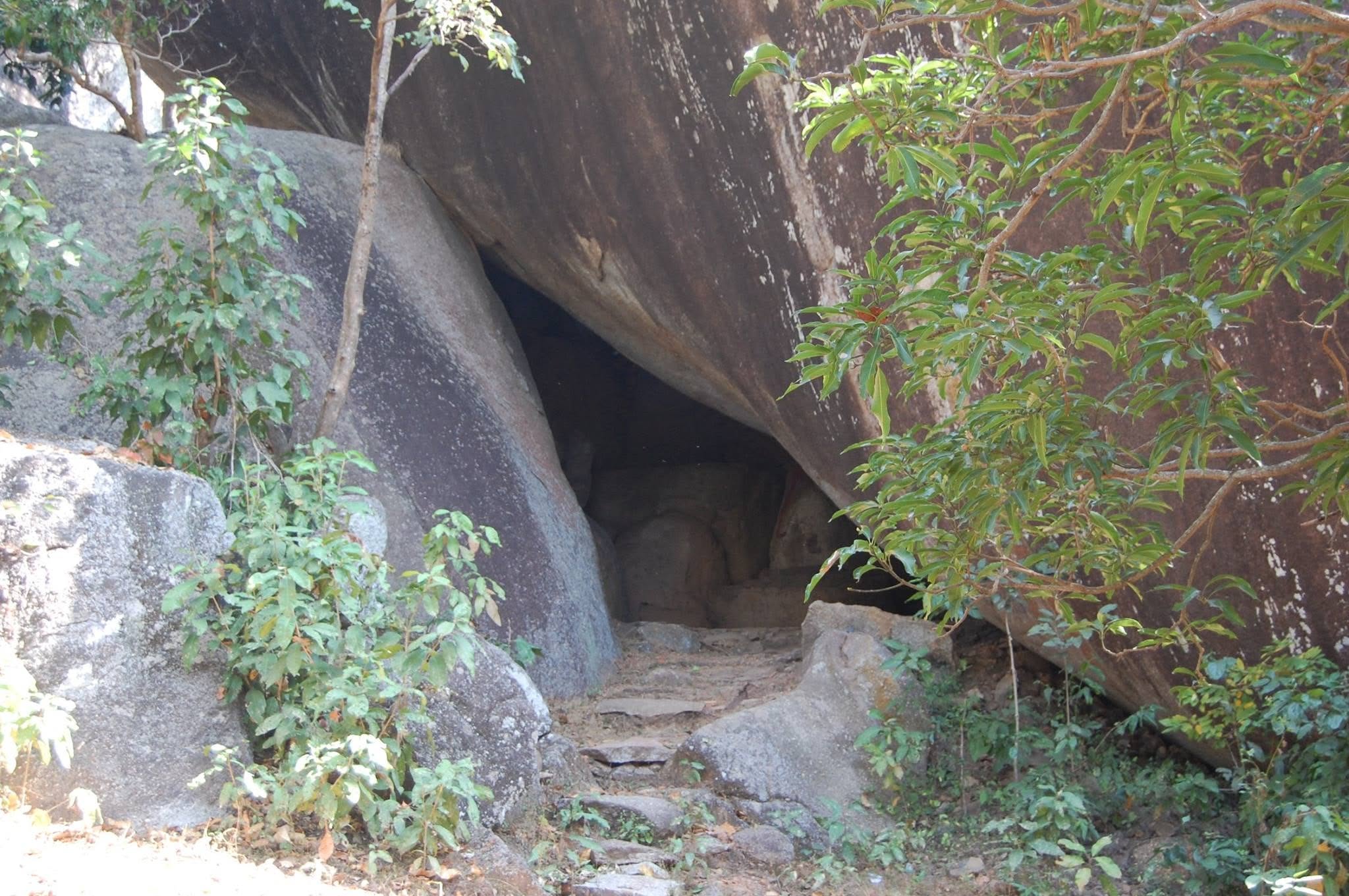
Located in the Naktideul Forest Range of Sambalpur district, the Bhima Mandali caves and rock shelters are known for prehistoric paintings, stone inscriptions and archaeological remains believed to date back around 15,000 years. The site is also associated with local legends of the Pandavas from the Mahabharata.
Although the Archaeological Survey of India (ASI) has conducted archaeological surveys and excavations at the site, the caves have not been formally declared a protected monument. Conservationists argue that the priority should be to secure statutory protection for the heritage site before opening it up for tourism.
Odisha reportedly has around 140 caves containing rock art, but only Vikramkhol in the Belpahar Range of Jharsuguda district has been accorded protection by the ASI. Even there, a large portion of the rock art has reportedly suffered damage. The rock paintings at Sitabhinji in Keonjhar district have also faded and become difficult to decipher.
The ASI had stated in 2023 that neglected rock art sites across Odisha would receive priority for consideration as protected sites.
According to heritage researcher Anil Dhir, who has visited Bhima Mandali several times, the Ambajhol cave contains a rare depiction of elephants, believed to be the only such representation in Odisha’s rock art. Of the three elephants depicted, only two are visible today.
Dhir said several rock engravings and paintings had deteriorated over the years due to rising temperatures, removal of forest cover, vandalism, graffiti and fires lit by visitors. He stressed that bringing the caves under the protection of the ASI had become essential to prevent further loss of the archaeological heritage.
The concerns extend beyond the caves to the surrounding forest landscape. The Naktideul Forest Range falls within an important Asian elephant corridor of the Rairakhol Forest Division and borders the Khalasuni Wildlife Sanctuary. The area witnesses regular elephant movement and frequent human-elephant conflict. A villager was reportedly killed in an elephant attack last week.
The sanctuary is home to several wildlife species, including Indian bison, sambar, spotted deer, barking deer, mouse deer, four-horned antelope and wild boar. Leopards, sloth bears, pangolins, civets and dholes, or wild dogs, are also found in the landscape.
Meanwhile, Sambalpur MP Dharmendra Pradhan, who visited the site a few months ago, has welcomed the state government’s initiative to develop eco-heritage facilities near the caves and bring Bhima Mandali onto Odisha’s tourism map.
However, conservation experts believe that tourism development must be preceded by a comprehensive conservation plan.
Surya Sarathi Roy, Director (Operations) of the Indian History Awareness and Research (IHAR), said rock art was an invaluable cultural heritage of humanity and among the earliest forms of artistic expression by prehistoric humans.
He said protecting such sites required a combination of physical barriers, digital documentation, regulated visitor movement and community participation. Uncontrolled tourism, vandalism, graffiti and even touching the paintings could cause irreversible damage.
Roy suggested that the ASI install perimeter fencing and viewing barriers or boardwalks to prevent visitors from approaching the painted surfaces. Drip lines could also be installed to divert rainwater away from the rock art panels. He emphasised that tree felling in the surrounding areas should be prohibited, as removing the forest canopy would expose the paintings to direct sunlight, wind and rain, accelerating their deterioration.
He also cautioned against visitors sprinkling water on the paintings to make the figures more visible, saying such practices could damage the fragile surfaces.
Roy called for capacity-building programmes involving local communities and other stakeholders to promote responsible tourism. He also suggested developing a Rock Art Circuit across Odisha to connect important prehistoric sites and attract researchers as well as visitors.
He recommended involving specialised institutions such as the National Research Laboratory for Conservation and INTACH, along with the ASI and the State Archaeology Department, to undertake scientific documentation and preservation measures.
Dhir, who is also the Odisha State Head of IHAR, said the Bhima Mandali caves offered important insights into prehistoric human habitation, predating the Harappan and Mohenjo-daro civilisations. He believes several more caves and archaeological remains may remain undiscovered within the dense forests of the Naktideul range.
He argued that the proposed tourism project should not compromise the site’s archaeological and ecological significance. According to him, establishing an eco-resort or similar infrastructure in the fragile landscape could disturb the local flora and fauna and pose additional risks to the preservation of the caves.
The debate over Bhima Mandali has brought into focus a larger question concerning heritage tourism in Odisha: how to make lesser-known archaeological sites accessible to visitors without compromising their cultural, historical and ecological value. Conservationists maintain that scientific assessment, formal protection and a clear visitor-management plan must precede any tourism-related construction at the site.