
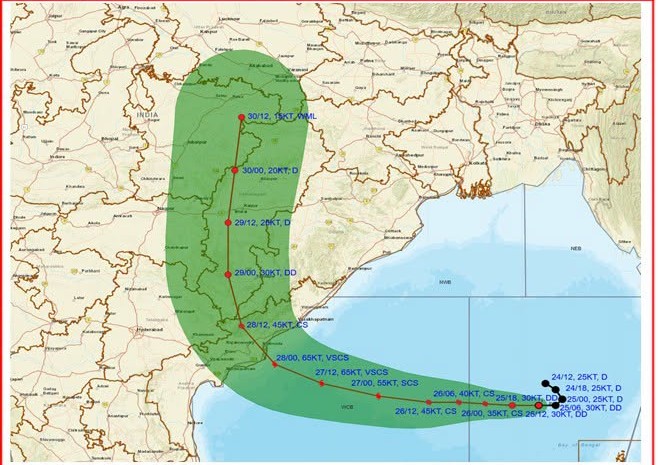
Bhubaneswar: Odisha has stepped up its cyclone preparedness, with the India Meteorological Department (IMD) forecasting a possible landfall between South Odisha and North Andhra Pradesh on October 28. The likelihood of landfall along the Andhra Pradesh coast is higher, while heavy to very heavy rainfall and strong winds are expected in several parts of Odisha.
Ganjam, Gajapati, Rayagada, Koraput and Malkangiri have been identified as the five most vulnerable districts. Schools, colleges and Anganwadi centres in these districts will remain closed on October 28 and 29 as a precautionary measure.
The State Government and district administrations have activated emergency response measures, including round-the-clock control rooms, evacuation arrangements, deployment of disaster response teams and preparations to protect people, livestock and essential infrastructure. The administration is working towards the State’s goal of zero casualties.
30 disaster response teams deployed in five districts
A total of 24 Odisha Disaster Rapid Action Force (ODRAF) teams and six National Disaster Response Force (NDRF) teams have been deployed across the five vulnerable districts.
Ganjam has been assigned nine ODRAF and two NDRF teams, while Gajapati has six ODRAF and one NDRF team. Rayagada, Koraput and Malkangiri have each been provided with three ODRAF teams and one NDRF team.
High alerts have been issued in all five districts. Leave for district-level officers and staff has been cancelled, and they have been directed to remain at their respective headquarters to ensure prompt response to emergencies.
District Emergency Operation Centres, along with control rooms at block, tehsil and urban local body levels, have been made operational round the clock. Dedicated helpline numbers and toll-free services have also been made available to assist residents.
Evacuation and shelter arrangements underway
Authorities are identifying residents living in kutcha houses, thatched huts and low-lying areas and shifting them to safe cyclone shelters. The shelters have been equipped with essential facilities to accommodate people from vulnerable locations.
Pregnant women nearing their delivery dates are being relocated in advance to nearby community health centres, primary health centres and hospitals. Special arrangements are also being made for senior citizens, children and persons with disabilities.
To prevent accidents, fishing activities in the sea have been prohibited. Tourist entry to hills, waterfalls, dams and other scenic destinations in the five vulnerable districts has also been banned.
Farmers advised to secure mature crops
The Agriculture Department has advised farmers to harvest and safely store paddy, maize, ragi and other crops that have reached 80–85 per cent maturity to minimise potential losses from heavy rainfall and strong winds.
Dedicated agricultural helplines have been opened to provide assistance and guidance to farmers during the weather event.
Arrangements have also been made to protect livestock, including shifting animals to safer locations, providing treatment through Mobile Veterinary Units and distributing cattle feed and fodder in vulnerable areas.
Health and essential services on alert
Health authorities have been directed to ensure adequate stocks of essential medicines, including snake antivenom, along with chlorine tablets and other supplies. Measures for water chlorination have also been planned to reduce the risk of waterborne diseases following heavy rainfall and flooding.
Equipment required for restoring electricity and telecommunications services has been positioned in advance to enable faster recovery in the event of disruptions.
Nodal officers have been assigned responsibility for vulnerable sectors and connected through dedicated WhatsApp groups to facilitate real-time information sharing and coordination among departments.
The administration has urged people to remain alert, follow official weather bulletins and instructions issued by local authorities, and avoid spreading or believing rumours. Residents in vulnerable areas have been advised to cooperate with evacuation teams and move to designated shelters whenever directed.